


Article Summary
A belt works with fur only when the coat already falls toward the waist. Use it to sharpen a wrap or smooth long coat, not to force shape into a boxy or fluffy piece.
Use a belt only when the coat has a waist point
A belt only works when the coat already understands the waist. Before tightening anything, look at how the front panels fall over the base layer and whether the belt will refine that line or fight it.
Use pieces that still look good after the coat opens: smooth mink, a wrap shape, a long straight coat, a dress base, a slim boot or a quiet leather belt. Then turn sideways. If the waist disappears or the jacket cuts the body in half, the lower half needs more structure.
When the waist is the part making the outfit awkward, use Fur Coat Proportions That Make the Whole Outfit Work before adding more styling on top.
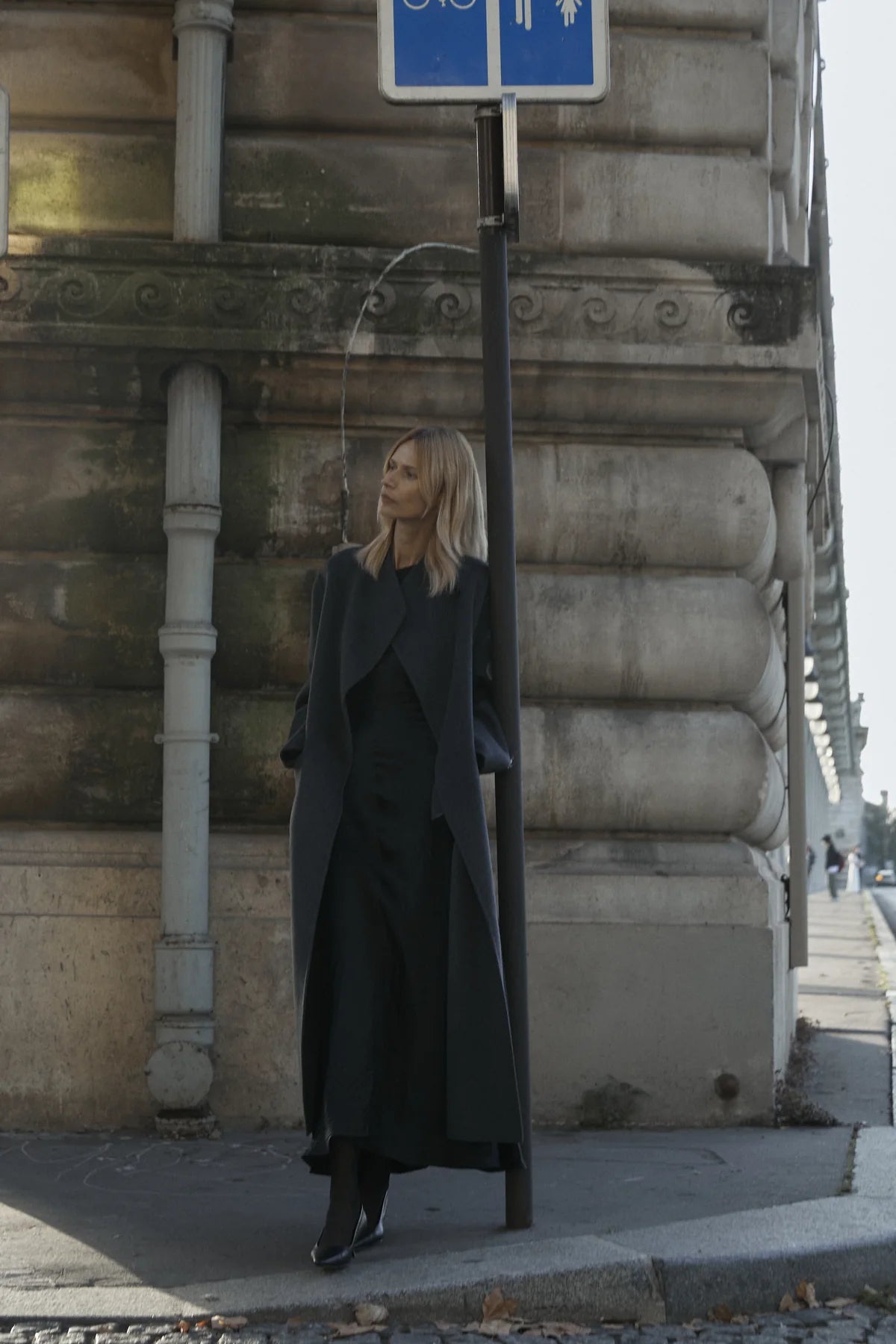

Thin belts suit smoother surfaces
A thin belt works best on a smoother surface or a coat that already narrows gently. It should underline the waist, not cut a deep groove through the pile.
Keep hardware small and the buckle quiet. When the belt is louder than the fur, the outfit starts to look assembled around the accessory instead of the coat.
Repeat the belt color once, usually in the shoe or bag. That is enough; the belt should not ask the whole outfit to match it.
Open the coat first.
The front should fall naturally before the waist is tightened.
Watch for crushing.
If the belt cuts a groove through the fur, the shape is being forced.
Sit before leaving.
A belt that works standing can pull badly in a car or restaurant chair.
Wide belts need enough coat length
Use the belt loops or designed tie position if the coat has them; they show where the maker expected the waist to sit. For an unbelted coat, test the front while it is closed first. Hold a soft belt against the coat without tightening it and check where the lower panels fall. If there is too little length below the belt, the hem can kick outward and exaggerate the upper volume. If the coat’s closure needs the belt to stay shut, the issue is fit or construction rather than styling.
A wide belt needs enough coat length below it. On a short or fluffy coat, the belt can make the body look boxed in; on a longer wrap or smoother coat, it can give the line more order.
Stand sideways and check where the belt sits against the opening. If it pulls the front panels unevenly, the problem is construction, not styling.
When length is also part of the decision, Long Fur Coat Outfit Ideas gives the belt more context.

Do not belt to fix the wrong problem
Do not use a belt to repair the wrong coat. A belt cannot fix a sliding shoulder, a sleeve that swallows the hand or a front opening that refuses to sit flat.
If the coat looks better only because the belt is holding it in place, try the same outfit with the coat open. A good belted look should still make sense after the belt is removed.
Use the belt only after the coat already fits well. If the belt is the only thing making the coat work, the shape is probably wrong for this outfit.
| If this happens | Change this first | Why |
|---|---|---|
| Neckline feels crowded | Simplify scarf, hair or base layer | Volume near the face reads fastest |
| Hem feels awkward | Change shoe or trouser break | The lower line finishes the coat |
| Coat looks too wide | Use a cleaner first layer | The base outfit needs to stay visible |
| Bag distorts the shoulder | Switch to a lighter bag | Strap pressure changes the silhouette |
Protect the pile from pressure
Start with the belt loose enough that the coat hangs from its shoulders rather than from a tight band at the waist. Smooth the front overlap, fasten it, then move the arms and sit. A deep groove, uneven front edge or belt that must be retightened after every movement is a reason to leave this coat unbelted. Do not assume a momentary mark means permanent damage; repeated pressure and rubbing are the concerns to discuss with a fur-care professional for a valuable or older piece.
Build the look around smooth mink, a wrap shape, a long straight coat, a dress base, a slim boot or a quiet leather belt. If the mirror feels busy, remove one loud element before adding another. Most strong fur outfits are simpler than the first styling attempt.
The warning sign is tight cinching, rough hardware, a belt used to hide bad shoulders or pressure marks across the pile. If the same issue keeps returning, open How to Make a Fur Coat Look Less Bulky and solve that smaller problem first.
Keep the bag quieter than the belt
A belted fur coat already has a focal point at the waist. The bag should not create a second fight across the shoulder, front opening or pile. Keep the bag smoother, smaller or lower-contact when the belt is visible.
A clutch or top-handle bag often works better than a heavy shoulder strap. If the strap crosses the belt line, it can make the coat look pulled in two directions.
Before leaving, fill the bag and check the coat again. An empty bag may look polite in photos; a real bag decides whether the belt still looks intentional.
Fix the base before blaming the coat.
For belted fur, the important checks are the front opening, pressure on the pile, buckle size and whether the coat still sits well after sitting down.
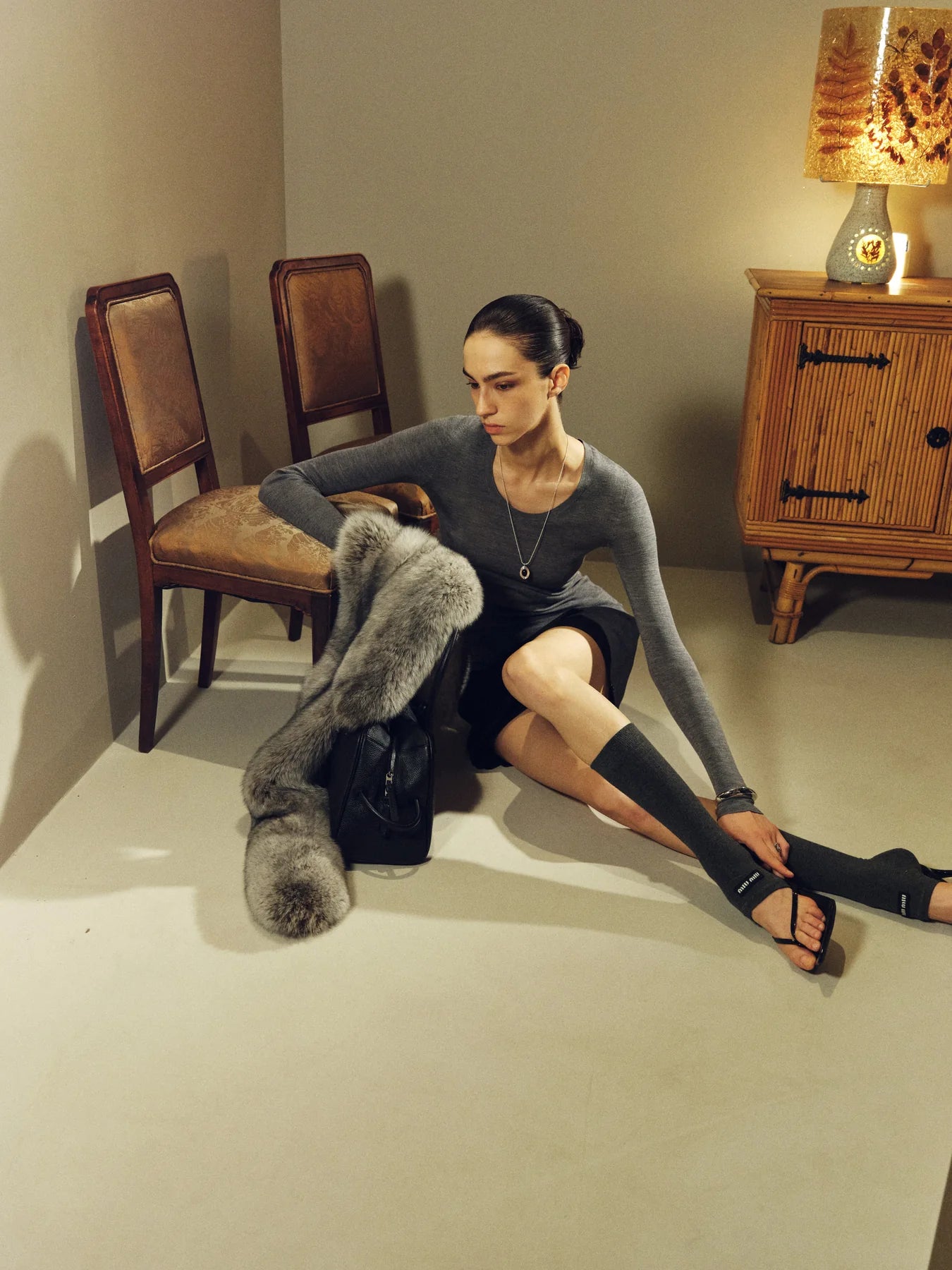
Use shoes to repeat the belt color
Repeating the belt color in the shoe is a simple way to make a belted coat look planned. Black belt with black boots, brown belt with brown leather or a tonal belt with a quiet shoe can connect the waist to the ground.
Do not over-match every piece. The belt and shoe only need to create a small line of continuity, especially when the fur itself has enough texture or shine.
If the coat is long, use Fur Coat Hemline and Boot Pairings to check whether the shoe is still visible enough for the color repeat to matter.
Check the coat open before belting it
With a belted fur coat, a coat that looks heavy when closed may look much cleaner when it is worn open. The first layer then becomes visible, so the neckline, waist and color underneath should look intentional.
This works best in wrap shapes, smooth mink, long coats, dinner outfits and coats that look better with a gentle waist line when the weather is dry and the room is warm enough to leave the coat relaxed. If the day needs the front closed every minute, open styling will not solve the real problem.
Use How to Make a Fur Coat Look Less Bulky when the opening reveals a more specific issue, such as a weak waist, crowded collar or bag pulling one side of the coat forward.
Compare wrap shapes with straight coats
A wrap coat already brings one front panel across the other, so a belt can follow the overlap and define the waist without inventing a new seam. Check whether both front edges stay level after fastening; if one side climbs, the belt may be pulling the coat off its intended line. A straight coat closes on its own front edge. A separate belt can create a waist, but it may also gather the lining and push the hem outward. Compare both coats without a belt, then with a loose belt at the intended waist.
Take a side photograph and sit down before deciding. A belt that sharpens the front view but makes the back bunch or the closure gap is not an improvement. The result matters more than whether the belt is narrow or wide.
The warning sign is tight cinching, rough hardware, a belt used to hide bad shoulders or pressure marks across the pile. If the same issue keeps returning, open Long Fur Coat Outfit Ideas and solve that smaller problem first.
 FurUse when the coat is meant to carry the outfit.
 MinkUse when proportion needs polish and less visible pile.
 Fur TrimUse when weather and carrying matter.
Do not belt fur for every outing
A belt is not always the more polished choice. For errands, crowded restaurants, long sitting, heavy bags or travel, leaving the coat open can protect the pile and make the outfit easier to move in.
Use the belt when the coat already sits well and the outing gives it room: dinner, a short walk, a dry entrance, a coat check or a look where the waist is meant to be seen. Skip it when the belt would need constant straightening.
This is especially important with longer-haired fur. A tight belt can flatten the waist, move the front panels and make the coat look less expensive than it is.
The base outfit still has to work
A belt makes the coat more defined, but it also draws attention to the clothes underneath. If the coat opens, the knit, dress, trouser or skirt should still look finished.
Test the outfit without the coat for one minute. If the base looks too plain, too bulky or too casual on its own, the belt will not solve it. It may only make the unfinished part easier to see.
When the base outfit is the problem, return to What to Wear With a Fur Coat before making the belt the main styling move.
Treat belting as an option, not a requirement
The coat should already hint at a waist before the belt appears. A belt can refine a wrap or smooth long coat, but it should not be asked to repair a shoulder, a boxy cut or a front opening that refuses to sit flat. Keep the answer tied to the shoes and bag that will actually be worn.
FireladyFur editing note
FireladyFur would judge this proportion before the most dramatic product photo. The first pass is practical: can the piece work around smooth mink, a wrap shape, a long straight coat, a dress base, a slim boot or a quiet leather belt, and does it avoid tight cinching, rough hardware, a belt used to hide bad shoulders or pressure marks across the pile? That keeps the advice close to real dressing rather than showroom styling. For brand background, read About FireladyFur; for the broader route, use the Firelady Fur Guide and Fur Coat Styling Guide.
Next step
Before choosing a product, test the outfit against the parts that will actually carry it: smooth mink, a wrap shape, a long straight coat, a dress base, a slim boot or a quiet leather belt. If the main problem is still tight cinching, rough hardware, a belt used to hide bad shoulders or pressure marks across the pile, stay with proportion rather than buying more drama. Then compare mink for a cleaner surface, fox fur for visible softness, or fur-trim parkas when the route needs pockets, weather protection and easier carrying. For the full length and volume order, return to fur coat proportions before making a final silhouette choice.
FAQ
What is the first thing to check with a belted fur coat?
Check whether the coat has a natural waist before the belt is added. Then confirm the shoulder, neckline, hem and shoe before adding accessories.
Can this silhouette work casually?
Yes, when the base layer and shoes match the route. For wrap shapes, smooth mink, long coats, dinner outfits and coats that look better with a gentle waist line, keep the supporting pieces clean and practical.
What makes this outfit look too bulky?
Common causes are tight cinching, rough hardware, forcing a waist on a boxy coat and using a belt to fix shoulder problems. Remove one source of volume and check the outfit again.
Which FireladyFur collection should I compare?
For a belted fur coat, compare mink when the line should feel smoother, fox fur when visible softness helps, and fur-trim parkas when weather or carrying matters.
What should I check before buying online?
Look for full-body photos that show a belted fur coat with shoes, plus a side view that reveals sleeve scale, collar height and where the hem actually stops.


