


A fur coat is easier to style when the rest of the outfit already has a life of its own: a base layer that looks finished indoors, shoes that suit the day, and a bag that will not scrape the surface. The coat should add presence, not rescue an unfinished outfit.
Start with the clothes that stay visible indoors
A fur outfit has two public moments. The first is the entrance, when the coat gives warmth and presence. The second is quieter: the restaurant seat, office elevator, hotel lobby or car door, when the coat opens and the layer underneath becomes part of the outfit. That layer can be simple, but it cannot look accidental.
Strong outfits usually begin with ordinary pieces handled well: black knit under a mink jacket, straight denim under fox, a slip dress under a smoother full-length coat, or a fine turtleneck under a short open collar. The base should look intentional after the coat comes off, even if it stays quiet.
For broader occasion planning, keep the Fur Coat Styling Guide nearby. This page stays with the outfit itself: the layer, shoe, bag and coat shape.


Build the outfit before choosing the coat family
Many awkward fur outfits start with the coat and then search for supporting pieces. Reverse the order. Choose the indoor base first, add the shoe for the route, pick a bag that will not crush the fur, then put the coat over that finished outfit.
The result changes quickly. A long mink over a slip dress feels clean with a narrow boot and handheld bag. A fox jacket over denim feels natural with ankle boots and a simple belt. The same coats can look forced when the shoes and bag are solving a different day.
For the layer under the coat, use what to wear under a fur coat. For boots, heels, loafers and flats, move to what shoes go with a fur coat.
| Piece | Best use | Why it works |
|---|---|---|
| Base layer | Fine knit, tee, dress, blouse or denim shirt | Keeps the coat from feeling bulky before styling begins |
| Shoes | Boots, heels, loafers or clean sneakers | Names the mood: city, dinner, casual or practical |
| Bag | Top-handle, clutch, light shoulder bag or practical tote | Protects the shoulder and finishes the outfit |
| Coat | Mink, fox, artisan fur, fur trim or outerwear | Chosen after the rest of the outfit is clear |
Denim makes fur easier without making it careless
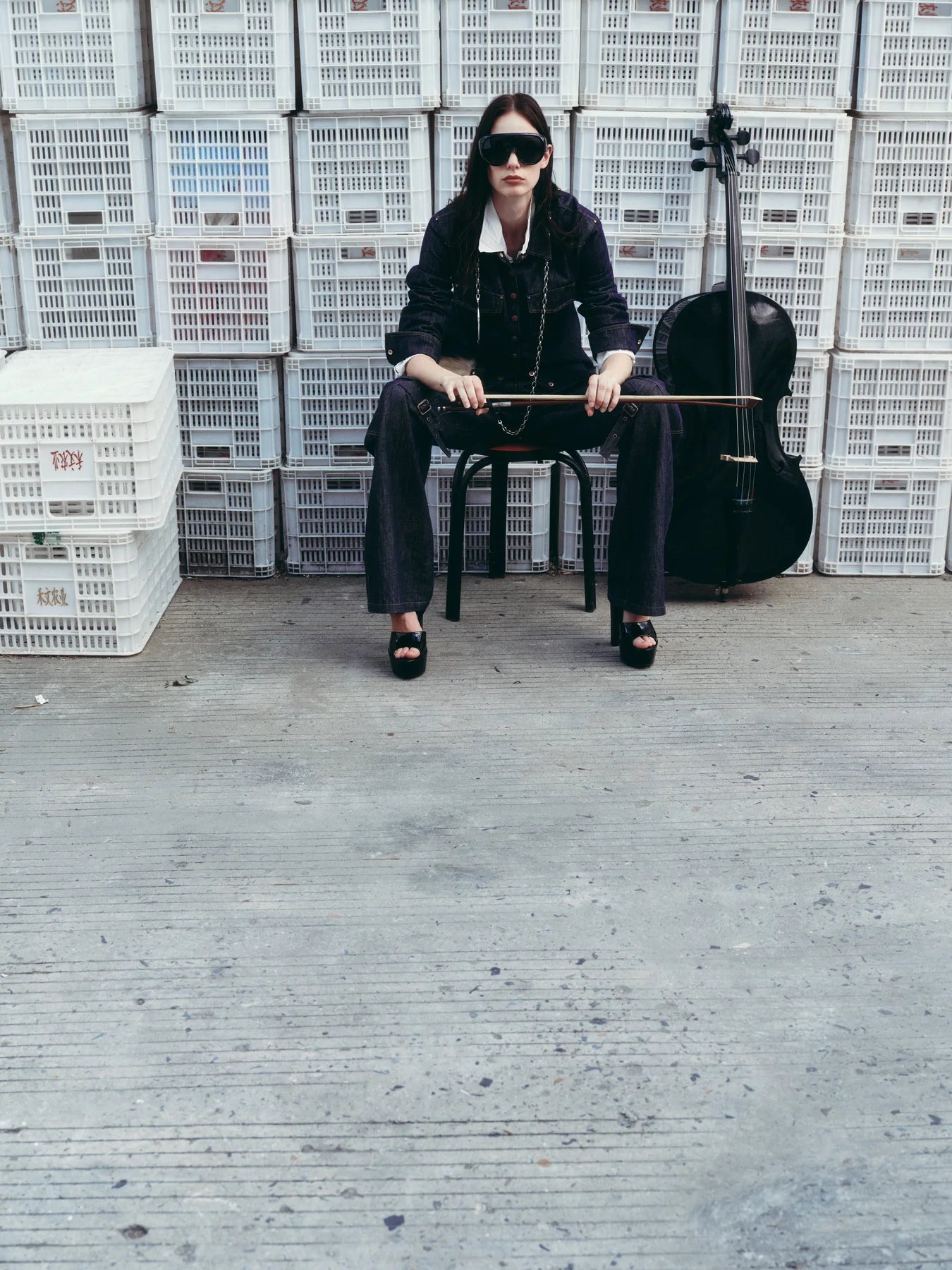
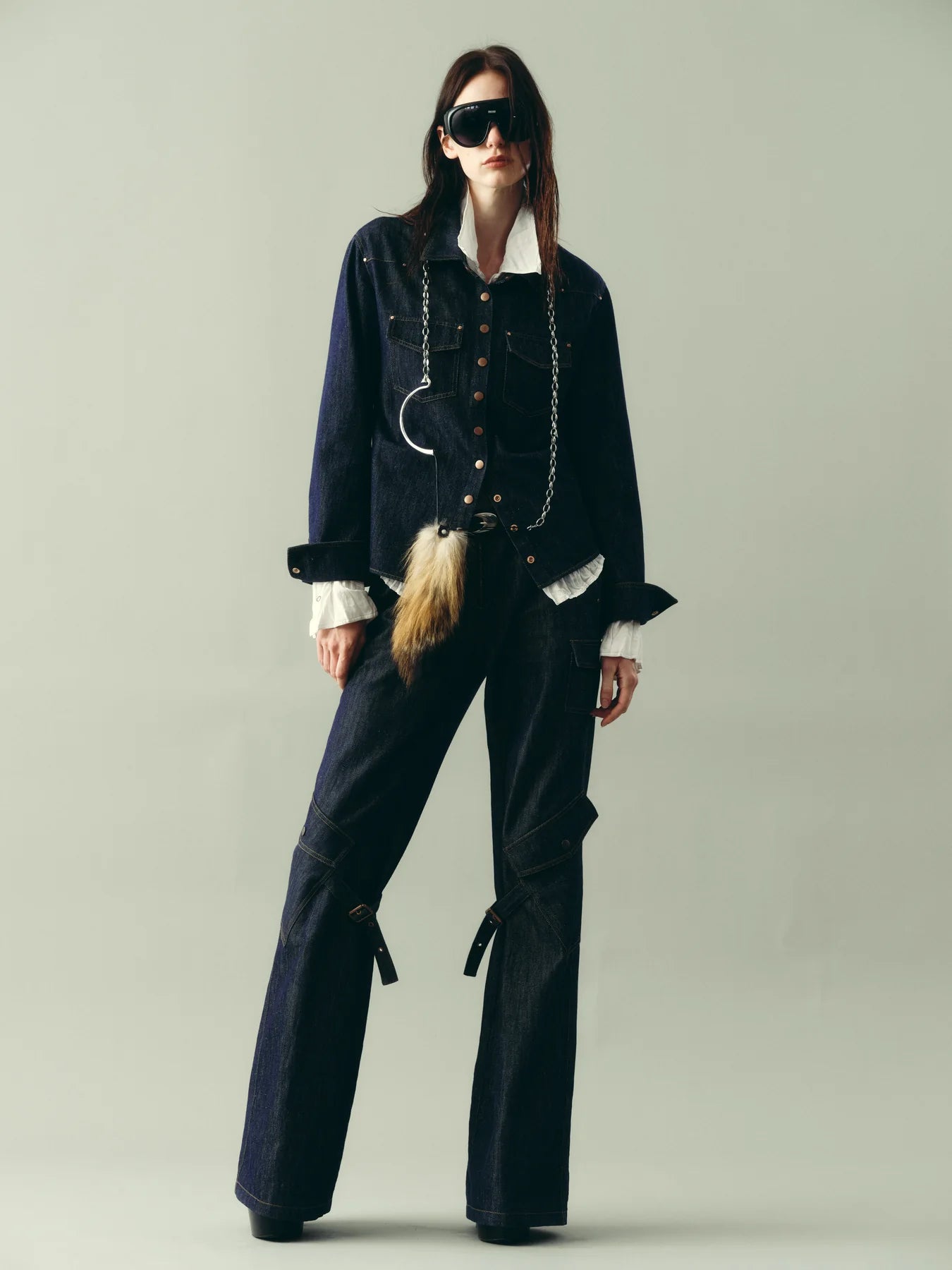
Denim is useful because it pulls fur into daily life. Straight blue jeans, black denim, white denim and relaxed vintage washes all work, but each changes the mood. Blue denim softens the coat. Black denim sharpens it. Cream denim looks good with tan and brown fur on dry days. Flared or wide denim needs a shorter or cleaner coat.
The denim outfit still needs editing. A ribbed knit, plain tee, silk shirt, clean belt or structured boot gives the fur enough company. Distressed jeans, loud hardware, oversized sneakers and a heavy tote can make the coat look like it landed on the wrong outfit.
For the denim-specific route, how to style fur with denim covers washes, cuts, boots and casual mistakes in more detail.
Dresses need hem and neckline discipline
A dress under fur can look effortless, but the coat should respect two lines: neckline and hem. A high collar with a high neckline can crowd the face. A cropped jacket over a long dress can cut the body in half. A long coat over a short dress can work when the shoe gives the lower half enough weight.
Slip dresses, knit dresses and simple black dresses are forgiving because they leave the fur room to frame the outfit. Printed dresses or heavy texture need more caution. The coat should not compete with the dress before the evening even begins.
If the outfit is dress-led, use fur coat with dress outfit ideas for the narrower hem, shoe and bag decisions.
Check the shoe, bag and coat in the same mirror.
A fur coat changes the body line, but the shoe and bag reveal whether that line feels wearable. Take one full-body look with the coat closed, one with it open, and one with the bag in hand before trusting a close-up.

Knitwear is warm, but it can crowd the coat
Knitwear is one of the most useful winter layers, and also one of the easiest to overdo. A fine merino turtleneck under a clean mink jacket can look expensive. A chunky sweater under a high-volume fox coat can make the shoulder feel swollen and the neckline too busy.
Choose knitwear by thickness first. Fine knits go under most fur. Chunky knits need a roomier sleeve, lower collar or shorter coat. A knit dress works well when the coat has a smoother surface; if both the dress and coat are heavily textured, the outfit may feel weighty instead of soft.
The knitwear article, fur coat with knitwear outfit ideas, is the better next step when sweaters, turtlenecks or knit dresses are the main winter base.
FireladyFur looks past the first product photo and asks how the coat will be repeated. A useful piece should work with more than one base layer, more than one shoe direction, and at least one bag that treats the surface gently. The strongest outfit is usually the one a wearer can put together again without rebuilding the whole closet.
For brand background behind these material and styling choices, read About Firelady Fur.
The bag can make or break the coat
A bag can ruin a good fur outfit faster than people expect. A heavy shoulder strap can press a line into the pile. A crossbody can drag across the front. A large tote can overpower a polished coat. A tiny clutch can look wrong if the outfit is actually a long city day.
Choose the bag from the day. Dinner can use a clutch, wristlet or small top-handle. City wear may need a smooth leather or suede handheld bag. Travel and errands usually need fur trim or practical outerwear more than a delicate full-fur coat with a backpack.
For bag pressure, strap placement and outfit formality, use what bag works with a fur coat.
Modern fur usually needs fewer signals, not more
Modern styling usually comes from clean contrast: a plain base against visible texture, a flat boot against a rich coat, denim against polish, a simple bag against volume. Adding every trend at once makes the coat look less current, not more.
One current signal is enough: straight denim, a narrow belt, a leather midi skirt, a sharper boot, a quiet suede bag, or a cleaner color story. The coat can keep its character while the outfit around it feels present.
If the coat feels dated, use how to make a fur coat look modern. If it feels too loud, use minimal outfits with a fur coat.
Pants change the coat more than most accessories
Pants are the quiet frame under a fur coat. Tailored trousers can make the coat look polished. Leather pants sharpen it. Denim relaxes it. Leggings make it weekend-friendly only when the upper half and shoe still look dressed. Wide-leg trousers need careful coat length so the silhouette does not become wide from shoulder to floor.
For a first outfit, straight jeans and a simple boot are easiest. For a sharper city outfit, use black trousers and a compact fur jacket. For evening, leather or satin-finish trousers can work when the coat surface is cleaner and the bag stays simple.
The pants-specific article, what pants to wear with a fur coat, gives the lower-half rules without turning every answer into denim.
Choose the product family after the outfit is real
Once the outfit is named, browsing becomes less random. If the base is polished and the shoe is elegant, Mink or Artisan Fur may be the cleaner match. If the base is denim, boots and visible texture, Fox Fur can make sense. If the day includes bags, transit, weather and errands, fur-trim parkas deserve a serious look.
FireladyFur does not need the coat to be the loudest piece in the outfit. The better choice is the one that repeats. A coat that works with two base layers, two shoes and at least one bag is more valuable than a dramatic piece that only works in one photo.
For broader material comparison, use the Fur Coat Comparison Guide. For construction, weather and closet value, the Fur Coat Buying Guide is the better companion.
Care limits change what you can wear
Styling is not finished when the outfit looks good. Bag straps, wet streets, restaurant seats, makeup, perfume, car belts and storage all touch the coat. If the outfit asks the fur to handle too much friction, the styling is not practical no matter how polished it looks.
A full fur coat belongs most naturally to a dry evening with a small bag and a clean place to hang it. A fur-trim parka fits errands, transit and weather. A short fur jacket works well with denim, boots and movement. Care should match the way the outfit will actually be worn.
When weather, odor, storage or repeated wear becomes the main question, move from styling into the Fur Coat Care Guide before deciding the outfit is safe.
Read the full-body photo before the close-up
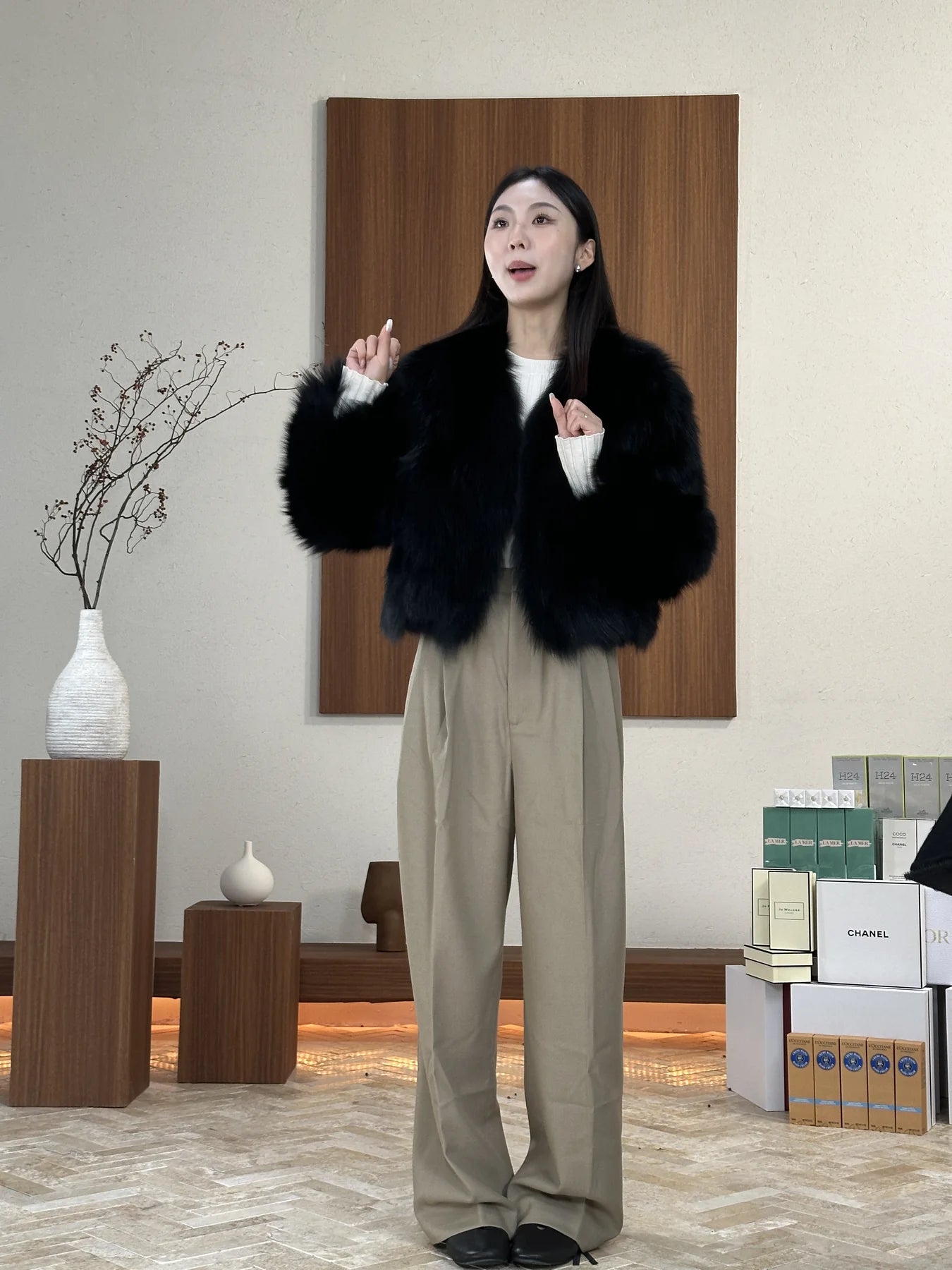
The close-up tells you whether the fur looks plush or smooth. The full-length photo tells you whether the outfit can be worn. Check where the coat ends, how much shoe is visible, whether the sleeves look packed, and where a bag would touch the pile.
A front view, side view and full-body product photo answer more styling questions than a dramatic crop: coat length, sleeve space, lower-half balance and whether the outfit still looks natural once the model is standing normally.
Remove the detail that keeps pulling focus
If the look feels awkward, do not keep adding accessories. Change the thick knit, the wrong shoe, the heavy shoulder bag, the crowded necklace or the pant shape first. Fur already has enough visual weight.
A cleaner fur outfit often comes from removing one noisy detail rather than adding another styling idea.
Do not leave while still fixing it.
If the strap keeps sliding, the sleeve keeps catching or the neckline keeps crowding the face, that piece is not supporting the coat. Change the small problem before turning the whole outfit into a styling project.
Use fur trim when the day is rougher than the outfit
Wet sidewalks, heavy bags, crowded transit, long car rides and bad coat storage all change the answer. A full fur coat may be right for dinner and wrong for a workday with a laptop tote.
A fur-trim parka or broader outerwear can look more polished when the day includes weather, errands, transit or heavier bags.
The route changes the outfit before the mirror does.
A look that works in a standing photo still has to pass a seat, doorway, curb and coat-check moment. Use the route to decide whether the outfit needs a practical parka, a shorter jacket, or a smoother full coat.
Run the car and chair test
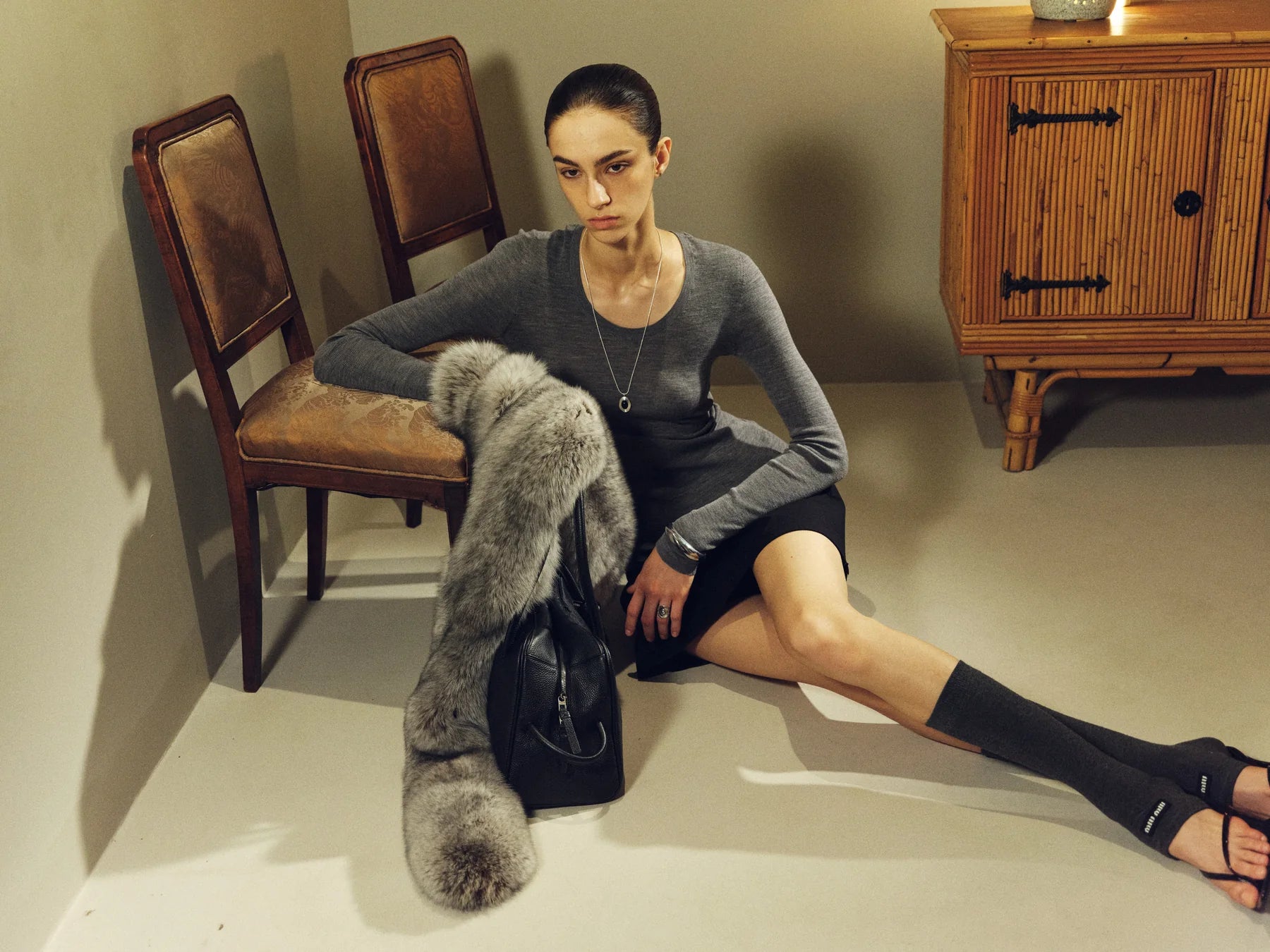
A fur coat does not spend the whole day standing still. It rides in a car, passes through doors, sits near chairs, slides over base layers and sometimes rests across an arm.
Before wearing the coat for dinner, work or city errands, sit down in the full outfit. Hold the bag. Reach forward. Check the sleeve and neckline.
A first coat needs repeatable routes
For a first serious fur coat, avoid building a single perfect outfit that has no second life. A good purchase works with at least two bases and two shoes: denim and boots, dress and heel, trouser and loafer, knitwear and ankle boot.
When one category cannot cover the repeat scenes, do not force it. A fur-trim parka may be better for errands and weather; a mink coat may be better for polished dinners; a fox jacket may be better for expressive casual outfits.
Browse after the outfit has a real job
Collection browsing is clearer after the outfit is named. Mink suits polished dresses, trousers and quiet bases. Fox Fur is easier when denim, knitwear or simple clothes can carry visible texture.
Fur-trim parkas make sense when shoes, bags, weather and movement are part of the day.
Run the outfit without the coat first
A fur coat can rescue a weak outfit at the doorway, but that trick ends the moment the coat opens. Before choosing the fur, look at the clothes underneath by themselves: can the top, trouser, dress or knit stand in a restaurant, office, car seat or hotel lobby without apology?
If the answer is no, make the base stronger before reaching for a more dramatic coat. A better knit, sharper trouser, cleaner dress or more deliberate shoe usually fixes more than another accessory.
Use the base layer to control temperature and polish
The base layer does two jobs at once. It keeps the wearer warm, and it decides how the outfit looks when the coat opens. Fine wool, silk, smooth jersey, compact cotton and fitted knitwear add warmth without swelling the sleeve. Heavy fleece, thick cable knit and stiff collars often make the coat look smaller than it is.
The best base is not always the warmest single layer. It is the one that lets the shoulder settle, keeps the sleeve moving and leaves the neckline readable. Add warmth with gloves, a scarf carried separately or a longer coat before packing the sleeve with bulk.
Let the shoe name the route
The shoe tells the truth about where the outfit is going. A polished ankle boot keeps fur city-ready. A knee boot helps dresses and skirts feel warmer. A loafer works with shorter coats and trousers in dry weather. Sneakers need denim, a relaxed coat or a sporty outerwear shape to feel natural.
Choose the shoe for the route first: car-to-door dinner, wet sidewalk, office elevator, airport, gallery day or weekend errands. The coat becomes easier to judge after the footwear admits the day.
Walk before adding polish.
Put on the shoes, close the coat and take a few steps. If the outfit becomes too fragile, too formal or too casual once it moves, change the shoe before changing the coat.
Treat the bag as contact with the fur
A bag also touches the coat. A heavy strap can press a flat line into the shoulder, a crossbody can drag across the front, and a large tote can make a polished coat look misplaced for the day.
Choose the bag by what it must carry. If the day includes a laptop, umbrella and water bottle, practical outerwear may look sharper than a delicate full-fur coat being dragged through errands. If the event allows a small handheld bag, full fur becomes easier to protect.
Use denim when the coat needs a real-life anchor
Denim brings fur into daily life because it gives the coat something familiar to lean on. Blue denim softens. Black denim sharpens. Cream denim works on dry days with tan, brown and grey fur. Wide denim needs a shorter or cleaner coat so the body does not become all volume.
The denim still needs to look chosen. A clean boot, ribbed knit, simple belt or small bag makes denim feel styled rather than accidental.
Use dresses when the coat needs an entrance
A dress gives fur an obvious winter occasion, but the neckline and hem have to cooperate. A high collar with a high neckline can crowd the face. A cropped jacket over a long dress can cut the body oddly. A full coat over a short dress can work when the shoe keeps the lower half grounded.
At dinner, remember the coat may be removed, checked, held or draped. The dress still needs to look complete once the fur leaves the body.
Use knitwear when comfort is part of the look
Knitwear belongs with winter fur, but thickness changes everything. Fine sweaters work under most coats. Thin turtlenecks work under open collars and V-necks. Chunky knits need wider sleeves, lower collars or a more practical outerwear shape.
If the sleeve feels packed, try a thinner knit before blaming the coat. Fur often needs air and movement to look right.
The warm layer still needs room to move.
Raise your arm, sit down and close the front. If knitwear pushes the collar into the jaw or packs the sleeve, keep the coat and change the layer first.
Use pants when the outfit needs city structure
Tailored trousers can make fur cleaner than denim without turning the outfit formal. Leather pants sharpen the coat but need a quiet top. Wide-leg trousers can look current with cropped fur, while slim pants can support more volume above.
Pants are useful for work, city days, travel and dinners that do not require a dress. They give fur a middle lane: polished, wearable and easier to repeat.
Keep modern styling from becoming random trend mixing
Modern fur styling is usually cleaner, not louder. One proportion move is enough: cropped fur with wide trousers, long fur with a narrow dress, textured fox with straight denim, smooth mink with a minimal boot.
If every piece is trying to make the coat look modern, the outfit becomes busy. Remove one old signal, choose one current shape and let the coat be the main texture.
Minimal outfits work because they let fit show
Minimal styling is not a way to hide fur. It lets the coat be read clearly. Black knitwear, cream denim, grey trousers, simple boots and a small bag can make even a textured coat feel controlled.
The trade-off is that fit becomes more visible. Shoulder width, sleeve length, collar height and hem line matter more when there are fewer styling distractions.
Read the plain product photos first
A close-up can prove softness or shine, but it does not prove the outfit. Look for full-body images, side views, collar height, sleeve opening, closure, hem length and how much shoe is visible. If a product page never shows the lower body, be careful about assuming how the coat will work with pants or dresses.
A useful photo answers a practical question. Can it close over a knit? Does the collar sit away from the jaw? Does the hem work with boots? Does the shoulder look safe for a light bag?
If it needs constant fixing, it is not ready.
Before leaving, open and close the coat, hold the bag and look at the hem with the real shoes. A good outfit survives those small movements without needing a full reset.
Let care decide the rough-day outfit
A coat can be stylish and still wrong for rain, crowded transit, heavy shoulder bags or a long restaurant chair situation. Styling should protect the next wear. If a full fur coat would spend the day being guarded, the outfit is not realistic.
This is where fur trim and outerwear are not compromises. They are better answers for days that need pockets, hoods, zippers, rougher shoes and less delicate handling.
Keep one dry-weather outfit and one rough-weather outfit
A fur wardrobe becomes easier when it has more than one route. The dry-weather version can be a smooth coat, fine knit, polished boot and small handheld bag. The rough-weather version may be denim, a practical boot, a warmer base and a fur-trim parka that can handle errands, wind and storage without constant worry.
This is not a downgrade in style. It is a way to keep the good coat from being forced into the wrong day. The outfit looks more confident when the clothing admits what the route actually demands.
Separate dinner polish from daily repeat
Dinner styling can be more delicate: a slip dress, a compact bag, a cleaner shoe and a coat that frames the neckline. Daily repeat needs more tolerance. The outfit must handle sitting, walking, carrying keys, getting in a car, changing indoor temperatures and imperfect coat storage.
A coat that works for dinner may not be the first choice for errands. A jacket that works with denim may not have enough polish for a formal room. Naming that difference early prevents one expensive piece from being judged against every possible outfit.
Use color as support, not as the whole idea
Black, cream, denim blue, taupe, grey and chocolate are reliable because they let texture show without making the outfit look busy. A bright color can work when it has a job: lifting a dark coat, softening a strong silhouette, or making a simple base look deliberate.
If the color is doing all the styling, the outfit may fall apart after the coat comes off. The stronger move is a simple palette with one clear texture, one clean shoe direction and a bag that does not compete for attention.
Let jewelry and hardware stay quieter than the fur
Fur already has movement, shadow and texture. Large hardware, noisy chains, heavy belts and oversized jewelry can make the outfit feel overbuilt. Small earrings, a clean watch, a narrow belt or one deliberate metal tone usually does more than a collection of accessories.
This matters most around the face and hands. The collar, bag handle, rings and earrings are often seen together. If all of them are loud, the coat loses its ease.
Plan for removing the coat
A good fur outfit cannot collapse the moment the coat is removed. The top, dress or knit underneath needs shape, warmth and enough finish to stand in a restaurant, office, car or entryway. A coat can elevate the outfit, but it cannot be the only reason the outfit works.
Before buying or styling, imagine the coat on the back of a chair or over your arm. If the remaining outfit feels unfinished, repair the base layer, shoe or bag before choosing a more dramatic coat.
Repeat one outfit before buying around another
One repeatable outfit might be straight denim, fine knit, ankle boots, small bag and a textured jacket. Another might be a knit dress, knee boot, compact bag and a smoother coat. Repeat one of those combinations several times before deciding the wardrobe needs another fur piece.
The repeat test keeps the purchase practical. If the coat only works with one outfit, the issue may be styling range rather than product quality. If it works with several base layers, the piece has earned more closet space.
Test the outfit in the order it will be worn
Try the base layer first, then the shoe, then the bag, then the coat. That order catches problems a mirror can hide. A sleeve may feel fine until the bag is added. A dress may look balanced until the boot shaft changes the lower half. A collar may look beautiful until a scarf or necklace crowds it.
Do not judge the coat from one standing pose. Walk, sit, close the coat, open it, hold the bag and take the coat off. A wearable outfit keeps its shape through those small movements.
Travel and car time change the outfit
A coat that looks perfect standing may feel different in a car, train, restaurant booth or crowded entryway. Long hems need room. Full sleeves need space. A bag needs a place to go. If the day includes travel, choose a base layer that will not overheat and a shoe that can handle walking before the coat becomes the focus.
For car-to-door evenings, the outfit can be more delicate. For a city day with multiple stops, make the outfit sturdier: lower heel, lighter bag, cleaner base and a coat that can be handled without constant adjustment.
Let the closet prove the outfit is real
A beautiful outfit is less valuable if it requires clothes the wearer rarely uses. A good fur outfit connects with pieces already in the closet: the denim that fits well, the boot that survives winter sidewalks, the knit that does not itch, the bag that can be held comfortably.
That does not make the outfit less special. It makes the coat easier to repeat. A fur piece looks more natural when it joins a real wardrobe instead of demanding a new wardrobe around it.
Browse FireladyFur after the outfit has a job
Collection browsing is most useful after the outfit problem is named. If the outfit needs polished evening warmth, look at smoother mink or artisan fur. If it needs texture over denim, fox can make the outfit feel deliberate. If it needs pockets, movement and weather tolerance, fur-trim outerwear may be the cleaner choice.
That order keeps the purchase grounded. The coat needs to make the outfit easier to wear, not force the whole closet to reorganize around it.
Build the base layer like an outfit, not underwear
The layer under a fur coat still matters after the entrance. It shows at the neckline, cuff, waist and hem, and it should look complete when the coat is removed. A clean tee can be enough with denim. A fine turtleneck can sharpen a V-neck mink jacket. A silk blouse can soften trousers. A knit dress can bring warmth and indoor polish together.
The wrong base layer usually fails in small ways first. It makes the shoulder rise, pushes the sleeve outward, traps heat indoors, or leaves the outfit looking unfinished when the coat comes off. If the base layer is weak, the coat carries too much of the outfit. If the base layer is strong, the coat can simply finish the look.
For a real purchase, test the base layer you already wear often. If the coat only looks good over a special top that rarely leaves the closet, the outfit may be more fragile than it seems.
Use two bases for every serious coat
A coat earns its place faster when it works over two different bases. Build one casual version with denim, a ribbed knit, a tee, a fine sweater or a clean trouser. Build another with a dress, blouse, fitted turtleneck, satin skirt or tailored pant. If the same coat works over both, it has range.
This test matters because product photos often show the easiest version. A short fox jacket may look charming over denim but too full over a dress. A smooth mink coat may look elegant over a dress but too formal over relaxed jeans. A fur-trim parka may handle knitwear beautifully but not give enough polish for a dinner dress.
Do not force one coat to pass every scenario. Learn where it feels natural, then buy or style around that lane.

Shoes ground the coat
Shoes are the fastest way to change the coat's meaning. An ankle boot gives most fur coats a reliable winter base. A pointed boot sharpens a long coat. A knee boot helps dresses and skirts feel warmer. A loafer works with shorter coats and trousers in dry weather. Sneakers need a relaxed coat or denim base, otherwise the contrast can look accidental.
Choosing by occasion alone can mislead you. A dinner shoe may be correct for the room but wrong for the sidewalk. A lug boot may be practical outside but too heavy under a refined coat. A loafer can look modern with a cropped fur jacket but weak under a long coat on a cold day.
Start with the route: car-to-door, wet sidewalks, office, restaurant, errands, travel. Then choose the shoe. The coat follows more naturally when the footwear fits the day.
Long coats need narrower shoe decisions
A long fur coat already carries visual weight. The shoe does not need to shout. A narrow boot, clean heel, sleek loafer or simple pointed shape usually works better than a heavy sneaker or overly bulky boot. If the coat is long and textured, keep the shoe cleaner. If the coat is long and smooth, the shoe can have a little more structure.
The hem matters. If the coat nearly reaches the boot, the shoe becomes a small but important detail. If the coat stops mid-calf, the boot shaft, heel height and pant break become visible. A wrong shoe can make the entire coat feel shorter, heavier or less polished.
When in doubt, check the side view. It shows whether the coat and shoe are balancing each other or pulling the outfit in two directions.
Short jackets allow more shoe personality
Short fur jackets usually tolerate more variation because the lower half is visible. Straight jeans and ankle boots are the easiest. Wide-leg denim can work if the jacket is cropped or compact. Loafers can make a short jacket feel city-ready. A clean sneaker can work when the coat is casual enough and the base layer is not trying to be formal.
Many first fur outfits feel easier with a jacket than with a long coat for exactly that reason. The shoe stays visible, the pants or skirt can balance the texture, and the bag can be a little more practical without taking over the line.
The trade-off is warmth and formality. A short jacket may be easier to style casually, but it may not replace a longer coat for cold evenings or polished winter events.
Bags are part of coat care
A bag touches the coat all day. That makes it a care decision as much as a styling decision. A top-handle bag keeps weight off the shoulder. A clutch works for dinner because it has little contact. A light shoulder bag can work if the strap is smooth and the bag is not heavy. A crossbody is the hardest with full fur because it cuts across the front.
A beautiful outfit can look tired after one heavy strap has pressed into the pile. This is especially true on pale, plush or long-haired fur. It is less of a problem with practical outerwear or fur-trim parkas, but even then a rough strap can pull the garment out of shape.
Choose the bag by what the day requires. If the day requires a laptop, water bottle and umbrella, the outfit may need a practical coat rather than a delicate fur piece.
Use denim to lower formality without lowering quality
Denim makes fur easier to wear because it gives the outfit a familiar base. Straight blue denim softens the coat. Black denim sharpens it. Pale denim can make cream, taupe and brown fur feel lighter. Wide-leg denim can look current, but it needs a shorter or cleaner coat so the body does not become all volume.
Denim and fur still need editing. A ribbed knit, plain tee, silk shirt, clean belt, ankle boot or simple bag helps denim look styled instead of thrown together. Distressed jeans, a loud belt, oversized sneakers and a heavy tote can pull the coat into a messier place.
Denim relaxes the coat without apologizing for it. The coat is still the main texture; denim is the frame that makes it wearable.
Dresses need neckline, hem and seating checks
A dress under a fur coat can look natural because both pieces understand occasion. The risk is proportion. A high collar with a high neckline can crowd the face. A cropped jacket over a long dress can cut the body oddly. A full coat over a short dress can work when the shoe keeps the lower half from disappearing.
Seating changes dress outfits. At dinner, the coat may be removed, held, hung or draped. The dress still needs to look finished. Keep sleeves away from the plate, keep the bag from crushing the fur, and give the neckline enough space before adding jewelry.
Slip dresses, knit dresses and simple black dresses are easiest because they leave the coat room to frame the outfit. Printed dresses or heavy textures need quieter fur.
Knitwear is useful only when it stays controlled
Knitwear is the most natural winter partner for fur, but thickness changes everything. A fine sweater works under most coats. A thin turtleneck works under open collars and V-necks. A chunky sweater needs wider sleeves, lower collars, or a practical outerwear shape. A cardigan can be useful, but buttons and bulk can catch under the coat.
The strongest knitwear outfits are simple. A fine black knit under a light mink jacket. A cream turtleneck under a brown coat with room at the collar. A knit dress under a smoother coat. A cardigan under a parka when the day needs warmth more than polish.
If the sleeve feels packed, do not size up the coat immediately. Try a thinner knit first. Fur often needs air and movement to look right.
Pants can make fur more wearable than a dress
Pants give fur a practical middle lane between denim and eveningwear. Tailored trousers make the coat cleaner without becoming formal. Leather pants sharpen the outfit but need a quieter top. Slim pants can support a fuller coat. Wide-leg trousers can look modern under cropped fur, but long bulky fur plus wide pants can become too much.
Pants are useful for work, city days, travel and dinners that do not require a dress. They also make shoe choice easier. A trouser and ankle boot can make a textured jacket look polished. A black pant and pointed boot can make a long coat feel cleaner.
Do not let the lower half disappear. If the coat is long, choose pants and shoes that keep the line clear.
Modern styling is usually subtraction
Many modern fur outfits work because something has been removed: fewer accessories, cleaner color, simpler shoes, quieter bags, less visible hardware. A modern look rarely needs sneakers, sunglasses, belts and trend pieces all at once. It often needs one current proportion and one strong coat.
A cropped fur with wide trousers can look current. A long mink with a narrow dress can look modern. A textured fox jacket with straight denim can feel fresh. A smooth coat with a minimal boot can look expensive without trying to look new.
If the outfit feels dated, remove one old signal first. Change the shoe, simplify the bag, reduce jewelry, or clean up the color palette before changing the coat.
Minimal outfits make fit more visible
Minimal styling clears space around the coat, but it also removes distractions. Shoulder width, sleeve length, collar height and hem line become more obvious. A minimal outfit can make a great coat look expensive. It can also reveal a coat that does not sit well.
Black knitwear, cream denim, grey trousers, quiet boots and small bags are reliable because they leave the fur as the main surface. Minimal still needs structure: a shoe with weight, a base with shape and a bag with purpose.
A minimal fur outfit is strong when it looks chosen, not empty.
Use colors already in the closet
The most useful colors are the ones already repeated in the wardrobe. Black, cream, grey, taupe, chocolate, denim blue and camel work because they can connect multiple outfits. A bright color can be beautiful when it has a job: lifting a dark coat, softening a strong silhouette or making a simple base look deliberate.
If a coat only works with one exact color story, it may become difficult to repeat. That is not automatically a problem; some statement coats are meant for narrow use. The wearer should know that before treating it like a daily winter piece.
When choosing between two coats, imagine each over the shoes, bag and base layers already owned. The easier coat often becomes the better purchase.
Keep jewelry and hardware away from the pile
Fur already has movement and shadow. Large chains, loud buckles, heavy belts, oversized earrings and bright hardware can make the outfit feel crowded. Small earrings, a clean watch, a narrow belt or one clear metal tone often works better.
This matters around the collar and wrist. The face, neckline, cuff, rings and bag handle are seen together. If every detail is shouting, the coat loses ease. If one detail is strong and the rest are quiet, the outfit feels edited.
Accessories work best when they help the coat sit in the outfit instead of making it look like part of a costume.
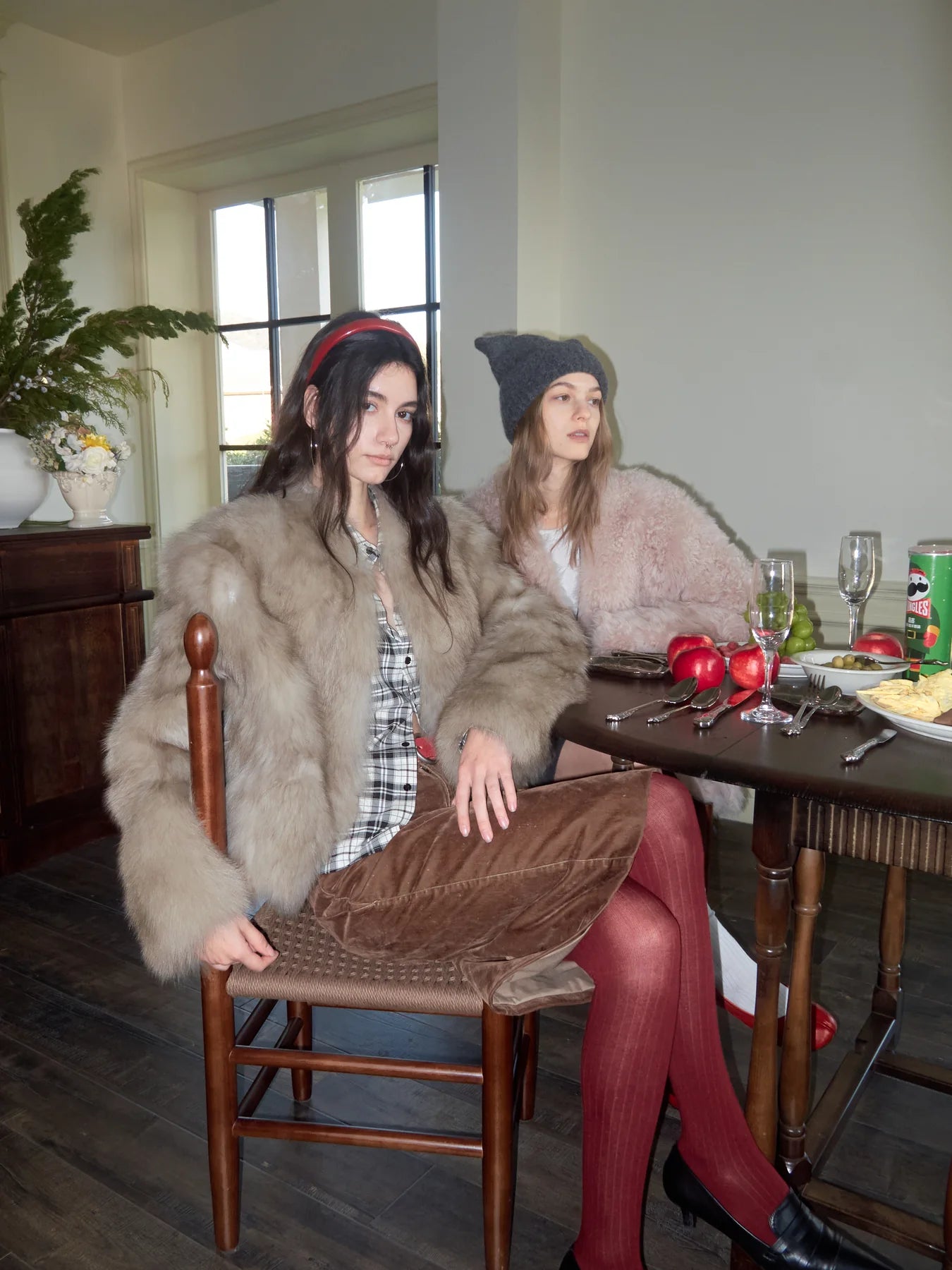
Driving and sitting are real styling tests
A coat is not judged only from a standing photo. It rides in a car, passes through doors, sits at dinner, hangs in a coat room and sometimes rests over an arm. Long hems, large sleeves, tall collars and delicate bags all behave differently once the wearer starts moving.
Before trusting an outfit, sit down in it. Reach forward. Hold the bag. Close and open the coat. Check whether the sleeve pulls, the collar crowds the jaw, the bag presses into the pile, or the hem feels awkward near a chair.
If the outfit only works standing still, it still needs more testing.
Weather decides how delicate the outfit can be
Dry cold gives the most freedom. A smooth coat, dress, polished boot and small bag can work beautifully. Wind, wet sidewalks, crowded transit and unpredictable storage narrow the choices. A practical boot, lighter bag, warmer base layer or fur-trim parka may be smarter.
This is where practicality can look more elegant than forcing glamour. A coat that matches the day feels confident. A coat that needs constant protection can make the wearer look uncomfortable.
Weather does not remove style. It changes which product family has the right to be there.
Read product photos in a stricter order
Start with full-length photos. Then check side views. Then check close-ups. A close-up can show softness and shine, but it cannot prove fit, outfit range, shoe balance or bag contact. A beautiful texture photo is not enough for a styling decision.
Look for collar height, sleeve opening, shoulder line, closure, hem length and how much of the lower outfit is visible. If every photo cuts off the shoes, be careful about assuming the coat will work with your boots or trousers.
A useful product photo answers a wearing question. If it does not, compare similar shapes before deciding.
Choose the product family after the outfit survives the day.
If the base, shoe and bag already work, the collection choice becomes clearer: smooth mink for polish, fox for texture, fur trim for weather, or shearling when the route is more practical than formal.
Browse collections after the outfit is named
Browsing is more productive after the outfit is clear. If it needs polished evening warmth, mink or artisan fur may be the cleaner route. If it needs visible texture over denim, fox may make more sense. If it needs pockets, hoods, bags and movement, fur-trim parkas deserve serious consideration.
Let the outfit lead the category choice. A coat that works with the base layer, shoe and bag already chosen will usually be easier to wear than a dramatic coat that needs the whole closet to change.
Use FireladyFur collections as a practical filter once the wearing situation is clear.
When to buy the more practical option first
If the wardrobe has no warm daily coat, a parka or practical outerwear may be the first purchase. If the wardrobe already has practical warmth but lacks polish, a mink or cleaner fur coat may be more useful. If the wardrobe has neutral basics and wants texture, fox can make the outfit feel more expressive.
The first purchase should fill the missing role, not chase the most impressive material. A coat worn thirty times in a season gives more value than a more dramatic coat worn twice.
Price matters, but repeat wear matters more.
Common mistakes usually start with one wrong supporting piece
Most awkward fur outfits do not fail because fur is hard to style. They fail because one supporting piece is pulling in another direction. The sneaker is too casual. The bag is too heavy. The knit is too thick. The dress neckline is crowded. The pants are too wide for the coat length.
Fix the wrong piece first. Do not add more styling to cover the problem. A cleaner shoe, thinner knit, smaller bag or straighter pant often changes the outfit more than another accessory.
The outfit does not need to become complicated. It needs the coat to feel like it belongs.
The first ten minutes outside tell the truth
A mirror can flatter an outfit that the street quickly exposes. Walk to the car. Step over a curb. Put the phone in a pocket. Hold the bag in the usual hand. If the coat starts sliding back, the collar keeps lifting, or the sleeve catches on the base layer, the outfit still needs work.
This is where a simple outfit often beats a clever one. A fine knit, straight pant, steady boot and light bag may look less dramatic on the hanger, but they keep the coat from feeling fussy once the day starts.
A good fur outfit does not require constant attention. It makes the wearer look dressed, warm and comfortable.
Use the neckline to set the mood
The neckline is the small area that decides whether the coat feels elegant, casual or crowded. A V-neck fur jacket can handle a turtleneck, clean crewneck or silk blouse. A high fur collar may need a lower neckline underneath. A large fox collar usually looks better when jewelry stays quiet.
If the neckline is wrong, the whole outfit feels tense. Too many layers at the throat make the face look cramped. Too little structure under an open coat can make the outfit look unfinished. The cleanest fix is usually a smoother base layer rather than more accessories.
Check the outfit from the front and side. If the collar and base layer both want attention, choose one to lead.
Let sleeve room decide how warm the base can be
Do not buy warmth at the cost of a packed sleeve. A coat that pulls across the upper arm will look smaller and feel more tiring, even if the size is technically correct. Fine wool, silk, thin thermal layers and compact knits add warmth without pushing the fur outward.
Heavy sweaters can work, but only with the right coat. A relaxed parka, roomy shearling or oversized short jacket may handle bulk. A narrow mink coat or polished fox jacket usually needs a thinner layer so the shoulder can settle and the sleeve can move.
If the coat closes but the sleeve feels loaded, change the base layer before blaming the coat.
Pair bag size with the day's errands
A small bag is not always better, and a large bag is not always wrong. Match the bag to what the day actually requires. A clutch works for dinner because it stays off the coat. A light top-handle bag can handle city errands. A large tote may be reasonable with a parka, but it can overpower a polished fur coat.
Do not pretend a delicate outfit can handle a practical day. If laptop, charger, umbrella and water bottle are coming along, choose the coat for that reality. Fur trim, down parkas and sturdier outerwear can look sharper than a full fur coat being dragged through a workday.
The bag should support the outfit's route. It cannot force the coat to absorb the whole burden of the day.
Choose boots by hem length
Boots are easy with fur, but the boot shaft needs to respect the hem. An ankle boot is the most flexible because it gives the coat room. A knee boot works beautifully with dresses, skirts and shorter coats. A tall boot under a long coat can look elegant, but only when the hem and boot do not create a cramped break.
Flat boots make casual fur easier. Heeled boots make dresses and long coats feel cleaner. Lug soles help rougher weather, but they can pull a refined coat into a heavier mood. A boot that looks good alone is not always the boot that helps the coat.
Put the coat on with the exact boot. The lower line changes more than product photos suggest.
Use trousers when jeans feel too casual
Tailored trousers are a clean way to make fur feel current without making the outfit formal. They give the coat a straighter vertical line than denim and feel more relaxed than a dress. A short jacket over pleated trousers can look sharp. A smooth coat over narrow trousers can look calm and expensive.
The fabric matters. Crisp wool trousers help polished fur. Fluid trousers need a stronger shoe so the outfit does not look soft from top to bottom. Leather pants can work, but keep the top quiet because leather and fur both carry strong texture.
Trousers are useful for the city day between dinner dressing and weekend denim.
Keep casual outfits from looking accidental
Casual fur works when the casual pieces look chosen. A plain tee, good denim, clean boot and compact bag can make the coat feel relaxed. A stretched sweatshirt, tired sneaker, overloaded tote and messy scarf can make the same coat look misplaced.
The difference is not price. It is clarity. Casual outfits need one clean line: straight denim, a simple knit, a better boot, a restrained bag or a coat with a shorter shape. Without that line, fur becomes the only deliberate part of the outfit.
When styling casually, remove the piece that looks most like an afterthought.
Give evening outfits a practical exit plan
Evening styling often focuses on the entrance, but the exit matters too. The coat may be removed at the table, checked at a restaurant, held in a car, or placed over a chair. The dress still needs to look complete after the coat comes off, and the bag should be easy to hold while the coat is handled.
Small bags, smoother collars and cleaner shoes are reliable for dinner because they reduce friction when the outfit is being handled. A dramatic coat can still work, but the dress and accessories need enough restraint to keep the evening comfortable.
A good evening outfit looks graceful before and after the coat is removed.
Use texture contrast carefully
Fur already brings texture. The surrounding pieces can either sharpen it or muddy it. Smooth denim, crisp trousers, silk, fine knits and clean leather give the coat a clearer surface to sit against. Heavy boucle, thick cable knit, distressed denim and loud hardware can work, but not all at once.
Texture contrast is strongest when one texture leads and the others support. A fluffy fox jacket over straight denim works because denim is flat. A sleek mink coat over a knit dress works because the textures stay separate. A textured coat over textured knitwear, rough boots and a large bag can feel crowded.
If the outfit feels busy, keep the coat and remove one competing surface.
Let the outfit tell you which fur category fits
The same styling problem can point to different product families. If the outfit needs polish over dresses and trousers, smoother mink or artisan fur may answer it. If the outfit needs visible personality over denim and simple knits, fox can be more natural. If the outfit needs errands, weather and bag tolerance, fur-trim parkas may be the smarter outer layer.
Do not choose material from a close-up alone. The garment needs to meet the wardrobe. A beautiful full fur coat is not right for every day, and a practical parka is not a downgrade when the route demands it.
Name the outfit first, then choose the material that makes it easier.
Give every outfit a care boundary
A styling plan is not complete until it knows where to stop. Full fur belongs away from heavy rain, rough straps, crowded storage and long days where the coat will be crushed repeatedly. Fur trim and practical outerwear can handle more daily friction, but they still need sensible storage and drying time.
This boundary keeps the coat beautiful longer. It also makes the outfit feel calmer. A polished full fur coat worn on a dry evening feels easy. The same coat on a wet errand day may feel nervous. A practical coat in that setting can look more confident because it belongs there.
Choose the outfit that suits the day without creating avoidable wear.
Build a shopping shortlist from outfits, not fantasies
Before buying, write down three actual outfits: one casual, one polished, one weather-aware. Name the base layer, pants or dress, shoes and bag for each. If a coat works with two of the three, it has real wardrobe value. If it works with only the fantasy outfit, buy it as a special piece.
This exercise also prevents overbuying. A wearer who already has boots, denim and clean knits may need texture. A wearer who already has statement coats may need a practical parka. A wearer who dresses mostly in trousers may get more use from a shorter jacket than from a dramatic full-length coat.
The right coat makes existing clothes easier to use, not less complete.
Test the outfit with a second coat choice
A useful outfit is not locked to one exact product. Straight denim, a fine knit, ankle boots and a small bag can work with a short fox jacket, a cleaner mink jacket or a practical fur-trim parka, with small changes in polish. A slip dress, compact bag and narrow boot can work with smooth mink or a quieter artisan coat.
This flexibility matters because it keeps the wearer from chasing one perfect photo. The outfit shows which length, texture and collar shape are actually useful. Once that is clear, product comparison becomes calmer and more precise.
If the outfit falls apart whenever the coat changes, the supporting outfit may be too narrow.
Let the room set the amount of drama
A fur outfit should fit the room as well as the weather. A restaurant, gallery, hotel lobby or winter party can carry more polish. A grocery run, crowded train platform or school pickup usually needs less volume and more utility. The same coat can look elegant in one room and overdressed in another.
Statement pieces still have a place. Choose the version of the outfit that belongs where the day actually goes. A cleaner shoe, quieter bag or simpler base can make a strong coat feel appropriate without making it dull.
The room matters as much as the mirror. Ignore it, and the outfit can feel uncomfortable even when every piece is beautiful.
Let photos check scale, not self-worth
Product and mirror photos are useful when they are read calmly. They are not there to judge whether the wearer is glamorous enough for fur. They are there to check scale: collar height, sleeve width, hem length, shoulder placement, shoe weight and bag contact.
Take one front photo, one side photo and one seated photo if possible. The front photo shows balance. The side photo shows bulk. The seated photo shows whether the outfit can actually be worn. A coat that passes all three is more trustworthy than a coat that looks perfect in one dramatic pose.
The plain photo often gives the better styling advice.
The final choice should feel easier, not fussier
A complete fur outfit has a particular feeling: once dressed, the wearer stops adjusting. The collar sits. The sleeve moves. The shoe feels right for the route. The bag has somewhere to go. The base layer still looks good indoors. That ease is the real sign that the outfit works.
If the outfit creates more rules every time it is tested, simplify. Change one piece at a time: thinner knit, cleaner boot, smaller bag, straighter pant, lower neckline, shorter coat. Good styling usually removes friction before it adds drama.
A fur coat is supposed to make winter dressing feel more finished. It cannot turn the day into maintenance.
Choose the next practical outfit problem
After the outfit is built, browse by the way the coat will actually be worn: polished dinners, denim days, office layers, travel, cold weather or heavy-bag errands. That keeps the next click tied to a real wardrobe need.
 MinkUse when the outfit needs smoother polish and a closer surface.
 Fox FurUse when denim, knitwear or simple shoes can carry more texture.
 Fur-Trim ParkasUse when weather, hoods, pockets and daily movement matter.
FAQ
What is the easiest outfit to wear with a fur coat?
Straight jeans, a fine knit, clean boots and a light bag are the easiest starting point. The same outfit direction can move dressier with trousers or a dress, or more practical with fur trim.
Should shoes or the coat be chosen first?
Choose the shoe direction early because it sets the tone: casual, polished, practical or evening-ready. The coat needs to follow that route.
What bag should I avoid with a fur coat?
Avoid heavy crossbody bags and rough shoulder straps on full fur. They can flatten the pile and make the outfit look busy.
How do I make a fur coat look modern?
Use clean base layers, simpler colors, sharper shoes and a bag that does not compete with the texture. Let the coat be the main surface instead of adding many competing details.
Choose the outfit you will repeat
Build one outfit that works indoors, one that survives the route outside, and then browse the product family that matches both.


