


Black fur is easy to wear badly because the color can swallow shape. The best outfits give black fur a clean line, a visible base layer and one texture contrast so the coat looks sharp instead of heavy.
Give black fur one visible edge
Black fur can look sleek in a doorway and heavy in a full outfit. The difference usually sits at the edge: neckline, cuff, hem, boot, bag or the color of the base layer. If those edges disappear, the coat becomes a dark mass.
For the full color decision, return to which fur coat color will you wear most. Stay here when the coat is black and the styling needs shape, light and movement.
This is why black is not automatically the easiest color to style. It forgives stains and works at night, but it can hide the outfit's line. Before adding jewelry, check whether the base layer, shoe and bag are giving the coat enough outline.
A quick mirror test helps: open the coat, close it, then look at the lower half. If the outfit turns into one dark column, add a cleaner shoe shape, a pale neckline or a bag with a different surface. If the coat still has a shoulder, collar and hem line, the black is working.
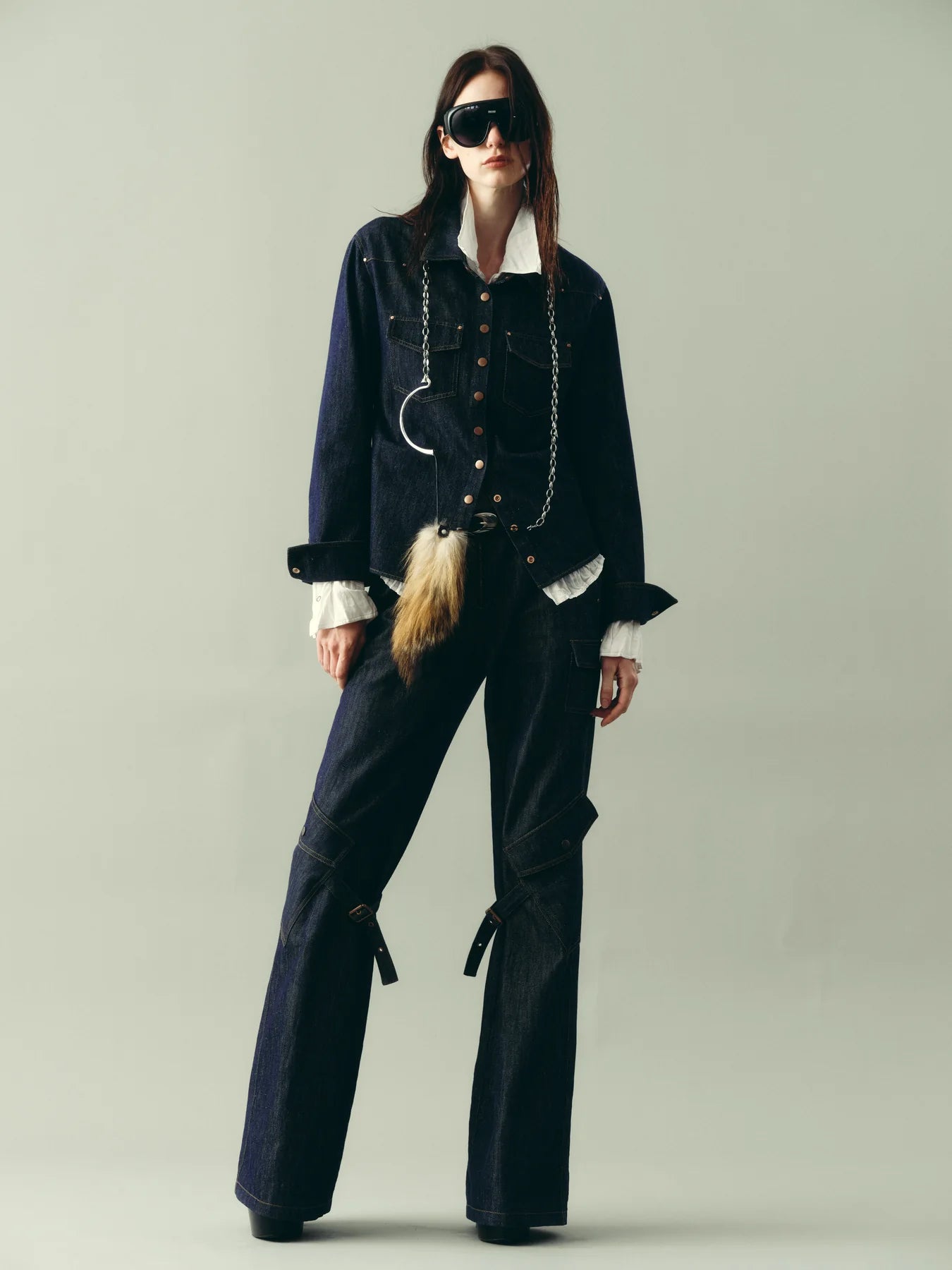
Use contrast near the face before adding accessories
A white tee, grey knit, open neckline, pale scarf or visible jewelry can keep black fur from closing around the face. This matters most with a high collar or long pile.
If the coat is smooth mink, a simple neckline may be enough. If the coat is fox or another fuller texture, the face area needs more air. Hair, collar and earrings should not all compete with the pile.
For daytime, the contrast can be casual: a clean cotton tee, a soft grey knit or a little denim at the collar. For dinner, it can be smaller: a lower neckline, a narrow earring or a silk blouse that lets the coat frame the face instead of swallowing it.
The contrast does not need to be bright. A small amount of skin at the neckline, a matte grey knit or a cream shirt edge can be enough. What matters is that the face does not disappear behind dark pile and dark hair.

Black looks cleaner when the face has space.
Try the coat open and closed. If both versions crowd the neck, change the base layer before changing the coat.
Denim makes black fur easier for daytime
Blue denim, black denim and charcoal denim all work, but they do different jobs. Blue denim relaxes the coat. Black denim keeps the outfit sharper. Charcoal sits in the middle and is useful when deep black looks too formal.
When denim becomes the main base, read how to style fur with denim. The shoe matters there because denim can make fur casual, but the wrong boot can make it look accidental.
Blue denim and boot
Use when the coat should look lived-in and city-ready.
Black trouser and narrow bag
Use when the coat needs polish without a dress.
Grey knit and clean sneaker
Use only when the coat is short or relaxed enough for that casual signal.
All black needs texture changes
An all-black fur outfit can be excellent, but not when every piece has the same surface. Use leather, ribbed knit, denim, velvet, suede or a sharper boot to keep the outfit readable.
For a deeper tonal approach, use monochrome fur coat outfits. Black is the simplest monochrome color and the easiest one to flatten.
| Piece | Best black-fur use | Watch point |
|---|---|---|
| White tee | Gives a black coat daylight and face contrast. | Keep the tee clean and substantial, not thin or hidden. |
| Black turtleneck | Strong for evening or city polish. | A high collar can crowd fuller fur. |
| Straight denim | Makes black fur easier for daily wear. | The wash should look intentional, not worn out. |
| Leather boot | Sharpens the lower half. | Avoid a boot so glossy it fights the fur surface. |
A black coat should be judged by outline, not only color.
For a black fur coat, FireladyFur would look first at the edges: neckline, shoulder, sleeve opening and hem. If the surface swallows those lines, the color is no longer doing the easy work people expect from black. Brand context is here: About Firelady Fur.
Use FireladyFur paths by surface
Choose smooth mink when the black outfit needs polish and a close surface. Choose fox when the outfit can handle more collar texture. Choose broader fur when the black base is meant to support color, patchwork or stronger texture.
If the wardrobe is mostly dresses, trousers and fine knitwear, the smoother surface will usually repeat more easily. If the wardrobe is denim, boots and relaxed winter layers, a shorter or more textured black coat may feel less formal. The product path should follow the clothes that already get worn.
For a first black fur purchase, favor the version that can be worn three ways without new styling help: one dinner outfit, one denim outfit and one cold-weather outfit. If only the dinner version works, the coat may still be beautiful, but it should be treated as an occasion piece.
 MinkUse when the black outfit needs polish without extra volume.
 Fox FurUse when the outfit can carry more collar texture and a bolder surface.
 FurUse when black is the base and the coat can carry color or patchwork.
When black starts to feel less like a styling issue and more like a purchase issue, step back into the Fur Coat Guide. For the full FireladyFur brand and material path, use Firelady Fur Guide; for broader outfit planning beyond black, use Fur Coat Styling Guide.
Where black fur changes mood
Dinner, daytime denim and severe all-black outfits ask for different amounts of contrast.
Build the outfit from contrast points
With black fur, contrast does not have to mean a bright color. A visible white tee, a silver earring, a grey knit, a leather boot, blue denim or a clear trouser break can be enough. The goal is to stop the outfit from becoming one dark surface. If the coat has a large collar, avoid hiding the entire base layer. Let the neckline show, even slightly. That small opening makes the coat look styled rather than closed around the wearer.
When black fur works for dinner
Black fur can be excellent for dinner because it works with satin, silk, black trousers and simple dresses. The restraint has to come from the outfit underneath. If the dress, bag, shoes and jewelry all try to look dramatic, the coat may become heavier than the room needs. For a small restaurant, a short black mink or compact fox often feels easier than a long, full-volume coat. For a larger entrance or hotel dinner, the longer coat can work if it has a clean shoulder and the bag is small.
When black fur looks too severe
If black fur feels harsh, change the base before changing the coat. Try denim, a grey sweater, cream scarf, brown boot or a softer bag. A coat that looks severe over black trousers may look natural over blue denim. Black is most unforgiving when the fit is poor. A tight shoulder or too-long sleeve makes the darkness look heavier. A cleaner fit makes the same color look intentional.
Read the surface before styling more black
The product surface decides whether black needs softness, a sharper edge or less closure.
Use black differently by coat surface
A smooth black mink behaves almost like a polished wool coat with more depth. It works with trousers, dresses, fine knits and restrained jewelry. A fuller black fox coat is more visible and usually needs a simpler base. A black patchwork or long-pile coat can feel dramatic even when the color is quiet. This is why two black coats should not be styled from the same formula. Judge surface first, then decide whether the outfit needs denim, a soft neckline, a cleaner shoe or a sharper bag.
What to check in product photos
For black fur, look for shoulder shape, sleeve opening and how the pile reflects light. A black product photo can hide detail, so side views and close-up texture matter. If the coat looks like one solid dark shape in every photo, plan a stronger base layer and shoe. If the texture is clear, the outfit can stay quieter.
Fit the black coat to the room and the light
These checks keep black fur from becoming a flat dark block once the coat moves from doorway to daylight, dinner light and phone photos.
Do the doorway test before adding more black
Stand in the coat with the pieces that usually get worn: black denim, grey knitwear, white tees, leather boots, satin, silver jewelry and one cleaner trouser. If the neckline, shoe and lower half disappear, the outfit needs one lighter or more textured interruption before it leaves the doorway. Black fur looks best when it has air around it. A white tee edge, grey knit, blue denim, silver jewelry or a cleaner boot can give that air without turning the outfit into a high-contrast costume.
Black fur changes between daylight and dinner light
The strongest routes are clear cold days, evening arrivals and city routes where the coat can look polished instead of bulky. In daylight, black can look larger and more severe; under restaurant light, it often looks smoother and more expensive. If the coat is meant for both, choose the base that survives both rooms. Denim or grey knit lowers the daytime pressure. Satin, silk or a narrow dress gives the evening version enough polish.
Read black product photos for outline first
Product photos should answer one thing quickly: check whether the shoulder line, sleeve opening and hem can still be seen from a few steps away. If the coat photographs as one dark mass, styling has to create the missing lines. Look for a side view, sleeve opening, collar edge and hem. When black hides detail, the safest outfit is not more black. It is a base with one visible edge.
The common black-fur failure is too much closure
The common mistake is wearing black fur with a completely hidden base, so the outfit becomes one solid dark block. A closed black coat over a hidden black base can look dramatic for a minute, then heavy for the rest of the day. Open the collar, show the base and let the shoe create a vertical break.
Use material to choose the black version
Choose smoother mink when the goal is polish; choose fox or artisan texture only when the base outfit is ready to stay quiet. If black is still only one option, return to Which Fur Coat Color Will You Wear Most before choosing the product family.
Small styling moves that keep black from closing in
Black usually needs only one correction at a time: a neckline, a denim wash, a boot surface or a quieter bag.
Grey and denim soften black without weakening it
When black fur feels too formal, grey knitwear and blue denim are usually the first fixes. They lower the pressure while keeping the outfit sharp enough for city wear. A faded jean makes black fur easier for daytime. A dark straight jean keeps it more polished. A grey ribbed knit gives the collar something visible to frame.
Bag hardware should not become the brightest thing
Black fur can make metal hardware stand out quickly. A small gold clasp or silver chain can finish the outfit, but a large shiny bag can pull attention away from the coat's shape. If the bag is loud, keep the shoe simple. If the shoe is strong, keep the bag cleaner. Black fur benefits from restraint because the color already has authority.
A short black jacket is easier for casual repeat wear
Full-length black fur can be elegant, but it also raises the formality of simple clothes. A shorter black jacket is easier with denim, boots, knits and errands because more of the base outfit remains visible. Choose the longer coat when the entrance matters. Choose the shorter jacket when the goal is repeat outfits that still feel relaxed.
Before leaving, check the outfit from three distances
Look close for texture, step back for outline, then check a phone photo from across the room. Black fur can hide detail in the mirror and look heavier in a photo. If the photo reads as one dark block, open the neckline, change the base layer or use a cleaner shoe before adding another accessory.
When black needs a softer plan
Black is useful, but it is not automatically the best answer for every route, photo or closet.
When black should not be the first choice
If the wardrobe is already mostly black and the wearer wants softness, a brown, cream or taupe coat may solve more. Black adds polish, but it may not add warmth to the mood. This is especially true for daytime wardrobes built around pale denim, oatmeal knits and brown leather.
Use black for travel only when the shape is easy
A black coat can look practical for travel, but long full fur still needs space. A compact jacket or smoother surface is easier than a dramatic long coat in seats and luggage areas. If the trip needs pockets, hood or weather protection, a fur-trim parka may be smarter than full black fur.
Black can look different in phone photos
Phone cameras often flatten black texture. If the coat will be worn for events, check whether the surface and sleeve shape still appear in photos. If not, use a lighter base, visible jewelry or a cleaner neckline to give the image something to read.
The easiest black outfit is not always all black
All black can be elegant, but a small break often looks more current. White, grey, denim or brown leather can keep the coat from feeling severe. Choose the break based on the room: grey for polish, denim for day, cream for softness, leather for edge.
The strongest black outfit still has a little air
Black fur can carry a lot of polish, but it looks better when something in the outfit gives the eye a pause. That pause can be as small as a white shirt edge, a grey ribbed knit, a trouser crease, a boot shaft, or the shine of a narrow earring near the collar.
This is why black fur should be tested in movement, not only in a still mirror photo. Walk from the door to the car, sit once, open the coat, then close it again. If every version reads as one dark shape, the outfit needs a clearer edge before it needs another accessory.
Look for edges before judging the darkness.
Try the outfit open and closed. If the collar, cuff, boot and base layer all vanish into one dark shape, add contrast before adding accessories.
FAQ
What should I wear with a black fur coat?
Use clean black, denim, grey, white, leather boots or a simple dress. The outfit needs shape so the coat does not look heavy.
Can I wear all black with black fur?
Yes, but mix surfaces: knit, denim, leather, velvet or suede. One flat black texture from top to toe can look dull.
What shoes work best with black fur?
Ankle boots, knee boots, loafers and clean heels work well. Choose the shoe by the route and the coat length.
Keep black sharp
If the outfit turns heavy, fix neckline, shoe and lower line before adding another accessory.


