


Most fur coat mistakes happen before the coat meets the week. A mink jacket, fox coat, shearling, or fur-trim parka changes once it sits across a car seat, brushes the daily bag, waits on a chair back, or has to work over the black trousers already in the closet.
The Product Photo Is Too Clean
A product photo has no rushed parking lot, no restaurant chair, no shoulder bag digging into the pile, no overheated room, no scarf that suddenly feels wrong. It is clean by design. The coat has not yet met the day that will either make it useful or keep it hanging.
Material names are only the beginning. Mink, fox, shearling, sheepskin, faux fur, long-hair fur, fur trim, and hooded coats all carry different moods, but mood alone does not answer the week. For the wider wardrobe path, keep the Firelady Fur Coat Styling Guide open; this article narrows the choice to the coat most likely to hold up in the routine you already have.


Let The Contact Points Talk
A polished dinner coat can be excellent without being an errand coat. A practical parka can be the smarter winter piece without trying to beat a full-length mink at the door. The expensive mistake is asking one garment to be every coat without checking whether any of those roles are real.
Look at contact points before prestige. Collar near the face. Sleeve against the chair. Hem across the lap. Bag on the shoulder. Hook or hanger after dinner. Those small places make the buying decision less abstract.
The coat with the strongest first impression is not always the one that keeps earning wear. The better sign is quieter: the outfit stops posing and the coat still belongs.
Use The Normal Outfit Before The Pretty One
The most revealing try-on is not the holiday dress or the sharpest evening shoe. It is the outfit that was already going to leave the house: hemmed denim, black trousers, a ribbed knit, a plain boot, a real bag with weight in it. A coat that looks wrong there may still be an occasion piece, but it is no longer pretending to be the winter answer.
After that first test, add the polished outfit. A dress, satin skirt, higher boot, or small evening bag can make a good coat feel more special. Those pieces can lift the coat; they should not have to rescue it. If the coat only works after the entire outfit has been rebuilt around it, the price is not only the checkout number. It is the new wardrobe the coat quietly asks for.
Denim is useful because it lowers the formality without making the outfit careless. Clean straight denim, black jeans, and a neat boot show whether a smoother coat has enough ease or a fuller coat has too much volume. If denim is the repeated base in your closet, the more detailed fur with denim styling article can take over after the type decision is clear.
The second normal outfit is the one used for travel, errands, or daylight arrivals. That might be a trouser and knit, a sweater dress, a thermal layer under a parka, or a sheepskin coat over boots. The coat does not have to look quiet. It has to look believable on the route where it claims to belong.
Photograph the normal outfit from the side before adding better accessories. The side view catches volume at the sleeve, collar, and hem. It also shows whether the lower half is helping the coat or simply being hidden by it.
| Coat type | Best first test | Warning sign |
|---|---|---|
| Mink | Black trousers, clean denim, a fine knit, or a simple dress. | The outfit suddenly feels ceremonial in daylight. |
| Fox | A calm base color, compact bag, shaped boot, and little texture near the collar. | The sleeve, hair, scarf, and bag all fight for attention. |
| Shearling or sheepskin | Dry-weather denim, boots, ribbed knit, and a practical bag. | Warmth turns bulky indoors or the shoe looks too light. |
| Fur-trim parka | Zipped and open with gloves, pockets, hood, bag, and sidewalk shoes. | The trim looks good, but the shell or hood collapses the outfit. |
| Faux or long-hair fur | Daylight, side view, strap contact, and sleeve-edge detail. | The texture looks fun in one photo and cheap or shapeless in motion. |
Mink Belongs In A Cleaner, More Polished Week
Mink usually enters the fitting room with the advantage of polish. The surface is smoother, the mood is cleaner, and the outfit can look expensive without much styling. That advantage also explains why some mink coats feel too formal when they leave dinner and meet daylight.
A short mink jacket often has the easiest modern life. It shows the waist and lower half, so straight denim, a trouser crease, or a narrow knit dress can keep the look current. Full-length mink can be beautiful, especially for evening routes and controlled transportation, but it asks for a cleaner shoe, a safer place to hang, and more patience with seating.
The denim test matters for mink because it exposes stiffness. A mink coat over black trousers may look obvious; mink over denim tells whether the wearer still feels like herself. If that is already the direction, the dedicated mink fur coat outfit article covers dresses, trousers, jeans, bags, and product-photo checks in more depth.
The mistake with mink is not choosing something classic. The mistake is stacking every classic cue at once: glossy coat, delicate shoe, tiny formal bag, jewelry, polished hair, and a dress that has no life without the coat. One traditional cue is enough. The rest of the outfit needs a present-day line.
For a first fur purchase, mink is strongest when the buyer can name two roles. Dinner plus clean denim. Office arrival plus knit dress. Hotel lobby plus black trouser. One perfect event look is not a problem, but it should be priced as a special piece rather than the coat that will solve winter.
Fox Works When The Coat Has Room To Lead
Fox does not whisper. Even a short fox jacket changes the upper body, the face area, and the way the lower half needs to answer. That is the pleasure of it. The coat can make a simple outfit look intentional before jewelry or a print is added.
The cleaner fox outfit usually begins by removing one thing. Remove the thick scarf. Remove the busy top. Remove the oversized tote. Keep the base color calmer than usual and let the collar or sleeve carry the softness. A shaped boot helps because it gives the lower half enough weight without turning the look heavy.
Fox is often compared with mink because both can feel luxurious, but they solve different styling problems. Mink gives control and surface polish. Fox gives visible softness and movement. The Firelady comparison on fox fur versus mink fur coats is useful when the buyer is choosing between quiet polish and visible volume.
A fox coat becomes difficult when everything around it also wants the first look: large curls, hoop earrings, thick looped scarf, wide-leg pants, furry bag, platform boot. Any one of those can work. All of them together make the coat fight for air.
The more exact fox styling path belongs in the fox fur coat outfit article. Stay in this article while the question is still whether fox is the right type at all.

Fox changes the side view before the front view.
A black fox jacket can look compact from the front and still add width at the sleeve or collar. Test the real scarf, bag, and hairstyle before deciding the size is wrong.
Shearling And Sheepskin Belong To Dry, Casual Winter
Shearling and sheepskin feel most natural on the days that already include denim, boots, ribbed knits, leather gloves, and dry cold. They do not need to look delicate. Their appeal is the sense that warmth and texture belong to the day rather than being staged for a photograph.
The fit trap is bulk. A thick coat over a thick sweater can become too much once the wearer goes indoors. A fine turtleneck, thermal tee, or slimmer knit may be enough under a warm shearling. The try-on should include the real winter layer, not only a thin top that makes every coat look easier.
Shearling is a better answer than full fur when the route is dry, casual, and active. It is not automatically better for wet sidewalks, long indoor hours, or crowded storage. For the closer material comparison, use fur versus shearling before treating either side as universally practical.
Sheepskin has a more casual mood. It can look excellent with blue denim, black jeans, Chelsea boots, lug boots, and cream knits. The boot does more work here than the bag. A flimsy shoe under sheepskin makes the coat look heavier than it is.
When casual warmth is already the answer, move from this broad decision into shearling coat outfit ideas or sheepskin coat outfit ideas. Both articles stay closer to the dry winter route.

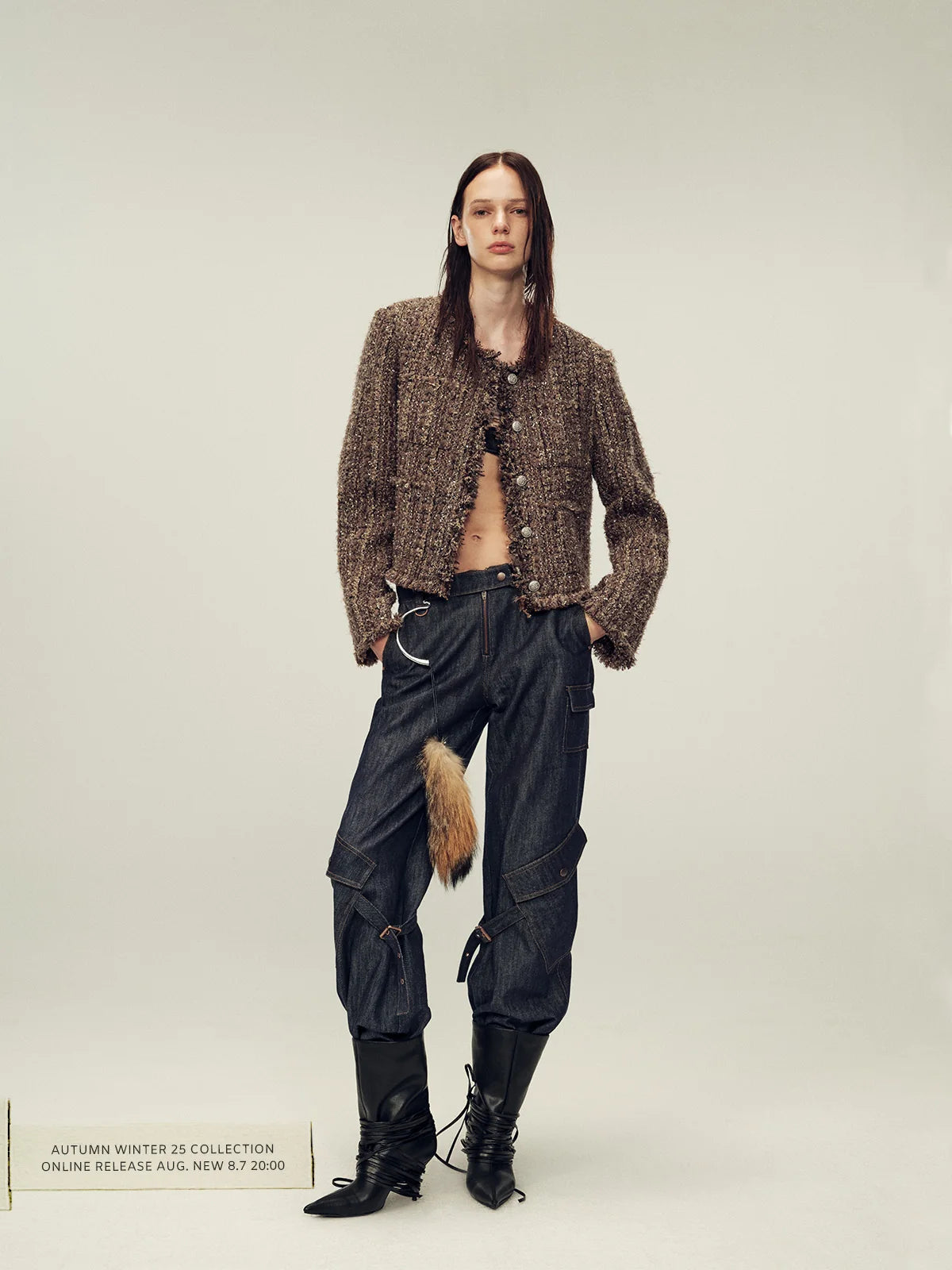
Fur Trim And Hoods Are For Days With Interruption
Some winter days do not care about the outfit plan. Wind comes up. The parking lot is slushy. The hands need pockets. The room is overheated. A child, grocery bag, suitcase, or subway turnstile changes the route before the coat has a chance to look glamorous.
This is where a fur-trim parka earns attention. The fur still frames the face, but the shell, hood, zipper, pockets, and cuffs handle the unromantic parts of the day. A full fur coat may be more beautiful at the door. The parka may be the coat that actually gets worn through February.
A parka still needs styling discipline. Dark denim, a cleaner boot, leather gloves, and a thin scarf keep the outfit deliberate. For a narrower practical path, use the fur-trim parka outfit article; for hood scale, hair, and scarf contact, use hooded fur coat outfit ideas.
The hood-down view matters more than many product pages admit. A hood can look beautiful up around the face and bulky when it rests behind the neck. Try both positions. City wear usually uses both, and the less flattering one often appears more often.
A practical coat is not a lesser coat. It is a coat with a clearer job. The mistake is letting practical features excuse a sloppy lower half. A parka with the wrong shoe can look accidental; the same parka with a stronger boot and cleaner bag can look intentionally winter-ready.
A Short Fur Jacket Exposes The Outfit Underneath
A short jacket is not simply a smaller coat. It leaves the waistband, trouser rise, skirt length, belt, dress line, and boot visible. That visibility is why short fur often feels modern in restaurants and cars. It is also why weak denim, a tired sneaker, or a dress hem that fights the jacket shows immediately.
The base outfit has to look finished before the jacket goes on. A tucked knit, sharp waistband, straight denim, clean boot, narrow dress, or shaped trouser gives the jacket a clean stopping point. Without that base, the fur can look as if it ended the outfit too early.
A short mink jacket and a short fox jacket do not behave the same way. Mink keeps the line smoother. Fox adds more visual width. The article on fur jacket outfit ideas goes deeper into dinner, denim, and daily wear once the short length is already appealing.
Restaurants are a practical reason to like short fur. The jacket is easier to remove, easier to keep on a chair, and less likely to dominate the table. Once it comes off, the outfit underneath becomes the room outfit. That is another reason the base cannot be an afterthought.
For a first fur piece, a short jacket can be forgiving or unforgiving depending on the wardrobe. It is forgiving when the lower half is already good. It is unforgiving when the coat is expected to hide a closet that still needs tailoring, hemming, or better shoes.
Faux Fur And Long-Hair Fur Need Better Edges
Faux fur and long-hair textures can look playful, dramatic, and current. They can also tip into costume faster than smoother surfaces. The difference often sits at the edges: sleeve finish, closure, hem, lining, and how the pile behaves where the bag or chair touches it.
Daylight is the first test for faux. Some surfaces look plush in a warm product image and shiny in real light. A good faux coat does not need to imitate natural fur perfectly. It needs to look like a deliberate texture with enough density and finish to stand on its own.
Long-hair fur has a different problem. It expands in profile and reacts to straps, seats, and crowded storage. A clean column underneath helps, but only if the route gives the coat enough room. For that narrower styling problem, use long-hair fur coat outfit ideas.
Faux fur deserves the same product-photo discipline as natural fur. Look at the sleeve edge, the closure, the lining, the collar shape, and the side view. The article on faux fur coat outfit ideas is useful once the buyer knows the surface itself holds up.
Both types benefit from restraint around them. A quiet trouser, a simple boot, and a compact bag are not boring here. They are the frame that lets the texture read as a choice.
Length Changes The Day After The Entrance
Length is easy to admire while standing still. It is harder in the car, at a table, in a coat check line, on a narrow stair, or beside a crowded closet. A long coat gives more entrance and more coverage. It also creates more fabric to manage after that entrance is over.
A cropped jacket puts pressure on the waistband and shoe. A hip-length jacket leaves the lower half active. A mid-length coat can feel practical if the hem lands well with the most repeated boot. A full-length coat asks for a route that respects it: controlled weather, enough hanging space, and seating that does not turn the hem into a problem.
The broader proportion question belongs in the Firelady articles on long fur coat proportion, short fur jacket proportion, and fur coat hemline and boot balance. Use those once the material direction is no longer the main uncertainty.
Model height can make length look easier than it will feel at home. Heel height, shoulder width, car size, stair use, and the boot worn most often all change the result. A coat that looks elegant in a tall studio frame can feel like too much fabric in a compact life.
The best length is not always the most flattering standing still. It is the length that stays flattering after sitting, walking, opening, closing, and hanging.
Collar, Sleeve, Scarf, And Hair Decide More Than Color
Color gets attention first because it is easy to judge on a screen. Collar and sleeve shape decide more real outfits. A wide collar can make a plain base look expensive or crowd the neck. A deep sleeve can look luxurious in a photo and become inconvenient at dinner. A hood can solve wind and still fight the scarf.
Try the coat with the hair, earrings, scarf, and neckline that belong to cold days. Loose hair adds another texture near fur trim. A high scarf adds another frame. A turtleneck can smooth the area or make it too closed. Those details are not vanity; they decide whether the coat feels comfortable around the face.
Sleeve depth changes the bag. A full sleeve usually looks better with a compact top-handle, clutch, or smaller crossbody. A narrow sleeve can tolerate a more structured shoulder bag, but only if the shoulder surface does not flatten badly under pressure.
When the color decision becomes the main issue, move to which fur coat color you will wear most. Stay here while collar scale, sleeve depth, and type are still doing more work than shade.
One of the quickest fixes is to remove the second soft accessory. Full collar plus thick scarf plus loose hair plus fuzzy bag can make even a good coat look chaotic. Let one soft thing lead.
The Bag Test Is Not Optional
A coat tried with empty hands is only half-tested. The bag changes posture, shoulder line, sleeve width, pile direction, and how much of the coat remains visible. It can flatten long hair, push a hood forward, mark a pale surface, or make a fox sleeve look wider.
Dinner coats can use a clutch or small top-handle. Work coats meet a structured shoulder bag. Errand coats need pockets, a crossbody, or a bag that does not crush trim. Travel coats meet straps, seats, and overhead handling. The coat type has to match the bag route, not the fantasy of walking with nothing in your hands.
For exact strap placement, bag shape, and material contact, use what bag works with a fur coat. Here, the bag is part of the type decision: smoother coats tolerate contact differently than long-hair, fox, or fur-trim hoods.
A never-used bag is not a solution. If the coat only works with a tiny bag that never leaves the closet, the coat has a condition attached. That condition may be acceptable for an evening piece. It is not acceptable for the coat expected to carry the week.
Take one side photo with the bag on the shoulder and one with it in the hand. The difference can be large enough to change the purchase.
Product Photos Need To Prove The Hard Angles
Every coat type has a flattering photo. Mink benefits from clean light on the surface. Fox benefits from a close crop around the face. Shearling benefits when the boot and denim are already styled. Parkas benefit when the trim is full and the shell is not being asked to move. Long-hair fur benefits before a strap or chair touches it.
Useful product photos show the places where the type can fail: side view, back view, open front, closed front, collar close-up, sleeve edge, hem, lining, and full-body proportion with shoes. A product video is better when it shows walking, opening, closing, and sleeve movement.
A missing angle does not make the coat bad. It means the buyer is accepting more guesswork. That uncertainty belongs in the value decision. A dramatic coat with missing side and closure views may still be tempting, but the hidden information is part of the price.
For fox, inspect collar scale and sleeve depth. For mink, inspect movement and side ease. For shearling, inspect lower-half context. For parkas, inspect zipped and hood-down views. For faux, inspect edge finish. For long-hair fur, inspect strap contact and profile volume.
The photo that feels least glamorous may be the one that saves the purchase. A seated image, a side image, or a plain open-front image tells more about daily wear than another cropped beauty shot.
- Side view with the real layer underneath.
- Open and closed front, not only the prettier version.
- Sleeve edge, cuff, and arm bend.
- Collar or hood shown with hair and scarf space in mind.
- Full-body image with the kind of shoe the coat will actually meet.
- Bag contact tested on the shoulder or in hand.
Driving Turns Length Into A Practical Question
Standing still is generous. The car is not. A full-length coat can bunch across the lap. Thick shearling can feel heavy after ten minutes. Fox sleeves can press into the seat. A hood can push the collar forward. A pale or long-hair surface can meet the exact strap or seat edge that marks it.
For daily driving, sit down before deciding the coat is easy. Reach toward the steering wheel. Turn the shoulders. Fasten the belt. Get out and look again. A coat that needs constant adjustment may still be beautiful, but it is no longer the simple daily coat.
Short jackets and fur-trim parkas often handle car routes better because the hem and sleeve have less to manage. A shorter mink jacket can look polished for arrival without wrestling with the seat. A parka can use zipper, hood, and pockets to manage the practical parts of the trip.
Long coats still have a place in car-heavy lives when the route is controlled and the wearer has enough patience to handle them. That is a lifestyle fact, not a flaw in the coat. Naming that fact before buying prevents disappointment later.
A good car test includes the outfit underneath. The coat may come off at the destination, and the room outfit still has to stand on its own.
Dinner, Hosting, And Coat Check Are Three Different Jobs
A dinner guest can carry more entrance than a host. The guest arrives, removes the coat, and sits. A host greets, moves between rooms, leans over chairs, handles drinks, and may wear the coat longer than expected. The same fox coat or long mink can feel perfect in one role and too precious in the other.
Coat check changes the decision again. A long or delicate coat needs a place that will not crush the collar, stretch the shoulder, or expose the surface to damp contact. A short jacket is easier to keep near the seat, but it asks the outfit underneath to look complete once the jacket comes off.
Hotels and formal dinners favor cleaner mink, fuller fox, or a longer coat when the weather and handling are controlled. Casual restaurants favor short fur, shearling, or a parka with polish because the coat may end up on a chair, not in a perfect wardrobe.
The room temperature matters. A coat that is kept on indoors has to balance warmth and comfort. A coat that comes off immediately has to leave a finished outfit behind. Warmth alone does not solve either situation.
Before buying a coat mainly for dinner, name the whole route: door, table, chair, coat check, car, and the outfit after the coat leaves the shoulders.
Weather Narrows The Field Before Trend Does
Dry cold lets more coat types work. Wet sidewalks, sleet, crowded storage, and unpredictable travel narrow the field quickly. Wind brings closure and hood shape forward. Mild winter makes a heavy shearling or down parka feel unnecessary. A car-heavy winter values seating more than sidewalk warmth.
Care and weather are not separate from styling. A coat that cannot tolerate the route will be styled less often because the wearer starts protecting it instead of wearing it. The Firelady Fur Coat Care Guide belongs in the decision once moisture, storage, cleaning, or travel handling becomes a real question.
Dark colors usually give more margin with bags, seats, and urban contact. Pale coats can be beautiful, but the bag, makeup, scarf, and storage plan need more attention. That does not make pale fur wrong. It makes the wearing conditions narrower.
A buyer in a dry city with controlled transportation can own a more delicate coat with less frustration. A buyer dealing with slush, stairs, errands, and shoulder bags needs more practical margin. Neither buyer is more stylish. They are buying for different winters.
A coat that looks best only on perfect weather days should be named as such. Perfect-weather coats can be worth owning; they simply should not be confused with the first layer reached for every morning.
Make The First Coat Less Fragile Than The Second
The first serious fur coat has to absorb more uncertainty. The buyer is still learning which length gets worn, which surface feels natural, which bag causes trouble, and how much care fits her life. For that reason, the first coat usually benefits from a little more margin: darker color, shorter length, smoother surface, practical closure, or a route that already exists.
The second coat can be more specific. A dramatic fox jacket, pale long-hair coat, full-length mink, or special evening piece makes more sense after the first coat has taught the wearer what she reaches for without effort.
This is also where value becomes practical. Firelady's fur coat value and resale guide is useful when price, longevity, condition, and repeat wear are part of the decision. The most expensive-looking coat is not automatically the best value if the week cannot support it.
For a first purchase, ask for two repeat outfits, one practical route, and one safe storage plan. For a second purchase, a narrower role is acceptable because the closet already has a foundation.
A statement coat bought as a statement is honest. A statement coat bought while pretending to be the daily coat is where regret begins.
A Statement Coat Still Needs A Real Role
There is nothing wrong with drama. A fox collar, long-hair texture, bold color, full-length mink, or oversized hood can be exactly the point. The coat only becomes a problem when drama is treated as a substitute for a use case.
A statement coat can be the dinner coat, the holiday coat, the hotel-lobby coat, the winter-photo coat, or the coat worn with one black column and a small bag. That role may be narrow and still valuable. Naming it clearly keeps the purchase from being judged by the wrong standard.
The styling around a statement coat usually improves by editing, not adding. Better boot, calmer bag, smoother hair, fewer competing textures. The coat already has the line. The outfit around it needs to hold the frame.
A quiet coat also deserves scrutiny. Sometimes a coat looks sensible and never gets worn because it does not make the wearer feel anything. Longevity comes from the fit between coat and habit, not from choosing the safest-looking option by default.
The right question is not whether the coat is too much. It is whether there is a real place in the wardrobe where that amount of coat feels natural.
Care Tolerance Belongs In The Style Decision
Care is often discussed after purchase, but it changes styling before purchase. A coat that worries the wearer around damp sidewalks, makeup, crowded storage, or shoulder straps will be styled differently. It may be saved for fewer days, paired with safer bags, or avoided when the route becomes unpredictable.
Natural fur, shearling, faux fur, parkas with detachable trim, and long-hair textures all have different maintenance habits. Faux is not automatically carefree. Shearling is not automatically wet-weather proof. Long pile is not automatically fragile, but it does react more visibly to contact. Parka trim may detach, but the attachment points and hood shape still matter.
If cleaning, storage, moisture, or damage risk is already part of the purchase, compare the relevant care path before checkout. Firelady's real fur versus faux fur care article is useful for maintenance assumptions that can mislead a styling decision.
Storage is a style issue because it affects which coats survive looking good. A long coat needs more hanging room. A full collar needs space around the neck area. A pale coat needs cleaner contact. A travel coat needs a route that does not crush it before it is worn.
The buyer who dislikes fuss should not ignore that preference. She may wear a darker shearling, short mink jacket, or fur-trim parka with more pleasure than a delicate coat she admires but handles nervously.
Let The Easier Irritation Decide Between Two Good Coats
Good final choices can feel close. A mink jacket and a fox jacket. A shearling coat and a fur-trim parka. A long coat and a short jacket. At that stage, prestige is less useful than irritation. Which coat asks for the special bag? Which one needs dry weather? Which one makes the car awkward? Which one leaves the room outfit unfinished?
Small irritations matter because they repeat. A collar that crowds the scarf once will probably crowd it again. A sleeve that fights the bag in the fitting room will not become easier during an errand. A hem that lands oddly with the most-used boot will keep asking for a different shoe.
The better coat is not always the one with fewer features. It is the one with fewer conditions attached to the way the wearer already lives. A coat with one manageable condition may be better than a theoretically versatile coat that bothers the wearer in five small ways.
Use a simple final comparison: normal outfit, polished outfit, car or chair, bag contact, storage, weather. Mark the first place where each coat becomes annoying. The smaller annoyance usually predicts more wear.
This is where a buyer can trust reluctance. Not the quick fear of spending money, but the repeated hesitation around the same practical detail.
Use The Return Window Like A Real Week
Once the coat arrives, avoid the five-minute mirror verdict. Try it with the clothes that already define winter: one denim outfit, one polished outfit, one cold-weather layer, the real boot, the real bag, and the scarf or neckline normally used on cold mornings.
Move through the actions. Sit down. Reach forward. Close the coat. Open it again. Walk to the door. Put on the bag. Hang the coat where it would rest. Take front and side photos before deciding. Ease through that sequence means more than one flattering standing angle.
Check the coat at two times of day if possible. Daylight can change surface, color, and shine. Evening light can make drama feel easier. The coat needs to look acceptable in the light where it will actually be worn most.
Do not talk yourself into a coat by promising to become a different dresser. A good coat can encourage better outfits, but it should not require a new shoe wardrobe, a new bag habit, and a new weather routine before it works.
A failed return-window try-on rarely becomes easier later. A coat that works with the real outfits already in the closet has a better chance of becoming part of winter instead of a piece admired and avoided.
Weight Changes How Often The Coat Leaves The Closet
Weight is not a glamorous shopping filter, yet it changes wear more than many buyers expect. A coat can look rich on the hanger and feel like work after ten minutes of errands, a long hallway, or a warm restaurant. The body notices weight before the room notices luxury.
Mink often feels easier than its polished reputation suggests, especially in shorter cuts. Fox can feel lighter than it looks, but the sleeve and collar may take up more space. Shearling and sheepskin can feel reassuring outdoors and too warm indoors. Parkas distribute weight through shell, zipper, hood, and insulation, which may feel more manageable on a practical route.
Try weight in motion. Stand still first, then walk with the coat open and closed. Hold a bag, bend the arms, and keep the coat on long enough for the first thrill to pass. The question is not whether the coat feels heavy for thirty seconds; it is whether it still feels welcome after the route begins.
A heavier coat can still be the right choice for a buyer who walks in real cold, spends little time indoors, and likes the feeling of protection. A car-to-door buyer may wear a lighter short jacket more often, even if the heavier coat looks more impressive at first.
Weight also affects styling. A substantial coat wants a boot and bag with enough structure. A delicate shoe under a heavy coat can make the whole outfit feel unbalanced, while a sturdy boot can make the same coat look intentional.
Layer Room Is Not The Same As Sizing Up
Winter layers change the fit more honestly than a size chart. A coat tried over a thin fitting-room top can look easy, then pull at the arm once a blazer, hoodie, or ribbed sweater enters the outfit. The layer used most often in real winter belongs in the try-on from the beginning.
Mink with a narrow arm can look clean until the wearer reaches forward. Fox and shearling may already carry volume in the sleeve, so a thick layer underneath can crowd the shoulder quickly. A parka can feel roomy through the body and still fight at the hood, cuff, or collar.
Sizing up is not always the fix. A larger size can free the arm and ruin the shoulder, hem, or body line. Name the exact problem before moving sizes: sleeve tight over a sweater, shoulder pulling, collar crowding the scarf, closure straining while seated, or hem losing proportion.
Layer room also affects the outfit after the coat opens. A bulky hoodie may solve warmth and make the room outfit look careless. A fine turtleneck, thermal base, or smoother knit can keep warmth without adding visual noise around the collar.
The better coat has enough room for the real layer without becoming shapeless over a thinner one. That balance matters more than the size number printed on the label.
Closet Space And Hanger Behavior Are Part Of The Purchase
The coat has to survive the closet before it survives the season. A full collar squeezed between other coats loses shape. Long hair flattened under a crowded rack looks different after a week. A pale coat resting against dark garments or rough hardware may create avoidable stress before the coat is even worn.
Long coats ask for vertical room. Short jackets ask for a hanger that supports the shoulder. Fox and hooded coats ask for space around the collar. Parkas with detachable trim ask for a place to keep the trim protected when it is removed. Shearling asks for enough air so the coat does not become crushed and heavy-looking.
This is not a storage lecture; it is a purchase filter. A buyer with a narrow closet, heavy daily rotation, and little patience for special handling may enjoy a short mink jacket, dark shearling, or fur-trim parka more than a wide statement coat that needs a careful home.
The chair-back test is useful for the same reason. Many coats do not go from body to perfect hanger. They rest on a restaurant chair, hotel hook, office rack, or car seat. The style that tolerates those pauses better may be the one that gets more wear.
Before buying an expensive or delicate piece, decide where it will rest on the first night. If that answer is vague, the coat already has a handling problem.
Pre-Owned Or Vintage Fur Needs A Stricter Type Check
A vintage or pre-owned fur coat can be beautiful, but type decisions become less forgiving when age, lining condition, previous storage, alterations, and older proportions are involved. A coat may have excellent fur and still feel wrong because the shoulder, sleeve, or length belongs to another decade.
Mink is common in vintage shopping, which can be useful for price and availability. The risk is stiffness or a formal cut that looks elegant on the hanger and dated over normal clothes. Try it with denim, a plain boot, and the bag used most often. That test separates a classic piece from a costume.
Fox, long-hair fur, and bold vintage collars need even more side-view discipline. Older cuts may have generous sleeves, larger collars, or stronger shoulder shapes. Those details can look fantastic with a simple base and overwhelming with modern loose layers.
Condition changes the styling burden. A weak lining, tired closure, flattened collar, dry-feeling surface, or uneven pile means the outfit has less room for error. The coat may still be worth buying, but it should not be judged like a new garment with clear photos and return terms.
Pre-owned buying also belongs near value and care. Use the Firelady Fur Coat Value Guide and care resources before treating an attractive price as the whole decision.
Color Changes The Amount Of Styling Work
Color does not decide everything, but it changes the amount of work the outfit must do. Black hides some contact and pairs easily, yet a long black surface with a full collar and dark base can look heavy. Cream, white, and pale beige can look beautiful, but the bag, makeup, scarf, weather, and storage plan become more visible.
Brown and taupe often make shearling and sheepskin feel natural with denim, leather, and cream knits. Gray can soften fox or long-hair fur without becoming as formal as black. Strong color in faux or dyed fur can work well when the rest of the outfit gives it a steady frame.
A buyer who wears mostly black may not need another black coat if the shape is also heavy. A lighter or textured coat may add dimension. A buyer who wears many prints and accessories may wear a quieter black, brown, or dark mink more often.
Use the color to reduce styling friction, not to chase the most striking image. The color that photographs best may not be the one that works with the boot, bag, gloves, and winter light already present in the closet.
Once type and route are clear, the color article on which fur coat color you will wear most can handle shade, wardrobe repetition, and photo confidence in more detail.
Buying Online Means Building Your Own Fitting Room
Online buying removes the store mirror, so the buyer has to create a better one at home. That does not mean trying the coat in every outfit in the closet. It means choosing the few outfits that reveal the most: one normal outfit, one polished outfit, one cold-weather layer, one real bag, one seated test, one side photo.
Read measurements as clues, not as promises. Bust, shoulder, sleeve, and length numbers matter, but fur volume, pile depth, lining, closure placement, and collar shape can change how those numbers feel. A coat can match the measurement and still feel too full, too flat, or too narrow in motion.
Product reviews, videos, and model notes are useful when they answer specific questions. Does the sleeve run deep? Does the coat close smoothly? Is the collar soft or stiff? Does the color read warm or cool in daylight? Vague praise is less useful than one practical note about fit or handling.
Keep the packaging clean until the decision is made. Try the coat carefully, photograph it, and compare the real outfits before removing tags or letting the coat absorb kitchen, perfume, smoke, or pet exposure. Return options are part of the purchase, and they deserve the same respect as the coat.
A good online keep decision sounds concrete: the coat works with these trousers, this denim, this bag, this boot, and this route. A vague decision usually means the buyer is still hoping the right outfit will appear later.
Know When Not To Buy Yet
Sometimes the best styling decision is waiting. A coat that needs a new boot, new bag, new storage plan, different weather, and more formal schedule may be beautiful, but it is not ready for the buyer's real winter. Waiting protects the budget and keeps the future purchase cleaner.
Do not buy only because the material name feels prestigious. Mink, fox, shearling, and long-hair fur all have good and bad versions. Do not buy only because the discount is large. A wrong coat at a better price is still a coat that takes space and asks for styling work.
Do not buy while ignoring the same repeated irritation. The collar keeps crowding the scarf. The sleeve keeps fighting the bag. The hem keeps missing the boot. The color keeps making the existing wardrobe look dull. One small problem can be solved; the same problem repeating across outfits is information.
Waiting is especially reasonable when the buyer has not identified a primary route. Dinner coat, daily coat, travel coat, dry-weather coat, errand coat, statement coat: each one points to a different type. Without that route, product photos gain too much power.
A better purchase often appears after the buyer can say no to the wrong attractive coat. That clarity makes the next coat easier to recognize.
A One-Week Route Makes The Final Choice Cleaner
Before the final decision, map a simple winter week. Monday work arrival. Tuesday errands. Wednesday dinner. Thursday school pickup or grocery run. Friday restaurant. Saturday dry walk. Sunday travel or hosting. Not every coat has to serve every day, but the buyer should see where the coat actually appears.
Mink may claim Monday and Friday. Fox may claim Wednesday and Saturday night. Shearling may claim the dry walk and casual dinner. A fur-trim parka may claim errands, pickup, and travel. A short jacket may claim restaurants and car-to-door routes. That map prevents the loudest coat from pretending to be the most useful one.
Count repeat outfits on the same map. Black trouser, straight denim, knit dress, boots, compact bag, gloves, scarf. The coat that improves repeated outfits has more long-term value than the coat that works only with the outfit invented for checkout.
The map also keeps special pieces honest. A coat that appears twice a month may still be worth buying if it brings enough pleasure and the budget supports it. It simply belongs in a different category from the coat expected to solve every cold morning.
After that week is visible, the type decision usually stops feeling abstract. The coat either has a place to go, or it does not.
Match The Coat To The Room After The Door
A winter coat often gets chosen for the entrance, then judged by what happens five minutes later. The wearer steps inside, removes the coat, carries it, folds it over a chair, or keeps it on in a cold lobby. Each version asks for a different type of garment.
A long mink or fox coat can make a beautiful arrival when the coat check is safe and the room outfit is ready underneath. A short jacket may be better when the coat stays near the table. A shearling coat may feel natural in a casual room and too rugged in a formal one. A fur-trim parka may look polished outside and too practical beside eveningwear unless the boot, bag, and glove sharpen the route.
The outfit underneath matters most in rooms where the coat comes off. A black trouser, fine knit, ribbed dress, or clean denim base keeps the style intact after the fur leaves the shoulders. A base that only looks finished while hidden under a coat creates a weak purchase signal.
Rooms with narrow seating favor shorter or smoother coats. Rooms with controlled climate and proper hanging space can support longer or fuller pieces. A coat that demands too much attention after arrival may be an event piece, not the garment for every winter dinner.
Before checkout, imagine the coat in the least glamorous room on its route: the office hook, the restaurant chair, the hotel hallway, the rideshare seat. If the coat still feels appropriate there, the entrance is more likely to hold up.
Price Makes Sense Only After The Conditions Are Counted
Price becomes clearer after the conditions are visible. A lower-priced coat that needs a new boot, safer storage, different bag, and dry weather may cost more in practice than a higher-priced coat that works with the wardrobe already owned. Value is not only fabric, fur, or label; it is the amount of real use the coat can receive without negotiation.
Count the conditions in plain language. Needs small bag. Needs dry sidewalks. Needs coat check. Needs fine knit only. Needs different boot. Needs no scarf. Needs careful storage. Needs the car route, not the walking route. One or two conditions can be normal for a special coat. Too many conditions turn the garment into a project.
A full-length statement coat can still be worth the price if the wearer has the occasions, transportation, storage, and desire for it. A practical parka can also be worth a premium when it solves the route most often traveled. The less useful purchase is the one bought for status while the real winter keeps asking for something else.
Cost per wear should include pleasure, not only frequency. A coat worn ten times a season can be successful when those ten nights matter. A coat worn sixty times should make ordinary days better without constant adjustment. Those are different value stories, and both can be valid.
The strongest purchase sentence sounds specific: this coat works with my black trousers, dark denim, compact bag, car route, and winter dinners. A purchase sentence built around someday usually deserves more time.
The Final Photo Should Look Almost Too Ordinary
Before keeping the coat, take one photo that is not trying to sell it. No special pose, no perfect lighting, no new outfit arranged only for the picture. Use the hallway mirror, the real boot, the bag with normal weight, and the coat open or closed the way it will usually be worn.
That ordinary photo may feel less exciting than the product page. Good. It shows whether the coat belongs to the buyer instead of only to the image. Mink should still look polished. Fox should still look deliberate. Shearling should still look useful. A parka should still look chosen. Faux and long-hair textures should still look intentional rather than theatrical.
Take the same photo from the side. Many buying mistakes hide in profile: collar height, sleeve depth, hem length, bag pressure, and whether the coat is widening the body more than expected. The side photo often explains discomfort before the wearer has words for it.
Then take one photo seated. The seated photo is rarely glamorous, but it tells the truth about length, bulk, closure, lap behavior, and sleeve movement. A coat that still looks acceptable seated has a better chance of surviving cars, restaurants, offices, and travel.
Keep the coat when the ordinary photos are not embarrassing and the special photos still feel pleasurable. That combination is stronger than one dramatic image and a long list of excuses.
Name The Use Before Naming The Material
A clean final decision usually starts with a sentence that does not mention fur type at all: I need a polished dinner coat. I need a dry-weekend coat. I need a coat for car-to-door winter. I need warmth with pockets. I need one dramatic piece for controlled evenings. The material becomes easier after that sentence is honest.
For polished dinners, mink and some longer fox pieces rise quickly. For dry weekends, shearling and sheepskin deserve more attention. For car-to-door arrivals, short mink, short fox, and fur jackets often feel easier than full-length coats. For difficult weather and errands, fur-trim parkas and hooded coats become practical rather than secondary.
The use sentence also protects the buyer from overbuying. A coat meant for two special nights a month can be more dramatic and more delicate. A coat meant for four ordinary days a week needs fewer conditions, better movement, stronger bag tolerance, and a color that does not fight the closet.
Once the use is named, the next step is not another vague search. It is a narrower path: mink outfits, fox volume, shearling for dry winter, polished parkas, short jackets, faux texture, long-hair proportion, sheepskin casual warmth, or hooded routes. Each one solves a different wearing problem.
That is the point of choosing by type. The buyer is not trying to prove one material is best for everyone. She is trying to find the coat that makes her own winter easier to dress.
 MinkUse for polished dinners, clean denim, trousers, and smoother winter dressing.
 Fox furUse when visible softness and collar or sleeve presence are the reason for buying.
 Fur-trim parkasUse when hood, pockets, wind, and practical city movement matter.
Where FireladyFur Would Send A Shopper First
For a wardrobe built around polished dinners, hotels, black trousers, and clean denim, FireladyFur would usually begin with mink rather than a more volatile texture. The surface is smoother, the outfits are easier to keep refined, and the product photos are usually simpler to evaluate.
For a buyer who wants the coat itself to create the moment, fox is the more honest starting point. It should be chosen with enough room around the collar, sleeve, hair, scarf, and bag. Fox is not a compromise version of mink; it is a different styling appetite.
For dry casual winter, shearling and sheepskin deserve serious attention before a full fur coat is treated as the default. For messy city days, a fur-trim parka may be the coat that keeps getting worn while more delicate pieces stay protected.
FireladyFur edits this choice by use, proportion, and evidence, not by material status alone. For brand context, read About Firelady Fur and the FireladyFur editorial standards.
The right path is the one with the fewest false promises: the coat looks good, the route exists, the care fits, and the clothes underneath are already close enough.
Choose The Type Before You Chase More Outfits
Browse the broader fur collection only after the type has a role. Move to mink, fox, shearling, parkas, jackets, faux, long-hair, sheepskin, or hooded styling when one route is clearly winning.
FAQ
How do I know which fur coat type I will actually wear most?
Test the coat against your repeated winter outfits before judging the best product photo. Use one ordinary outfit, one polished outfit, the real bag, the real boot, and a seated or car test. The coat that works across more of those moments is usually the stronger purchase.
Is mink or fox easier for a first fur coat?
Mink is usually easier when the buyer wants smoother polish, trousers, dresses, and clean denim. Fox is better when the coat itself should create visible softness and presence. For a first purchase, mink often has fewer styling conditions, while fox gives more drama.
When is a fur-trim parka better than a full fur coat?
A fur-trim parka is better when the route includes wind, pockets, errands, parking lots, wet sidewalks, or frequent car use. It keeps fur near the face while the shell, zipper, hood, and pockets handle the practical parts of the day.
Should I choose shearling or sheepskin instead of full fur?
Choose shearling or sheepskin when dry casual warmth, denim, boots, and everyday movement matter more than a formal entrance. Full fur is stronger for polished routes, controlled weather, and occasions where the coat itself is part of the look.
What product photos matter most before buying a fur coat online?
Look for front, side, back, open, closed, collar, sleeve, hem, lining, and full-body views with shoes. For fox, check scale. For mink, check movement. For parkas and hooded coats, check zipped, open, hood-up, and hood-down views.


