


A fur coat, a fur jacket, a leather jacket, and a fur-trim parka do not sit on one simple ladder. Compare them on two axes first: how much winter exposure the garment must handle, and what style role it needs to play once the coat is on the body.
Start with season first, then style
The useful comparison is not just coat versus jacket. The real purchase decision mixes several questions at once: what makes a coat different from a jacket, whether a shorter leather or fur jacket can work in fall and mild winter, whether a longer fur coat is warmer, whether a parka is more practical, and which piece looks better with daily or evening clothes. A strong guide has to separate those questions before it recommends a product path.
Use two filters before looking at price. The first is season pressure: how cold, windy, wet, and exposed the wearer will be. The second is style role: whether the outerwear needs to finish a polished winter outfit, make a short city outfit sharper, or behave like a practical weather layer. A leather jacket can be excellent for fall-to-winter styling and layered city outfits. A short fur jacket can add texture and warmth while staying easy to move in. A full fur coat is stronger when warmth, full-body coverage, and a finished winter line matter together.
That is why this page sits inside the broader Fur Coat Guide and the Fur Coat Comparison Guide. It starts with the coat-versus-jacket decision, then points to the Fur Coat Buying Guide, Fur Coat Care Guide, and Fur Coat Styling Guide once the question becomes budget, care, outfit rotation, or product proof.
| First filter | What it asks | Likely direction |
|---|---|---|
| Winter exposure | Will cold reach the thighs, dress hem, lower back, neck, or long layers during real outdoor time? | Longer fur coat when exposure is repeated; fur-trim parka when wind, hood, and pockets matter more than a full fur body. |
| Fall and mild winter styling | Is the goal a flexible outer layer over knitwear, denim, trousers, or city outfits where movement matters? | Short fur jacket, leather jacket, or lighter outerwear path before a full-length coat. |
| Fashion presence | Should the garment frame the outfit, finish the outfit, or become the main winter statement? | Fur jacket for framing; fur coat for a complete line; fox or mink direction depending on surface volume. |
| Practical routine | Will the piece sit in cars, enter warm rooms, carry bags, travel, or repeat several times a week? | Shorter jacket or parka if friction is the main problem; coat only if coverage solves more than it complicates. |
This means the article is not trying to declare one category superior. A leather jacket may be the more natural fall layer. A short fur jacket may be the more wearable city piece. A full fur coat may be the better winter answer when the wearer wants both warmth and style presence. A fur-trim parka may be the honest answer when the weather is more important than the fur surface. The right choice is the garment whose strength matches the season and the outfit role at the same time.


Coverage sets the boundary; style decides whether it feels right
A fur coat usually extends farther down the body and behaves like a fuller winter layer. A fur jacket is shorter and leaves more of the outfit visible. A leather jacket usually belongs closer to transitional styling unless it is heavily lined or layered. A fur-trim parka brings hood, pockets, shell behavior, and weather utility into the decision. Those differences are physical, but the final choice is visual as well as practical.
For warmth, longer coverage helps when the lower body, dress hem, hips, or long knitwear are exposed. For style, shorter coverage helps when trousers, denim, boots, skirts, or waist shape should remain visible. For fashion impact, a full fur coat can create a more complete winter presence because the surface reads from shoulder to hem. For easy fall-to-winter dressing, a leather or short fur jacket may feel more natural because it works with layered outfits instead of replacing them.
When the outfit needs full winter coverage, formal polish, a longer line, and warmth below the hip.
When repeat wear, sitting, driving, trousers, denim, and shorter city outfits matter more than maximum coverage.
When the need is fall styling, weather utility, hood function, pockets, or a practical shell rather than a full fur body.
If the only question is where the hem lands, read the focused shape and coverage guide. This guide goes wider because the same length can mean different things in different wardrobes. A longer coat can be the stronger winter piece and still be wrong for a person who spends the day driving. A shorter jacket can be the easier fashion piece and still be too exposed for long dresses, outdoor waiting, or severe cold.
Stores also use category names loosely. Coat, jacket, cardigan, cape, parka, and outerwear may appear in product titles without proving the garment's real job. Treat the label as a clue, then check hem position, closure, collar, sleeve shape, lining, and how the product is photographed. The strongest purchase is the one whose shape proves the use case, not the one whose title sounds most impressive.
Warmth depends on exposed zones, not only fabric density
Many people ask whether a fur coat is warmer than a fur jacket. The better version of the question is: what part of the body or outfit is actually exposed? A dense short jacket can feel warm around the torso and arms, but it cannot protect the lower body, a dress hem, or long knitwear the way a coat can. A long coat can protect more, but only if the front closes well, the collar blocks wind, the sleeves fit, and the lining supports the material.
For a dedicated warmth comparison, use long fur coat vs short fur jacket. The summary is practical: choose longer coverage when outdoor exposure is repeated and uncomfortable; choose a shorter jacket when the base outfit, vehicle use, or indoor routine already solves enough of the cold.
Longer coverage matters when thighs, hips, dress hems, or lower layers are exposed for more than a few minutes.
A compact jacket may be enough when most exposure happens in short transitions and the wearer sits often.
Collar height, closure, sleeve shape, and front overlap can matter as much as length.
Warmth also depends on how the rest of the outfit is built. A heavy knit, thermal base layer, wool trousers, boots, and a secure collar can make a shorter jacket feel sensible in a mild city winter. A dress, thin evening fabric, bare legs, open shoes, or long outdoor waiting can make the same jacket feel underbuilt. The outerwear should be judged with the outfit it will actually cover, not as an isolated product.
For cold dry weather, the coat has an advantage when coverage is the missing layer. For damp or windy weather, a full fur coat is not automatically the better tool, because windproofing, shell behavior, and moisture management matter. That is where a parka or a different outerwear path can be more practical. For mild winter, the shorter fur jacket may be easier to repeat because the wearer is not carrying more garment than the day requires.
If the question is mainly fall styling, a leather jacket or short fur jacket can be enough because the base outfit can supply warmth. If the question is winter coverage with fashion presence, a longer fur coat has the stronger case because it protects more of the outfit while creating a finished line. If the question is bad weather, compare a fur-trim parka before assuming a full fur surface is the practical answer.
Use the garment family to test the promise
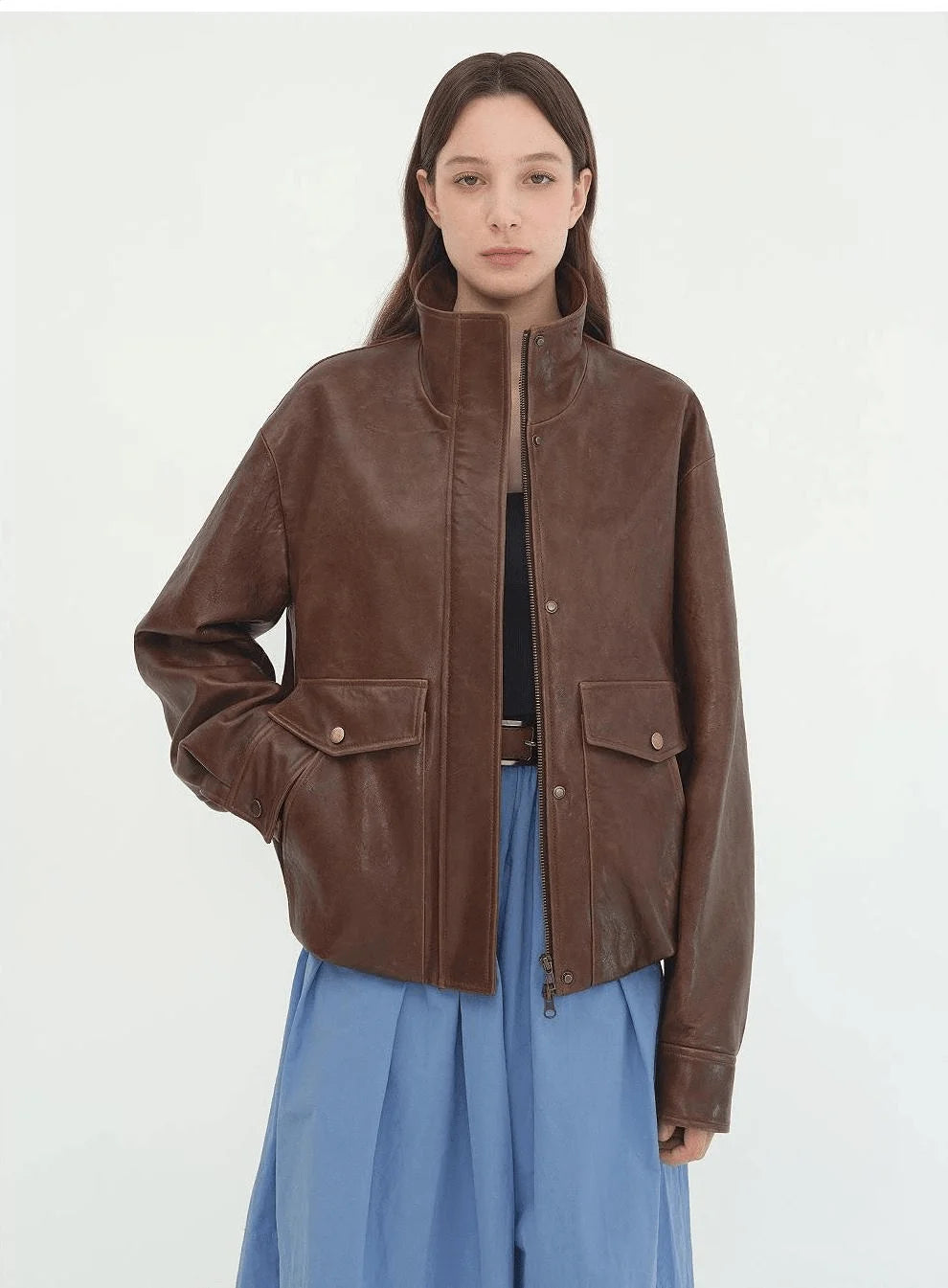
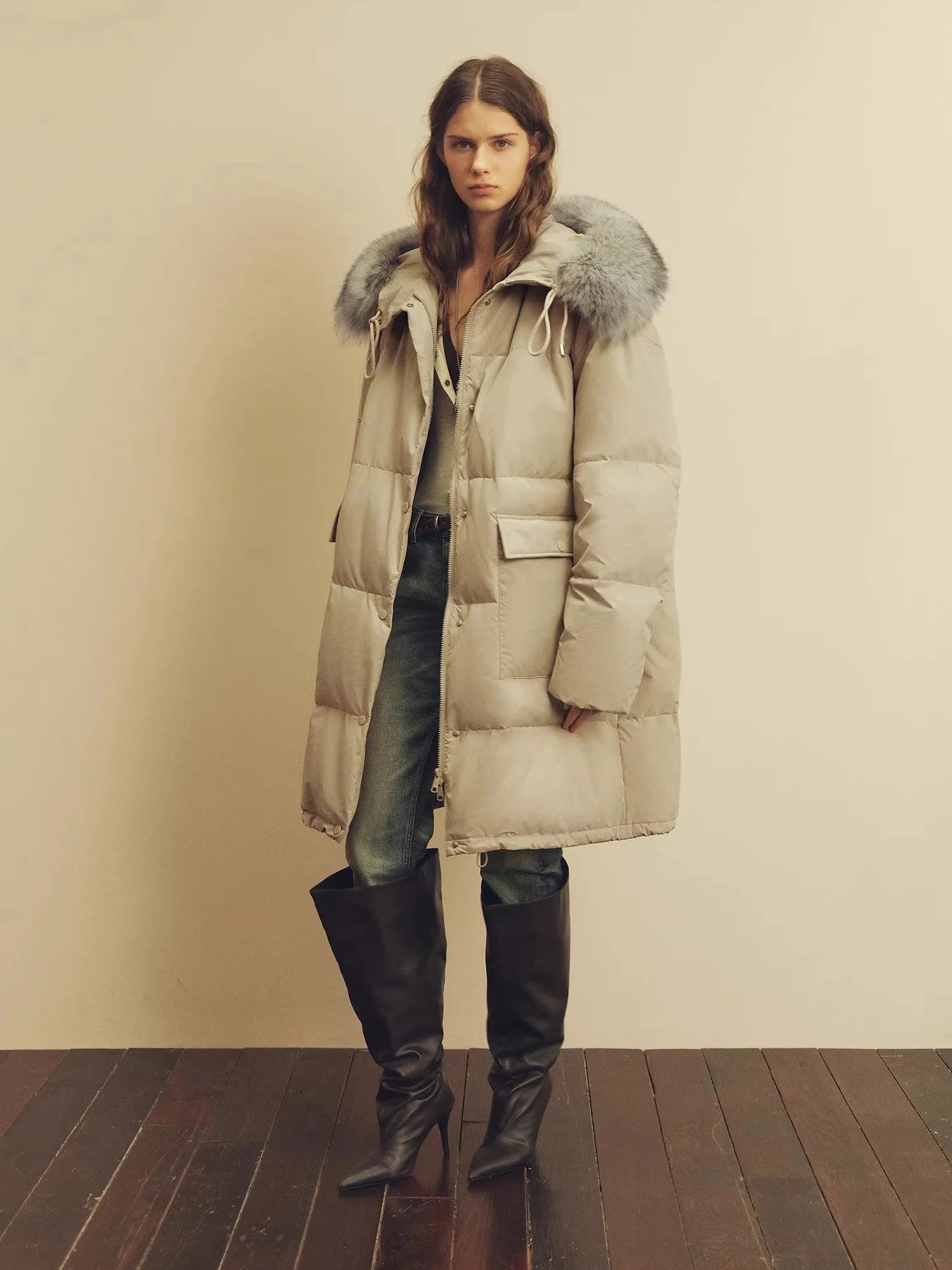
Warmth is easier to judge when the product family matches the job: full fur for coverage, short mink for repeated movement, leather for mild-season structure, and fur-trim parkas when wind, pockets, and weather tools matter.


Movement is where the shorter jacket earns its place
A garment can be warm and still fail in daily life. The failure usually appears when sitting, driving, climbing stairs, carrying a bag, or moving between heated interiors and cold streets. A jacket has less hem to manage and often feels more natural with trousers, boots, and everyday layers. That is why fur coat or fur jacket for daily wear deserves its own article.
The important point is not that shorter is automatically better. It is that movement has to be tested before the purchase feels settled. If the piece will be worn mostly to restaurants, offices, errands, and short car trips, a shorter fur jacket may become the item that actually leaves the closet. If the piece will be worn on long outdoor walks over dresses or tailored winter outfits, a coat may justify the extra length.
Can the garment enter and exit a car without bunching, twisting, or forcing constant adjustment?
Does the back hem crush, ride up, or push the silhouette into an awkward shape?
Do shoulder straps and sleeve contact flatten the fur or make the coat look collapsed?
Does the piece feel manageable in short heated stops, or does it become something to remove immediately?
Movement is also a care issue. A garment that is constantly crushed against seats, trapped under bags, or folded under the body will age differently from one that hangs cleanly between uses. Long coats can suffer at the hem and seat area if they are repeatedly forced into cars without adjustment. Jackets can suffer at collars, cuffs, and elbows because they are worn more often and handled more casually. The practical question is not only comfort today; it is whether the way the piece will be worn matches the way it can age well.
If the piece will be used several times a week, choose the silhouette that can survive that rhythm. If it will be used for special occasions, choose the silhouette that protects the outfit and photographs well without becoming a burden. The same garment can be excellent in one rhythm and weak in another.
Daily wear rewards the piece that repeats cleanly
Daily outerwear is not judged by one strong photo. It is judged by how often it can be worn without demanding a new outfit plan. A fur jacket often performs well here because it can sit closer to a regular outerwear habit. It can work over knitwear, trousers, denim, boots, and shorter dresses without making the entire outfit feel formal.
A coat can still be the right daily choice when the climate and wardrobe ask for it. Someone who walks outside in cold weather, wears long layers, or needs lower-body coverage may use a coat more than a jacket. The article on when a short fur jacket is the better buy covers the compact side of that decision; the larger principle stays the same: the best daily piece is the one that reduces friction across the whole week.
Look at the repeated outfit, not the most attractive outfit. If the week is built around trousers, slim boots, errands, restaurant stops, and car travel, a shorter jacket may be the piece that makes fur usable. If the week is built around long coats anyway because the weather is severe, a fur coat may fit the existing habit. If the week is mixed, a mid-length piece or a fur-trim parka may be a smarter first purchase than choosing the most dramatic full-length coat.
Daily use also changes how much visual drama feels appropriate. A large fox coat can be beautiful but may feel too deliberate for quick errands. A compact mink jacket can look polished without demanding the whole outfit. A fur-trim parka can carry a fur detail while still behaving like practical winter outerwear. The category should match the amount of attention the wearer is comfortable repeating, not only the amount of attention the product image creates.
Evening outfits ask for proportion before drama
For evening wear, length changes the line of the outfit. A coat can protect a dress, long skirt, wide-leg trouser, or formal layer from shoulder to hem. A jacket can look sharper over a shorter dress or a warm venue outfit where the lower half should remain visible. The wrong length can cut the outfit in a distracting place, even when the material itself is beautiful.
The focused evening article, fur coat or fur jacket for evening outfits, expands the formal side. The working rule is simple: match the outerwear length to the base outfit before judging drama. If the garment protects the outfit and preserves the proportion, it is doing its job. If it fights the outfit, the category label does not save it.
| Evening situation | Likely better direction | Why |
|---|---|---|
| Long dress or column outfit | Fur coat | The outerwear protects the complete line and avoids cutting the outfit at the hip. |
| Short dress or cocktail look | Fur jacket or shorter coat | A shorter line can feel intentional and keep the outfit visible. |
| Cold outdoor arrival | Fur coat | The garment has to work before and after the venue, not only inside photographs. |
| Warm venue and short transport | Fur jacket | A lighter piece can be polished without feeling like too much outerwear. |
There is a second evening question: how much of the outfit should remain visible? If the dress, trousers, or shoes are the main styling feature, a jacket can frame them. If the outerwear is meant to create the complete winter line, a coat can be stronger. Neither direction is more correct by default. The mistake is choosing a jacket because it feels easier, then discovering that the evening outfit looks exposed; or choosing a coat because it feels grand, then discovering that it overwhelms the person wearing it.
For occasion dressing, test the piece with the real base outfit. A coat that looks perfect over a thin dress may feel too heavy over tailoring. A jacket that works over a cocktail dress may look incomplete over a long gown. The decision should be made while thinking about the garment under the outerwear, not only the outerwear itself.
Sometimes the honest answer is a fur-trim parka
Not every winter problem should be solved with a full fur surface. If the real issue is wet streets, wind, pockets, hood function, commuting, school runs, or travel, a fur-trim parka may be the stronger answer. It gives a fur detail while using a shell, insulation, and closure system built for weather and utility.
That is why it is useful to compare fur jacket vs fur-trim parka. A parka is not a downgrade when the situation calls for weather control. It is a different tool. If the question is winter function first and fur texture second, compare the detachable fur-trim parka collection before choosing a full fur coat or jacket.
Bring parkas into the comparison when weather is the job
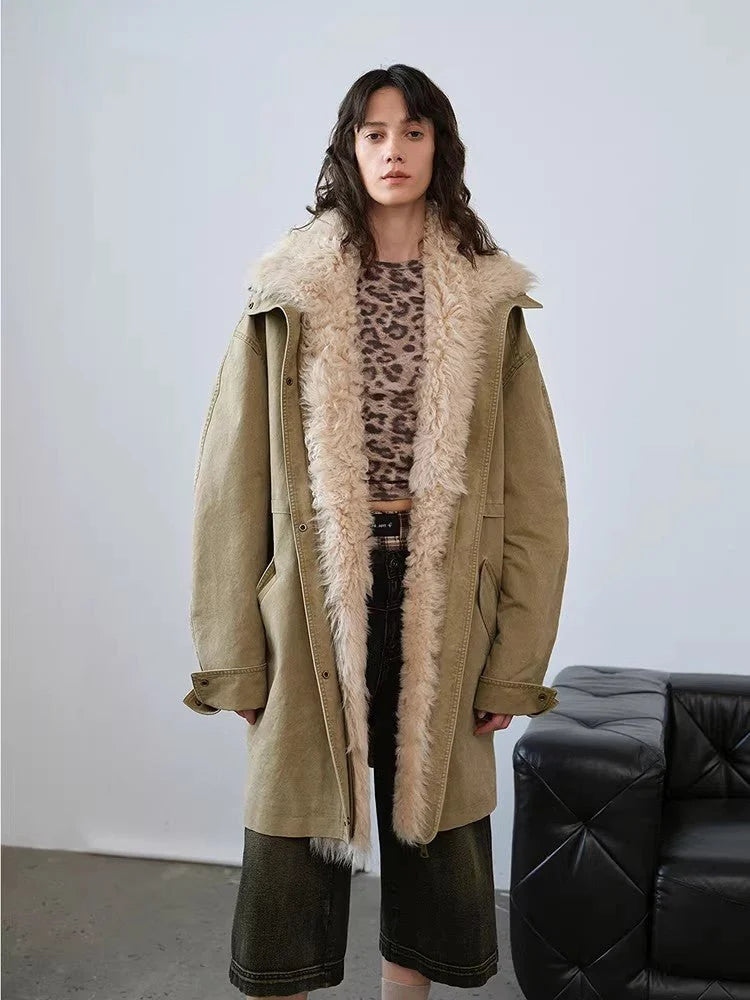
A fur-trim parka should not be treated as a weaker fur coat. It answers a different question: can the outerwear handle wind, damp streets, hands-free errands, hoods, and pockets without asking the wearer to protect a full fur surface all day?
If that is the real use case, compare detachable fur-trim parkas beside short fur jackets before judging either one by luxury language alone.
The parka path is especially important for city life. A hood can matter more than a longer fur hem when wind and light snow are the problem. Pockets can matter more than formal polish when the piece is used for commuting. A durable shell can matter more than a full fur body when the day includes public transport or travel. If those details sound like the real problem, the comparison should widen before the purchase narrows.
That does not mean a parka replaces a fur coat. It means the purchase should not pretend that every winter problem is the same. A fur coat is a garment for coverage, warmth, and presence. A fur jacket is a garment for movement, texture, and repeat styling. A fur-trim parka is a winter tool with a fur detail. Once those roles are separated, the decision becomes much cleaner.
Full-length coverage is worth it only when the exposure is real
A long coat has a stronger case when the same exposure problem appears again and again: cold walks, long evening arrivals, dresses, long knitwear, exposed thighs, open streets, or formal outfits that should not be broken by a short hem. A full-length piece can simplify winter dressing because it covers more of the outfit and asks fewer questions from the base layer.
The cost is ownership. Longer coats need more storage room, better hanger support, more awareness around wet hems, and more care when sitting or entering cars. If the wardrobe does not need that coverage, a longer coat can become an expensive answer to a rare problem. The focused article on when full-length fur coat coverage is worth it should be used when the purchase is moving toward length, price, and storage tradeoffs.
Do not buy extra length because it feels more serious. Buy extra length when it protects a body zone or outfit line that is repeatedly exposed.
Full-length coverage has a psychological pull because it looks complete. That can be useful when the wardrobe is already built around long lines. It can also become overbuying when the wearer actually needs a flexible layer. Before choosing the longer path, ask what the extra length will protect: a dress, a long sweater, the hips, the thighs, the hem of a formal outfit, or a cold walking route. If the answer is vague, the added length may be more emotional than practical.
Storage should be considered at the same time. A long coat needs a proper hanger, enough breathing room, and a place where the hem is not crushed. If the closet is narrow or crowded, the garment may age badly even if the purchase was expensive. That is why a full-length decision belongs partly in the care discussion, not only in the style discussion.
Fit decides whether the category works on the body
The correct category can still fail at the shoulder. A short jacket can look boxy if the shoulder is stiff, the collar is too large, or the sleeve volume fights the frame. A long coat can look elegant when standing still and fail when sitting, layering, or closing the front. Fit is not a minor detail; it decides whether the garment will be worn often enough to justify the purchase.
Use the fit-focused article on shoulders, sleeves, layering, and movement when the product page looks promising but the practical fit is uncertain. Before checkout, check shoulder support, sleeve movement, armhole comfort, front closure, collar weight, side profile, and how the garment behaves over the real base layer.
The garment should sit with support, not collapse or form a hard box around the upper body.
Reach forward and bend the elbow; the sleeve should move without pulling the shoulder out of place.
Judge the piece closed, not only open. Pulling, gaping, or a distorted line changes the decision.
Test it over the knit, dress, or tailoring that will actually be worn underneath.
Fit also changes the apparent category. A short jacket with a generous collar and strong shoulder can feel visually larger than a simple mid-length coat. A long coat with a clean line and controlled collar can feel easier than a bulky cropped piece. This is why shoulder, sleeve, collar, and closure checks matter before deciding that length alone solved the problem.
If shopping online, look for side images and closed-front images before trusting the front view. An open-front image can hide pulling. A straight-on photo can hide side bulk. A cropped product image can hide where the hem actually lands. If those details are absent, the safest next step is to ask for measurements or choose a product page with clearer evidence.

Styling changes when the lower outfit stays visible
A jacket leaves more of the outfit exposed. That can be an advantage when trousers, boots, denim, waist shape, or a shorter dress are part of the look. A coat hides more and can create a complete winter statement. It can also simplify a formal outfit because fewer lower-body decisions remain visible.
The styling article, how fur coat length changes styling, should be used when the warmth decision is already close but the outfit line is not. In practice, the question becomes: should the fur frame the outfit, finish the outfit, or become the outfit? A shorter jacket frames. A longer coat finishes. A dramatic coat can become the main visual statement.
For casual styling, the jacket usually has the easier job. It can sit with denim, straight trousers, simple knitwear, and city boots without turning the whole outfit formal. For polished styling, the coat has the stronger job because it can protect the full line and reduce clutter. For high-impact styling, material volume matters as much as length: fox can create more surface drama, while mink may read cleaner and more controlled.
Color also changes the decision. Darker pieces often feel easier to repeat because they sit closer to ordinary outerwear. Pale, high-volume, or strongly textured pieces can be beautiful but may ask more from the rest of the wardrobe. A short jacket in a strong color can become a statement even without full length. A long coat in a quiet tone can feel more controlled than a short jacket in a dramatic texture.
Material, price, care, and storage can overturn the first choice
Length and silhouette lead the comparison, but they do not finish it. Material changes weight, surface volume, warmth, and how formal the garment feels. Mink often reads compact and polished. Fox can bring more visible volume and texture. Shearling or fur-trim parkas may solve practical winter problems with less full-fur upkeep. The product path should support the chosen role, not distract from it.
Price should also come after use. A more expensive coat can be rational if it solves repeated winter coverage and is cared for correctly. A less expensive jacket can be wasteful if it never handles the real weather or wardrobe. Storage and care matter because fur is not a low-attention material. If the garment will be compressed, stored in heat, exposed to moisture, or worn daily without maintenance, read the care guide before treating the purchase as finished.
Choose when the goal is compact polish, dense surface, and a cleaner city or evening line. Compare the mink fur collection with fit and closure in mind.
Choose when visible texture and volume matter. Use the fox fur collection only after checking sleeve scale and storage space.
Choose outerwear or fur-trim parkas when weather control is more important than a full fur body.
Care should be part of the price calculation. A longer coat may require more careful storage and handling because more surface area can be compressed or exposed. A shorter jacket may be easier to hang, but it may be worn more often, which can increase collar, cuff, and lining wear. If the garment will be used daily, the care burden moves from theoretical to real. If it will be used rarely, storage discipline becomes the bigger issue.
Price should be read through cost per useful wear, not only through the tag. A coat that serves every cold evening and protects formal outfits for years can be more rational than a cheaper jacket that never feels warm enough. A jacket that is worn twice a week can be more rational than a full coat that only leaves the closet twice a season. The better buy is the silhouette that earns use.

Compare the three silhouettes before price enters
Price should not be the first filter. A long coat, a short jacket, and a fur-trim parka can all look attractive on a product page, but they solve different winter problems. If the category is wrong, a lower price does not make the purchase better. The clearest way to begin is to ask what the outerwear must do on a normal week: cover formal clothing, move through errands, handle wind and damp streets, or add a polished surface to clothes that are already warm.
A full fur coat is the stronger answer when coverage is the main value. It protects more of the body, keeps dresses and longer knits visually clean, and gives evening clothing a finished outer layer. A short fur jacket is stronger when repeated movement matters: sitting in a car, walking into warm rooms, wearing jeans or trousers, and repeating the piece without feeling dressed for an event. A fur-trim parka belongs in the comparison when the problem is not only softness or luxury, but weather utility: hood coverage, pockets, wind handling, and a more practical city rhythm.
This is why this page should be read before narrow shopping filters. If you already know you need coverage, the long coat question becomes easier. If you know you need movement, the short jacket question becomes easier. If you keep comparing beautiful photos without first naming the winter problem, every option can look reasonable and the final choice becomes dependent on mood rather than use.
| Outerwear type | Best at | Weak point to check | Better next step |
|---|---|---|---|
| Full fur coat | Longer coverage, evening polish, dresses, cold outdoor waits, and a complete outerwear line. | Storage space, seat comfort, weight, hem clearance, and whether the length is useful often enough. | Read the detailed guide to when full-length fur coat coverage is worth it. |
| Short fur jacket | Daily movement, driving, indoor transitions, denim or trousers, and repeat wear. | Lower-body warmth, outfit balance, sleeve length, and whether it looks intentional rather than cropped by accident. | Use the practical article on when a short fur jacket is the better buy. |
| Fur-trim parka | Wind, hood coverage, pockets, commuting, travel, and weather that is more practical than formal. | Less formal polish, less full fur surface, and a more casual line over dresses or evening outfits. | Compare the utility case in fur jacket vs fur-trim parka. |
| Delay the purchase | Unclear use, uncertain sizing, weak storage space, or a purchase driven only by a photo. | The piece may be beautiful but still fail the week it has to live in. | Return to the broader Fur Coat Buying Guide before comparing products. |
The table is not a rule that one category is better than the others. It is a way to keep the comparison honest. A full coat can be the more rational purchase for someone who wears long dresses, walks outdoors in cold weather, and has room to store it properly. A short jacket can be the more rational purchase for someone who drives daily, wears separates, and wants a piece that can repeat through the week. A parka can be the more rational purchase when cold wind, wet sidewalks, or travel matter more than a continuous fur surface.
Length changes the risk, not only the look
The most obvious difference between a coat and a jacket is length, but the hidden difference is risk. More length can protect more clothing and body area, yet it also asks for more storage room, more careful hanging, more awareness around stairs and car doors, and more attention to hem wear. Less length gives movement and easier repetition, yet it can expose the lower body and make the outfit underneath more important.
A long coat earns its place when the extra coverage solves a recurring problem. If cold air reaches the thighs, if wind enters under shorter jackets, if dresses or long knitwear need a clean outer layer, or if the wearer often stands outside before entering an event, the longer line is not just a style choice. It is a functional layer. A long coat also gives the outfit a single vertical shape. That can make formal clothes easier, because the coat does not cut the body at the waist or hip.
A short jacket earns its place when the extra coverage would create friction. Driving, seated dinners, office entries, cafe stops, commuting, and repeated indoor-outdoor movement make a shorter length easier to live with. The jacket can be removed, carried, or worn indoors more naturally. It also lets trousers, denim, skirts, and footwear remain visible, which matters when the outfit is built from separate pieces rather than one long formal line.
The mistake is to treat length as a ranking. Longer is not automatically warmer in every useful sense, and shorter is not automatically more casual in every outfit. The better question is where the extra length sits in real use. A coat that covers the thigh but opens in the front can still let wind enter. A jacket that ends at the hip but has dense material, a proper closure, and a warm base layer can be sufficient for many city winters. Length is one part of the system; closure, lining, collar, sleeve shape, and the clothes underneath decide the final comfort.
Cold outdoor waits, dresses, long knits, bare legs, formal arrivals, and wind that reaches below the hip.
Driving, stairs, crowded restaurants, office chairs, small closets, frequent carrying, and warm indoor rooms.
Hem clearance, closure depth, where the coat ends on the leg, and whether the lower outfit still works.
Seat comfort, shoulder movement, hanger width, garment bag space, and whether the piece repeats with your clothes.
If the length question is the part you are still unsure about, the focused article on long fur coat vs short fur jacket length and warmth goes deeper into coverage zones, winter exposure, and movement. This page keeps the category decision broader: choose the length that solves the most frequent winter problem, then compare material, fit, and price inside that length range.

Warmth is a coverage system, not a single material claim
Warmth is the question that makes many people lean toward a coat, but it should be handled carefully. A full coat often gives more coverage, and that coverage can matter a great deal in wind, low temperatures, or outdoor waiting. Yet warmth is not only a matter of the word coat. A short jacket with dense material, a good collar, and a tight closure can feel warmer than a longer garment that gaps in front, exposes the neck, or lets cold air move through the hem.
Start with exposed zones. The neck, chest opening, sleeve cuffs, lower back, thigh, and hem line decide how cold air reaches the body. A long coat has an advantage when it covers more of these zones, especially over dresses, skirts, thin trousers, or formal clothes. A short jacket can still work when the base outfit already handles warmth, such as wool trousers, lined pants, tall boots, or thermal layers. If the lower outfit is thin, the short jacket will ask the rest of the outfit to do more work.
Then look at closure. A coat that closes deeply through the front can block wind better than one that hangs open in a dramatic line. A jacket with a secure zipper, buttons, hooks, or wrap closure can outperform its length if it seals the torso well. Collar shape matters too. A high collar or hood changes the warmth equation, especially in wind. That is one reason a fur-trim parka can compete with a fur jacket for real winter use even when it has less fur surface.
Finally, ask where the warmth is needed. A person who walks from car to door may need a warm shoulder and torso layer more than full-leg coverage. Someone who stands outside, waits for transport, or walks in open wind may need coverage below the hip. Someone dressing for a formal event may need warmth over a dress without ruining the line of the outfit. Those are different needs, and the answer changes with each one.
Short jackets can work when the chest, shoulders, and back are the main exposure zones and the lower outfit is already warm.
Full coats help when cold reaches the thighs, skirt area, or dress line, especially during outdoor waiting.
Fur-trim parkas become relevant when wind, hood coverage, and pockets matter more than a continuous fur surface.
For a narrow warmth comparison, read long fur coat vs short fur jacket. For the broader material side of warmth, the Fur Coat Comparison Guide also connects this category decision to material comparisons, including real fur, faux fur, shearling, and parka options. The practical rule is simple: do not buy length as a symbol of warmth. Buy the coverage, closure, and construction that fit your actual exposure.
Movement is part of value
A coat that looks more luxurious but stays in the closet has poor value. Movement decides whether the garment becomes a repeat piece or a special-occasion piece. Sit down, stand up, drive, step into a restaurant, carry a bag, raise your arms, and walk quickly in the shoes you normally wear. These motions reveal more than a still product photo.
A short fur jacket usually has the advantage in movement. It does not fight the chair, does not gather as much around the hips, and is easier to wear with trousers, jeans, or shorter skirts. The shorter length also makes the piece less formal by default, which can help it repeat through a normal week. If a jacket looks good with the clothes already in the wardrobe, it can become a real winter layer rather than a garment reserved for one mood.
A full coat can still move well, but it needs a better fit. Shoulder room, sleeve angle, armhole placement, front closure, side opening, and hem width all matter. If the coat is narrow at the hem, it may look clean while standing but feel restrictive when walking or climbing stairs. If the sleeves are too narrow, layering becomes difficult. If the shoulder is too tight, the coat may pull whenever the wearer reaches forward. These are not small details. They decide whether the coat feels elegant or fussy.
This is where the category name can mislead. A jacket can be too bulky to move in, and a coat can be beautifully balanced. The real test is not the label; it is how the garment behaves on the body. The focused fit guide for shoulders, sleeves, layering, and movement should be used before price comparisons when the product page shows only a few still images.
| Movement test | What a coat must prove | What a jacket must prove |
|---|---|---|
| Sitting | The hem should not bunch awkwardly, pull at the closure, or create pressure at the hip. | The jacket should not ride up so much that the lower outfit looks exposed or unfinished. |
| Driving | The coat should allow seat-belt comfort and arm movement without twisting the shoulder. | The sleeve and shoulder should move cleanly when reaching forward. |
| Layering | The coat should close over the real base outfit, not only over a thin top. | The jacket should not become tight at the armhole or bulky over sweaters. |
| Carrying | The coat should not drag, catch, or feel difficult to remove in warm interiors. | The jacket should remain polished when carried or worn open between stops. |
Movement also affects cost per wear. A more expensive full coat can be worth it if it solves a real cold-weather problem and can be worn often enough. A less expensive short jacket can be weak value if it never matches the clothes or weather. Price is useful only after movement has been tested against real use.

Daily wear asks for a lower-friction piece
Daily wear does not mean casual in a careless sense. It means the garment can enter and leave a normal day without requiring too much planning. A daily piece works with repeated outfits, survives errands, handles indoor heat, and does not feel too precious for movement. This is where a fur jacket often becomes more practical than a long coat.
A short jacket works well with jeans, straight trousers, knit dresses, boots, loafers, and simple base layers. It can feel intentional without turning every outfit formal. It also lets the lower outfit remain visible, which gives more styling flexibility. If the piece is easier to repeat, it can create better value even when it covers less of the body.
A long coat can still be daily, but the city has to support it. Cold streets, longer outdoor walks, formal workplace dressing, and a wardrobe built around dresses or long lines can make a full coat practical. The problem appears when a long coat is bought for an imagined version of winter rather than the real one. If the wearer spends most of the day in cars, offices, restaurants, and heated stores, the coat may become something that is always too much to carry, sit in, or store.
Use a weekly test. List the seven most likely winter uses, not the most glamorous use. If the garment fits four or more of those days, it has daily potential. If it fits one special dinner and one holiday photo, it may still be worth buying, but the decision should be treated as occasion wear rather than daily wear. The focused article on fur coat or fur jacket for daily wear expands this into commuting, driving, indoor transitions, and outfit rotation.
Weekly test: do not ask whether the garment looks good once. Ask whether it solves the Monday coat problem, the car problem, the dinner problem, the cold-walk problem, and the closet problem. If a piece fails the ordinary week, a dramatic photo will not fix it.
Daily use also changes care. A garment that is worn often needs a realistic maintenance rhythm: space on the hanger, brushing or surface care only when appropriate, no plastic compression, and a plan for moisture. If care tolerance is low, a simpler jacket or parka may outperform a larger full-fur coat. If the owner is willing to maintain the garment properly, a full coat can remain polished for years. For care boundaries, keep the Fur Coat Care Guide nearby when comparing any expensive outerwear category.
Evening wear asks for proportion before drama
Evening outfits create a different problem. The garment is not only keeping the body warm; it is finishing the line of the clothing underneath. A long coat can be excellent over dresses, skirts, tailoring, and formal looks because it protects the outfit as one continuous shape. It can make arrival feel complete. It can also hide awkward lower layers when the dress or trousers are not meant to be exposed to cold weather.
A short fur jacket can be stronger when the outfit needs the lower half visible. A fitted dress, tailored trouser, statement skirt, or high boot can look better when the jacket stops at the waist or hip. The shorter length can also feel more modern and less ceremonial. The risk is that the jacket may expose too much of a thin lower outfit in cold weather, or cut the body in the wrong place if the dress line is delicate.
The event setting matters. A full coat may be more useful when there is outdoor waiting, valet lines, cold courtyards, or long walks between venues. A short jacket may be better when the event is mostly indoors and the outerwear is seen only briefly. A parka may be practical for the trip but weaker for the entrance unless the styling is intentionally casual or the trim is polished enough to belong with the outfit.
Evening decisions also require restraint. Do not choose the longest coat only because it feels grand. The garment should support the outfit, not compete with it. If the dress already has volume, embellishment, or a strong silhouette, a shorter jacket may balance it better. If the outfit is minimal and column-like, a full coat can make the whole look cleaner. The article on fur coat or fur jacket for evening outfits is the better next read when the real question is formality, proportion, and arrival.
Long dress or long knit
A full coat usually gives the cleanest line because the outer layer follows the length of the outfit instead of cutting across it.
Trousers or denim
A shorter jacket often feels easier because the lower outfit stays visible and the outerwear does not dominate the whole look.
Outdoor wait
Longer coverage becomes more useful when the coat has to protect the wearer before entering the venue.
Mostly indoor event
A shorter jacket can be enough when the outerwear is mainly part of the arrival and departure, not the full evening.

The parka question belongs in the same comparison
It may seem odd to compare a fur-trim parka with a fur jacket, but many real winter purchases sit exactly there. The person is not choosing between two runway shapes. They are choosing between polished fur, easier daily movement, and a garment that handles weather without much ceremony. If wind, hood coverage, pockets, travel, and wet pavement are part of the problem, the parka belongs in the conversation.
A fur-trim parka is not a replacement for every fur coat. It does not give the same continuous surface, formal line, or evening polish. It is usually more casual. But it can solve a different winter problem better. A hood with fur trim protects the face and neck. Pockets matter when hands are exposed. A weather-oriented shell can be more forgiving than a full fur surface in damp or dirty conditions. The garment may also feel easier for school runs, commuting, travel, and city errands.
A short fur jacket competes with a parka when the goal is daily wear with more style. The jacket may be more polished, lighter visually, and easier to pair with clean trousers or denim. A parka competes when the day is messy: wind, bags, public transport, children, long walks, or changing weather. This is not a question of which is more luxurious. It is a question of whether the day asks for polish or protection first.
If the closet already has practical winter outerwear, a fur jacket may add the missing polished layer. If the closet has only dressy pieces and no weather-safe daily outerwear, a fur-trim parka may solve more. The targeted fur jacket vs fur-trim parka guide handles the utility comparison, while the broader category order stays clear.
Price should follow use, not lead it
Price becomes meaningful only after the category has passed the use test. A full coat can cost more because it uses more material, requires more construction, and often carries a more formal design purpose. A short jacket may cost less or may cost just as much if the material, craft, and finish are strong. A parka may shift the price toward shell construction, trim quality, hardware, lining, and weather features.
Do not compare price per garment before comparing the job of the garment. A full coat that covers dresses, cold walks, and formal arrivals may justify a higher price if those are repeated needs. A short jacket that works three days a week may justify its price through frequency. A parka that handles wind and travel may justify its price by replacing several weaker winter options. The wrong category at a lower price is still expensive if it stays unused.
Cost per wear is useful, but only if the wear is realistic. Do not count imagined events. Count the weather, outfits, and places that already exist. A full coat can be a sound purchase for someone with the right wardrobe and climate. A short jacket can be a better first purchase for someone who wants movement and repeat styling. A parka can be the practical choice for someone whose winter is more about wind and transit than formal dressing.
Long-term cost also includes care and storage. Full coats need more room and careful hanging. Short jackets can be easier to store but still need shape support. Parkas may handle daily weather better, but trim, hood, and shell care create their own maintenance questions. If you are unsure whether fur as a category is the right purchase, start with the parent Fur Coat Guide, then use the buying guide to compare price, material, care, and use before choosing a product family.
| Decision factor | Full coat | Short jacket | Fur-trim parka |
|---|---|---|---|
| Best value when | The wearer needs longer coverage often enough to justify storage and care. | The garment repeats across normal outfits and feels easy indoors and in cars. | Weather utility, hood coverage, and pockets matter more than formal polish. |
| Hidden cost | Closet space, careful hanging, hem awareness, and occasional professional care. | Layering limits, lower-body exposure, and the need for strong styling below the waist. | More casual appearance, shell maintenance, and trim care around hood and collar. |
| Do not buy if | The length solves no regular problem and will be difficult to store or sit in. | The jacket leaves the wearer cold or looks unfinished with most outfits. | The desired look is formal, minimal, or built around a full fur surface. |
Fit is the final category test
A category can be correct and still fail because the fit is wrong. This is especially true with fur, where surface volume can hide fit problems in a product photo. A coat that looks generous may still be tight at the shoulder. A jacket that looks compact may still sit too wide at the sleeve. A parka may look practical but feel bulky if the hood, trim, and collar fight the body line.
Start with shoulders. The shoulder should support the garment without pulling forward or collapsing. If the shoulder is too narrow, the garment will resist reaching, driving, and layering. If it is too wide, the piece may look heavy or borrowed. Then check sleeve length. A long coat with sleeves that fight the wrist can feel formal in the wrong way. A short jacket with sleeves that are too short can expose the base layer and weaken the outfit.
Next check closure. Can the garment close over the real winter layer? A coat that closes only over a thin top is not a winter solution. A jacket that pulls at the front when seated will not become easier after purchase. A parka that closes but pushes the hood or collar awkwardly against the face may be technically warm but uncomfortable.
Finally, check where the hem sits. A full coat should not drag, catch, or hit the wrong part of the leg. A jacket should not stop at a place that makes the lower outfit look accidental. The best length is the one that works with the body and clothes, not the one that sounds more impressive. If fit is the uncertain point, the detailed fit and layering guide should be read before comparing final product pages.
Check whether the garment sits cleanly without pulling forward or collapsing at the outer edge.
Raise the arms, reach forward, and check whether the sleeve exposes too much base layer or restricts movement.
Close the garment over the actual winter outfit, not a thin fitting layer that makes every option seem easier.
Look at where the garment ends while standing and sitting; the wrong ending point can ruin both comfort and proportion.
Style is where the category becomes visible
Once warmth and movement are settled, style becomes easier to judge. A full fur coat gives a more continuous surface. It can make the outfit look calmer because fewer layers are visible. It also creates a stronger outerwear statement, especially in long lines, wide collars, or rich texture. That can be desirable, but it can also overpower simple clothes if the rest of the outfit was not built for it.
A short jacket keeps more of the outfit visible. This makes it easier to style with trousers, denim, skirts, and boots, but it also means the base outfit must do more work. The jacket cannot hide a weak lower half. It should look intentional with the pants, skirt, or dress underneath. If the lower outfit is messy, the jacket will not solve it.
A parka changes the style language again. It can make the outfit feel practical, city-ready, and less formal. This is useful when the wearer does not want every fur detail to feel dressed up. It is weaker when the goal is a refined evening line or a full outerwear statement. If style is the main uncertainty, compare actual outfit categories instead of abstract adjectives: trousers, denim, long dress, short dress, boots, sneakers, office wear, evening wear, travel wear.
The article on how fur coat length changes styling is useful once the category is close, because it turns the question from "which is nicer" into "where does the eye stop, what remains visible, and what must the rest of the outfit carry." That is the difference between a useful style decision and a product-page reaction.
Use focused articles when one variable is blocking the decision
A main comparison guide should help you make the first category decision, but it should not pretend that every smaller question can be fully answered in one pass. Once the likely category is clear, the smaller comparison should become more specific. If the issue is length and warmth, read the length comparison. If the issue is daily movement, read the daily wear article. If the issue is evening proportion, use the evening guide. If the issue is whether a parka belongs in the shortlist, use the utility comparison. If the issue is fit, go straight to the fit guide.
This matters because each smaller question changes the evidence you should look for. Warmth needs closure, collar, lining, and exposed-zone evidence. Daily wear needs movement, indoor comfort, and outfit repetition. Evening wear needs proportion, hem line, and dress compatibility. Parka utility needs hood, pockets, shell, trim, and weather use. Fit needs shoulder, sleeve, closure, and seat checks. A single product photo cannot prove all of those things at once.
Use the following sequence when the choice still feels unclear: first choose the winter problem, then choose the category, then choose material and construction, then compare fit, then compare product details and price. Skipping that order creates the kind of purchase that looks right in a browser tab and wrong in the closet.
- Shape and coverage when the category itself is unclear.
- Length and warmth when exposure below the hip is the main concern.
- Daily wear when movement, driving, and outfit rotation matter most.
- Evening outfits when proportion and formality decide the outer layer.
- Parka utility when wind, hood coverage, and city wear belong in the comparison.
- Fit and movement when shoulders, sleeves, closure, and sitting comfort are uncertain.
The comparison also connects to other Firelady guides. If the decision is mostly about material behavior, start with the broader comparison guide. If care or storage will affect the purchase, use the care guide. If the question is outfit proportion, use the styling guide. If long-term value matters, use the value and resale guide. Move to the next guide only when it answers the next real decision.
What product pages should show before you trust the category
A product page should reduce uncertainty. For a full coat, it should show enough length, closure, hem, and body proportion to prove the coat works as outerwear rather than only as a dramatic surface. For a short jacket, it should show whether the shorter length looks balanced with trousers, skirts, or dresses, and whether the sleeve and shoulder leave room for movement. For a parka, it should show hood shape, trim placement, pockets, closure, and how the shell sits on the body.

One front photo is rarely enough. Side views reveal bulk and length. Back views reveal shoulder width and hem shape. Open and closed views reveal whether the garment works both ways. Movement photos reveal whether the piece is only photogenic while still. Detail photos reveal closure, lining, collar, sleeve finish, and edge construction. If those views are missing, the product may still be good, but the decision contains more risk.
Be especially careful with cropped photos. A cropped full coat may hide the hem length. A cropped jacket may hide where it ends on the body. A close texture image may make the fur look rich while saying little about fit. A model photo without height or proportion context may make a garment look shorter or longer than it will feel in real life. Good product presentation does not ask the viewer to imagine the missing angles.
When a product page is thin, ask for measurements or compare similar pieces within the same collection. Browsing the full fur collection, the more refined artisan fur collection, or specific material collections such as mink fur and fox fur can help you see how length, surface, collar, and volume change across product families. If the practical option is still in play, compare fur-trim parkas before narrowing the choice too early.
Read product photos like a short fitting
When the choice is between a fur coat and a fur jacket, product photos should answer practical questions before they sell mood. A beautiful surface is useful, but it is not the full evidence. The image set should show where the hem lands on the body, how the front closes, how the sleeve behaves when the arm bends, and whether the piece still looks balanced over the clothes you are likely to wear with it.
For a full fur coat, the most important images are not always the closest surface shots. Look for a full-body front view, a side view, and a walking or standing angle that shows the lower hem. The coat should not swallow the body, drag visually near the floor, or make the lower outfit look accidental. If the purpose is evening coverage, check whether the coat protects the dress line. If the purpose is cold-weather coverage, check whether the thigh, hip, and seat area are actually covered rather than only implied by styling.
For a short fur jacket, the image check is different. The jacket has to prove that the shorter length is deliberate. The waist or hip point should look clean, the lower outfit should still make sense, and the collar and sleeve volume should not make the piece look top-heavy. A jacket can be the smarter choice for daily wear only when it looks controlled in motion and does not ride up in a way that makes the outfit feel unfinished.
For a fur-trim parka, the photo evidence should move away from surface glamour and toward utility. The hood, trim attachment, pocket placement, front closure, shell fabric, and hem length matter more than one flattering fur detail. If your real question is weather, commuting, wind, or pockets, the parka should be judged by those details before it is compared with a full fur coat.
Look for full-body proportion, side line, hem clearance, closed-front shape, dress coverage, and how the coat sits over longer layers.
Look for waist or hip placement, sleeve movement, shoulder balance, collar scale, and whether trousers, denim, or skirts still look intentional below it.
Look for hood depth, pocket use, shell structure, trim behavior, zipper or button closure, and whether the coat can handle wind and daily movement.
Do not treat cropped, filtered, or single-angle images as a complete answer. Ask whether the missing angle is exactly where the purchase risk sits.
This is why the first visual comparison on this page uses three different product families: a longer fur coat, a compact fur jacket, and a fur-trim parka. They are not three versions of the same answer. They solve different winter problems. A long coat protects more of the outfit. A short jacket gives back movement. A parka adds weather tools that a pure fur body may not provide.
Test the length against the week, not one outfit
The clearest way to avoid a weak purchase is to test the garment against a normal week. A coat or jacket can look right in a product image and still fail the first time it has to sit in a car, fit over office clothes, move through a restaurant, or hang in a closet without being crushed. The better category is the one that handles repeated friction with the least compromise.
Start with the clothes you already wear in winter. If your weekly base is long dresses, tailored trousers, calf-length knits, or evening outfits, a full fur coat may simplify the outer layer because it covers the line instead of interrupting it. If your weekly base is denim, shorter skirts, boots, knitwear, or layered separates, a fur jacket may feel easier because it lets more of the outfit remain visible and avoids the formality of a long coat.
Then test movement. Sit, bend the elbow, reach forward, and imagine getting in and out of a car. A long fur coat that bunches at the seat or pulls at the front may not be wrong, but it is telling you where it will be inconvenient. A short fur jacket that exposes the lower back, rides above the waist, or feels tight over layers may also be warning you. Length only helps when the rest of the garment lets you move normally.
Does the garment improve the outfit from shoulder to hem, or does it only look good around the collar and upper body?
Can you sit without the hem fighting the seat, the front pulling open, or the jacket riding up awkwardly?
Can you name three real winter outfits and two real occasions where the piece will be worn without special planning?
If the answer is unclear, the problem may not be coat versus jacket yet. It may be fit, material, warmth, or styling. A longer coat with weak closure may be less useful than a shorter jacket with better construction. A compact jacket in dense mink may feel warmer than a loose long piece that lets air enter through the front. A parka may outperform both if the day involves wind, wet sidewalks, and pockets. The category matters, but it does not rescue a garment that fails the way it will actually be used.
How the smaller comparisons fit into this decision
This page is the broad decision. The narrower guides are useful when one part of the choice becomes the sticking point. If you already know the issue is length, move into the article on long fur coats and short fur jackets. If the issue is daily use, compare driving, comfort, and outfit rotation. If the question is evening wear, use the guide on formality, proportion, and coverage.
The same applies when the comparison moves outside the simple coat-jacket pair. If a fur-trim parka keeps entering the decision, read the fur jacket versus fur-trim parka guide before choosing a full fur surface. If the question is whether a compact piece is the smarter purchase, use the short fur jacket buying guide. If the question is whether full coverage earns the extra storage and formality, use the full-length coverage guide.
- Shape, coverage, and category difference
- Long fur coat vs short fur jacket warmth
- Daily wear, driving, and outfit rotation
- Evening outfits and formal proportion
- Fur jacket vs fur-trim parka utility
- When a short fur jacket is the better buy
- When full-length coverage is worth it
- How coat length changes styling
- Fit, shoulders, sleeves, and layering
Use those articles only when the question has narrowed. A person choosing between a formal long coat and a compact jacket does not need to read every comparison before making progress. The evening and styling articles may be enough. A person choosing between a jacket and a parka should not start with luxury language; the utility comparison matters first. A person who likes the shape but feels restriction in the shoulders should go straight to fit, sleeves, and layering.
The practical order is simple: name the winter job, check the shape, test warmth and movement, then decide whether the garment belongs in a collection search. If the answer still feels vague after that, the product is probably not showing enough evidence or the role has not been named clearly enough.
FireladyFur recommendation: choose by repeated friction
FireladyFur treats this as a repeat-use decision. A full fur coat is the stronger choice when the same winter problem keeps appearing: exposed dresses, cold lower body, formal outerwear needs, long outdoor arrivals, or a wardrobe that looks unfinished under a short jacket. A fur jacket is the stronger choice when the repeated problem is movement: sitting, driving, indoor transitions, casual outfits, and the need to wear the piece often without feeling overdressed.
A fur-trim parka should stay in the comparison when weather tools are part of the real need. Hood coverage, pockets, wind control, and a weather shell can matter more than a full fur body. Choosing a parka is not a downgrade when the day is practical. It is a different answer.
FireladyFur frames this comparison through real winter use, garment behavior, fit, care, and repeat wear rather than surface drama alone. For the brand context behind these editorial guides, read About FireladyFur and Editorial Standards.
If the signals split, rank them by discomfort rather than by glamour. If your legs are repeatedly cold, a jacket will not solve that. If you avoid a coat because it is hard to sit in, a longer hem will not make it more useful. If the coat looks beautiful but has nowhere to hang properly, storage is already part of the cost. If the jacket looks easy but only works with one outfit, repeat wear is weaker than it appears.
Price should come after that. A cheaper jacket that gets worn every week can be a better purchase than a dramatic coat that stays in the closet. A higher-priced coat can also be justified when it replaces repeated cold-weather frustration, protects formal clothing, and fits the way you actually move. The point is not to buy the longest or shortest garment. The point is to buy the one that removes the problem you keep meeting in winter.
Choose the product path after the category is clear
If the decision points toward coverage, start with fur coats and jackets and judge each option by hem length, closure, fit, and storage. If the decision points toward refined material and a polished surface, compare Artisan Fur, mink fur, and fox fur. If the decision points toward weather utility, compare detachable fur-trim parkas and broader outerwear before committing to a full fur piece.
Browse only after the role is clear. For coverage, look for full-body images and clean closure. For movement, look for shorter length, shoulder comfort, and easy sleeve motion. For utility, look for hood, pockets, shell, and trim construction. The product page should make the right use case easier to confirm, not harder to imagine.
Frequently Asked Questions
Is a fur coat better than a fur jacket?
A fur coat is better when the repeated problem is lower-body coverage, formal clothing, dresses, long knits, or cold outdoor exposure. A fur jacket is better when movement, sitting, driving, and repeat casual wear matter more than maximum coverage.
Is a fur jacket warm enough for winter?
A fur jacket can work in moderate winter conditions when the material is dense, the front closes securely, and the base outfit already carries warmth. It is weaker than a longer coat when legs, dresses, or long layers stay exposed.
Which is easier to wear every day?
A fur jacket is usually easier because it is shorter, easier to sit in, and less formal. A fur coat becomes the everyday choice only when the wearer repeatedly needs the added coverage.
Which works better for evening outfits?
A fur coat usually works better over long evening outfits because it protects the full line from shoulder to hem. A fur jacket can work over shorter dresses, warm venues, or outfits where the lower half should stay visible.
Should I compare a fur-trim parka too?
Yes, when wind, wet streets, hood function, pockets, commuting, and weather control are part of the question. A fur-trim parka is often the more practical answer when utility matters more than a full fur surface.
What should I check before buying either one?
Check the real wearing role, temperature, time outdoors, sitting and driving comfort, shoulder fit, sleeve movement, closure, storage space, care tolerance, and whether the product images prove the silhouette from the front, side, and back.


