


Fur fashion begins before fashion has a name. The earliest story is not a runway story, or even a luxury story. It is a survival story about skin, hair, cold air, wind, tools, sewing, and the moment protective clothing started to carry identity.
That is why the origin of fur fashion should be read in two layers. The first layer is practical: early humans needed covering that could hold warmth, block wind, and move with the body. The second layer is cultural: once a material can be selected, shaped, decorated, exchanged, and recognized, it can begin to mean something beyond shelter.
The exact first garment has not survived. Animal hide, fur, sinew, plant fiber, and early stitching materials usually decay long before stone, bone, or shell. Archaeologists therefore work from a chain of clues: clothing lice genetics, hide-working tools, needles, art, rare preserved garments, and the climate demands of human migration.
The first clothing question is harder than it looks
It is tempting to ask, "What was the first human clothing?" and expect one clean answer: fur, hide, leaves, bark, or woven cloth. The evidence does not behave that neatly. The oldest surviving garment is not the same as the oldest garment people wore. The first material to leave evidence is not always the first material used.
Most early clothing was made from organic matter. Fur, leather, grasses, bark fibers, cords, and sinew break down quickly in ordinary soil. Stone tools survive. Bone tools may survive. Shell beads may survive. A hair-bearing hide wrapped around a body usually does not. That preservation bias is the first reason early clothing history relies on indirect evidence.
The second reason is that "clothing" covers many stages. A scraped hide draped over shoulders is clothing. A fur layer tied around the waist is clothing. A carefully cut sleeve, stitched hood, fitted boot, or decorated collar is a later kind of clothing. These stages may have overlapped for thousands of years, and different groups would have used different materials in different climates.
A stronger answer is this: fur and hide were very likely among the earliest clothing materials because they were available through hunting, naturally insulating, and usable before weaving. The question is not whether fur mattered early. The question is what kind of evidence can support that claim without turning history into mythology.

What early humans needed clothing to do
The earliest clothing was probably not designed for modesty or trend. It solved bodily problems. Humans lost much of the dense body hair that protects many mammals, then moved through climates where exposed skin needed help. Clothing could reduce heat loss, protect against wind, shield skin from abrasion, and extend the time people could hunt, gather, carry children, or sleep away from a protected fire.
Fur has a specific advantage in that setting. The hair side traps air. The leather side can become a flexible backing when it is scraped, cleaned, softened, and maintained. A hide can be worn hair-out for weather, hair-in for warmth, or layered with other skins. Even before formal tailoring, a hide could become a portable weather system.
This is why early fur clothing should be understood as material technology. The value was not shine. It was the way hair, skin, thickness, suppleness, size, and weight worked together. A heavy hide might provide warmth but limit movement. A smaller pelt might be easier to tie or wrap. A softened skin could bend at the shoulder, hip, or knee. The first clothing decisions were probably material decisions before they were style decisions.
Hair fibers trap pockets of air, which helps slow heat loss when a body is exposed to cold or wind.
A hide had to move with shoulders, arms, hips, and legs. Softening and cutting changed cover into wear.
Clothing used for hunting, travel, and sleep needed strength at edges, ties, seams, and repeated bend points.
What evidence can actually tell us
No single source proves the whole origin of fur fashion. Each evidence type answers a narrower question. Genetic evidence can suggest when regular clothing became common enough for clothing lice to diverge from head lice. Bone tools can show that people worked animal skins. Needles can show more refined sewing. Preserved garments can show actual material combinations, but usually from much later periods.
| Evidence type | What it can show | What it cannot prove alone |
|---|---|---|
| Clothing lice genetics | A regular clothing habit existed before the oldest preserved garments. A widely cited clothing lice study estimates early clothing use around 170,000 years ago. | It does not identify the first garment material or prove a specific fur coat, cloak, or stitched item. |
| Hide-working bone tools | Worked bone tools from old deposits can show animal-skin processing. The Contrebandiers Cave bone-tool study links 120,000-90,000 year old tools with hide and fur work. | Tools support preparation activity, but the finished clothing usually has not survived beside them. |
| Needles and awls | Perforation and sewing tools show a move from wrapped cover toward fitted clothing, layers, and possibly decoration. A 2024 Science Advances article on Paleolithic eyed needles treats needles as part of the evolution of dress. | A needle does not tell us every fabric or fur species used in a garment. |
| Preserved leather and fur clothing | Rare finds show actual material choices. The Scientific Reports study of Otzi's leather clothing shows multiple animal sources in a 5,300-year-old outfit. | Direct finds are valuable, but they are usually much younger than the first likely clothing use. |
This evidence map changes the article's answer. Fur is not "the earliest clothing" because one complete prehistoric fur coat was found at the beginning of the timeline. Fur belongs near the origin because hair-bearing hides fit the physical problem early humans faced, and because the indirect evidence points to skin working, clothing habits, and later fitted dress long before written fashion history.
Use this as a reading checklist: compare what each evidence type proves, what it leaves open, and whether the claim is about likely clothing use, skin processing, fitted construction, or a directly preserved garment.
Hide, fur, and leather were early material technology
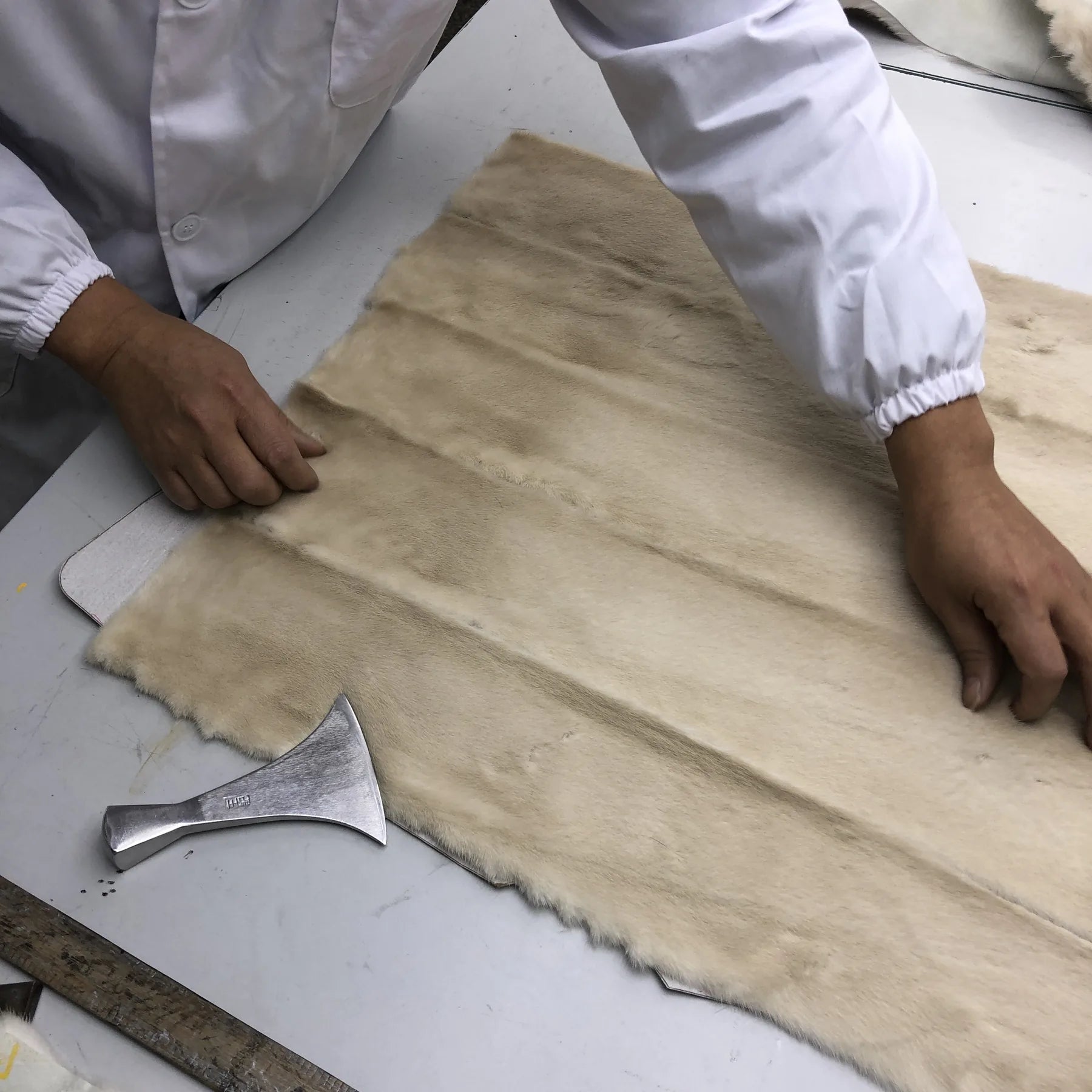
A raw animal skin is not automatically a comfortable garment. It can stiffen, smell, rot, crack, or become too heavy. Turning it into clothing requires choices: remove tissue, scrape the skin, preserve flexibility, control hair direction, cut around weak areas, pierce edges, tie or sew panels, and maintain the piece after use.
That work is where fur clothing becomes craft. A hunter may supply the hide, but a wearable garment depends on processing knowledge. Which skins are warm without being too stiff? Which hair direction sheds weather better? Which edge will tear if tied too tightly? Which part can bend around a shoulder? The earliest makers may not have used modern tanning language, but they were already solving material problems.
The iScience work on Contrebandiers Cave matters because it points to skin processing at a deep time depth. If people were working hides and furs between 120,000 and 90,000 years ago, the story of clothing cannot be reduced to late decorative fashion. It belongs inside a much older tool-and-material tradition.
From wrapped hide to fitted clothing
The earliest fur clothing may have been simple: a hide over the shoulders, a skin tied around the body, a strip wrapped around feet, or a loose cover used for sleeping. Simple does not mean crude. A wrap still needs size, softness, weight, and placement. It has to stay on the body while the wearer moves.
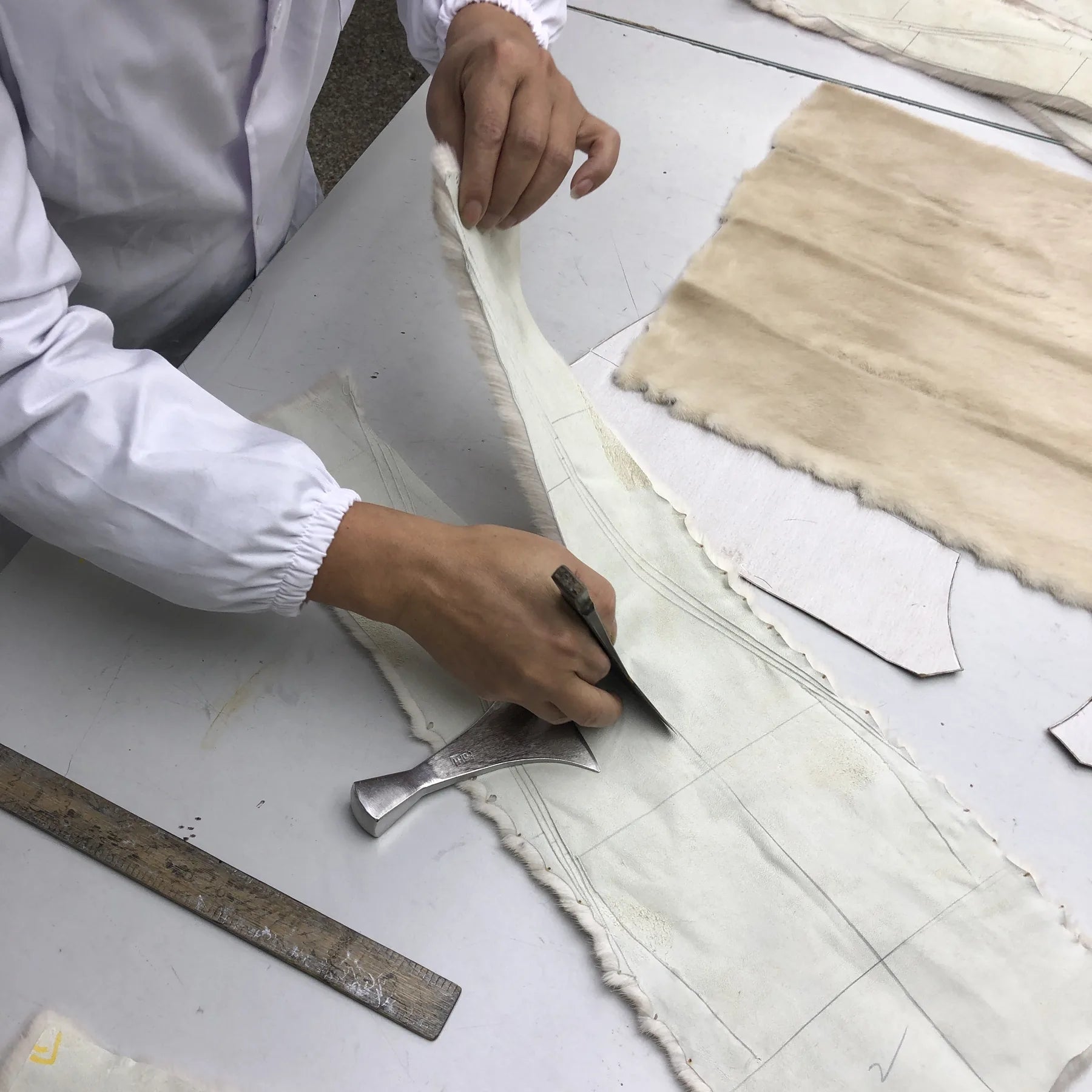
Fitted clothing changes the problem. Once people cut, pierce, and sew material to follow the body, clothing can become warmer, lighter, and more efficient. Gaps can close. Sleeves can move. Footwear can protect soles. Hoods can reduce heat loss around the head and neck. A sewn layer can also combine different materials: fur where warmth is needed, leather where strength is needed, cord where tension is needed.
Eyed needles matter because they suggest a more precise clothing system. The 2024 Science Advances discussion of Paleolithic eyed needles connects sewing tools with the evolution of dress, including the role of clothing in social and decorative expression. In plain terms, sewing helped clothing move from cover toward fit, and from fit toward display.
This is the bridge from clothing to fashion. A body covering becomes fashion when people can choose material, shape, color, edge treatment, decoration, and visible arrangement. Fur was ready for that shift because it is visually legible. Species, pile length, density, color, softness, and sheen can all be seen by others.
How protection became identity
Fashion begins when practical objects become socially readable. A fur layer can say that a person survived cold, hunted successfully, controlled a scarce material, belonged to a group, held status, or understood local craft. The same garment could warm the body and communicate skill.
That social layer likely grew gradually. A rare pelt would be noticed. A cleaner edge would be noticed. A warmer, better-fitted layer would be copied. A decorative trim, bead, color contrast, or shaped collar would make the garment more recognizable. Over time, clothing became a surface where climate, skill, identity, rank, trade, and beauty could meet.
Later historical fur fashion - court robes, ceremonial trims, noble collars, theatrical wraps, Hollywood coats, and modern runway pieces - did not create that pattern from nothing. It formalized a much older fact: fur is protective material with a visible surface. A material that can protect and be seen is already close to fashion.
A timeline of evidence, with limits
The clearest way to read the origin of fur fashion is as a sequence of evidence windows. Each window narrows the story without pretending to close every gap.
Clothing lice genetics suggest regular clothing use by anatomically modern humans in Africa. This supports early clothing habits, while leaving garment material uncertain.
Worked bone tools from Contrebandiers Cave in Morocco support hide and fur processing. This strengthens the case for skin-based clothing technology.
Needles and related tools point to fitted clothing, layered dress, and more controlled construction. Sewing allows protection to become shape.
Otzi's preserved outfit gives direct evidence of complex leather and fur material selection. It is not the origin of clothing, but it shows how refined animal-material clothing could become.
Fur appears in visible status systems, trade, ceremonial dress, military outerwear, court clothing, and later modern fashion. This is the documented fashion layer, not the starting point of clothing itself.
The timeline also shows why the current page should not focus only on ancient Egypt, Rome, China, medieval Europe, and the 20th century. Those periods are part of fur fashion history, but they arrive after the deeper origin story. The earliest chapter is material survival. The later chapters are power, beauty, craft, and market taste.
Where recorded fur fashion fits
Written and visual history still matters. It gives us the phase where fur becomes easier to trace as status, trade, and design language. In ancient societies, fur and leather could mark access to animals, skilled processing, distant exchange, or ceremonial privilege. In cold regions, they remained practical outerwear. In elite settings, they also became visible signs of rank.
This is the point where the word "fashion" becomes more natural. A fur trim on a robe, a collar used in court dress, a military cloak, a ceremonial cap, or a luxury coat all carry public meaning. The garment still warms the body, yet its placement, rarity, color, and association with authority also speak to other people.
Medieval and early modern Europe made that social coding more formal through sumptuary rules, court portraits, guild craft, and trade networks. Certain furs became associated with nobility or official dress, while coarser skins remained closer to workwear and harsh-weather use. The same material category could therefore split into different social meanings depending on species, finish, cut, and wearer.
The 20th century added another layer: fashion houses, cinema, photography, ready-to-wear production, new dyeing and shearing techniques, lighter construction, and mixed-material design. Fur entered coats, collars, trims, wraps, jackets, and accessories as both warmth and visual drama. The modern debate around real fur, faux fur, reuse, care, and longevity belongs to this later era, but the material questions are older than the debate.
Hide and fur begin as insulation, wind control, and protection for exposed human skin.
Scraping, softening, cutting, piercing, sewing, and lining turn animal material into wearable structure.
Species, finish, color, rarity, placement, and decoration make the garment readable to others.
What this history changes about modern fur fashion
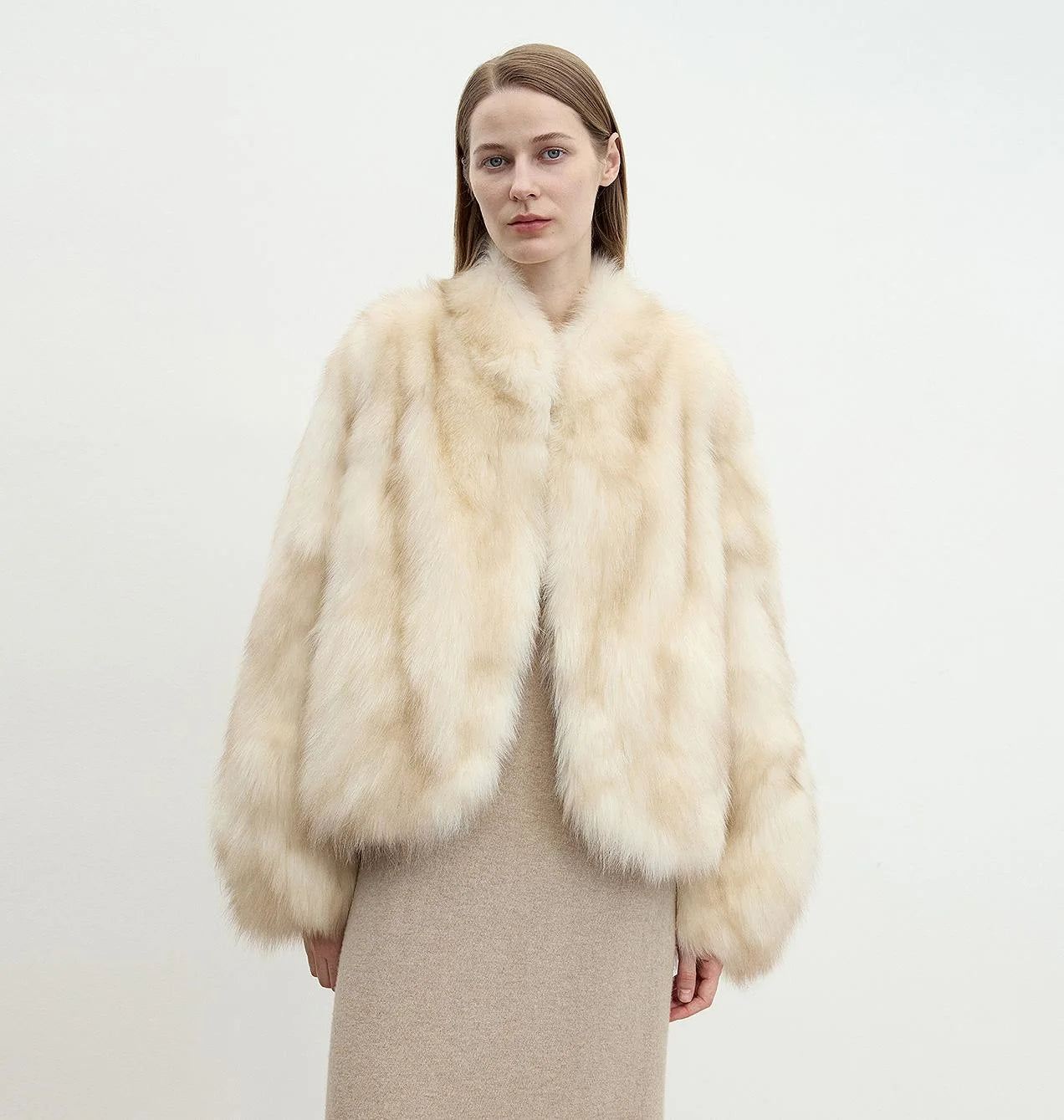
Reading fur through early clothing history makes modern fur easier to judge. It shifts the question away from surface glamour and toward material behavior. A fur coat is still a two-sided object: hair and leather, warmth and movement, visible texture and hidden structure.
That matters for shoppers because the oldest material logic still applies. Warmth depends on density, coverage, layering, and air trapping. Wearability depends on weight, flexibility, cut, and lining. Longevity depends on storage, moisture control, skin condition, and construction quality. A beautiful surface is only one part of the garment.
For a modern buying path, start with the broader Firelady Fur Guide when you want to understand fur as a material category. Use the Fur Coat Guide and Fur Coat Buying Guide when the question turns into warmth, fit, quality, and cost. If you are comparing material choices, the articles on real fur vs faux fur, whether real fur is warmer than faux fur, and fur vs shearling help translate the history into practical comparison.
That is the more useful modern lesson. Fur fashion did not begin as a logo, a trend, or a luxury shorthand. It began as a material solution. Its later fashion meaning grew because that material solution was visible, scarce, workable, and socially readable.
Editorial synthesis: the short answer
Fur fashion began as protection before it became display. Hair-bearing hides gave early humans warmth, wind control, and portable cover before fashion had written records.
The first clothing date is an evidence window, not a birthday. Lice genetics, hide-working tools, needles, and preserved garments each reveal part of the story.
Fur belongs near the origin because it solves the early clothing problem. It can insulate, flex, cover, and be shaped with tools before weaving becomes necessary.
Sewing changed clothing from cover to fit. Once hides and skins could be cut and joined, clothing could close gaps, follow movement, and carry decoration.
Fashion began when protection became socially readable. A fur garment could show climate knowledge, craft, group identity, rank, trade, and taste.
FireladyFur's material judgment
FireladyFur reads fur through the same layered logic: material first, construction second, style third. A modern fur coat should be judged by warmth, leather-side flexibility, hair condition, lining, proportion, comfort, and how realistically it will be worn and cared for.
That is why FireladyFur's guides do not treat fur as a flat luxury symbol. The better question is how the garment works: whether the material holds warmth, whether the shape supports movement, whether the construction feels stable, and whether the owner can maintain it over time. You can review the brand approach through About FireladyFur and Editorial Standards.
Move from origin story to buying judgment
If this history changes how you read fur, continue with the practical guides: material comparison, warmth, fit, construction, and long-term care are the modern version of the same old clothing problem.
FAQ
What was the earliest human clothing made from?
The earliest clothing probably used organic materials such as animal hide, fur, leather, sinew, bark fiber, grasses, or plant fiber. Most of those materials decay, so scientists rely on indirect evidence as well as rare preserved garments.
When did humans start wearing clothing?
One major clothing lice study estimates regular clothing use around 170,000 years ago, but that is an inferred window rather than a preserved garment date. Direct clothing remains are usually much younger.
Was fur used before woven fabric?
Fur and hide were likely used very early because they came from hunted animals and could provide warmth before complex weaving was required. That does not prove every first garment was fur, but it places fur close to the origin of clothing technology.
Why do early clothing pieces rarely survive?
Early clothing was mostly organic. Fur, leather, sinew, bark, and plant fibers break down in many environments, while stone and some bone tools survive far more easily. That is why tools and genetics matter in clothing research.
How did clothing become fashion?
Clothing became fashion when protective materials also carried visible choices: species, texture, color, cut, decoration, fit, rarity, and craft. Fur was well suited to that shift because it is protective and highly visible.
How is modern fur fashion connected to early clothing?
The connection is material logic. Modern fur still depends on warmth, hair direction, leather-side flexibility, construction, fit, and care. The cultural meaning has changed, but the garment still begins with material performance.


