


Most fur outfit problems start when the coat color and the clothes underneath are fighting each other. A good color plan gives the fur a base, a contrast, and one repeated tone from shoe, bag or inner layer.
Start with the coat color and the clothes that stay visible
The coat arrives first, but the base layer, shoe and bag remain visible after the coat opens or comes off. Match those pieces before adding more color.
If you are still choosing the coat shade, use which fur coat color will you wear most. This article is for the next step: the coat exists, and the outfit needs color order.
Do one practical test before buying new accessories: place the coat beside the base layer, shoe and bag that would actually leave the house. If those three pieces already make sense, the palette is close. If one piece fights the coat, solve that item before building a full color formula.
Use black when the coat needs a sharper frame
Black works with almost every fur color because it gives the coat an outline. It is especially useful with cream, white, bright colors, patchwork and warm brown when the outfit needs city polish.
Too much black can make a dark coat heavy, so black works best when the base has shape or a contrasting surface.
Black is most useful when the coat has volume, pale color or a soft outline. A black boot under cream fur, a black trouser under colorful fur or a black knit under brown fur can make the outfit look deliberate without forcing the bag to match.
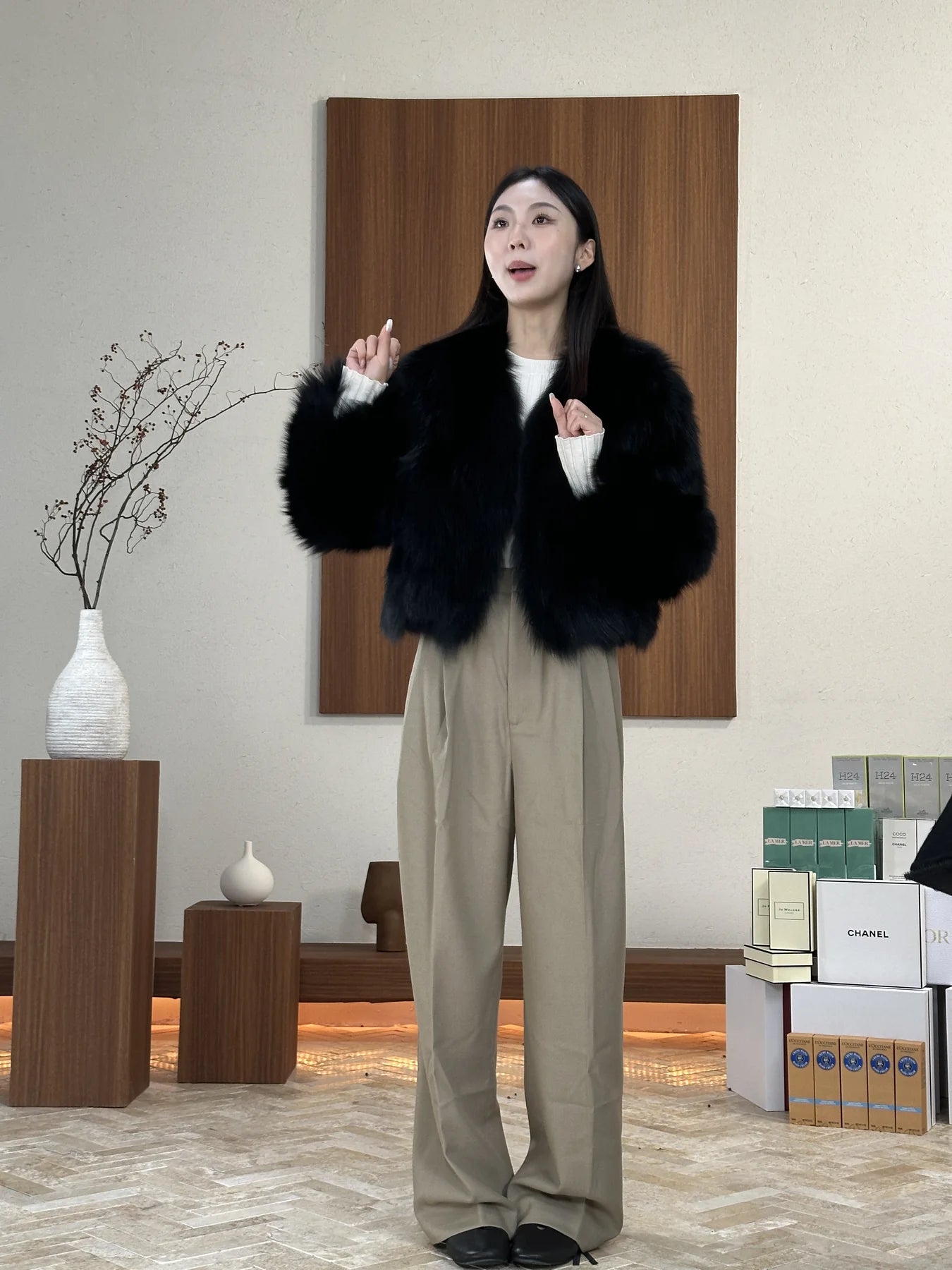
Use cream when the coat needs softness
Cream softens brown, black, grey and colored fur. It also helps a textured coat feel less severe. Use cream near the face, as a knit, tee, trouser or bag when the coat needs warmth.
Avoid random off-whites. If the cream piece looks yellow, grey or dirty beside the fur, change it.
Cream should be checked in daylight. If it makes the fur look warmer and the face softer, it is helping. If it turns yellow, grey or dull beside the coat, choose a cleaner white, oatmeal or taupe instead of trying to make the wrong cream work.
Cream is strongest when it has a job: face softness, a lighter base, a warm trouser or a quiet bag. If it appears in too many places without texture change, the outfit can look pale rather than polished.
Use denim when the coat needs daily life
Denim makes fur easier. Blue denim lowers formality, black denim sharpens, white denim freshens cream and brown, and dark straight denim can carry almost any coat color.
For the denim-specific path, use how to style fur with denim.
Denim also tells the room that the coat is being worn, not staged. A brown or black fur jacket with denim can feel natural for daytime. A long cream coat with denim needs a sharper shoe so the outfit still looks edited.
Choose the denim wash by how formal the coat feels. Faded blue can relax a short jacket, dark straight denim can support a longer coat, and white denim needs a cleaner shoe because it makes the whole outfit brighter.
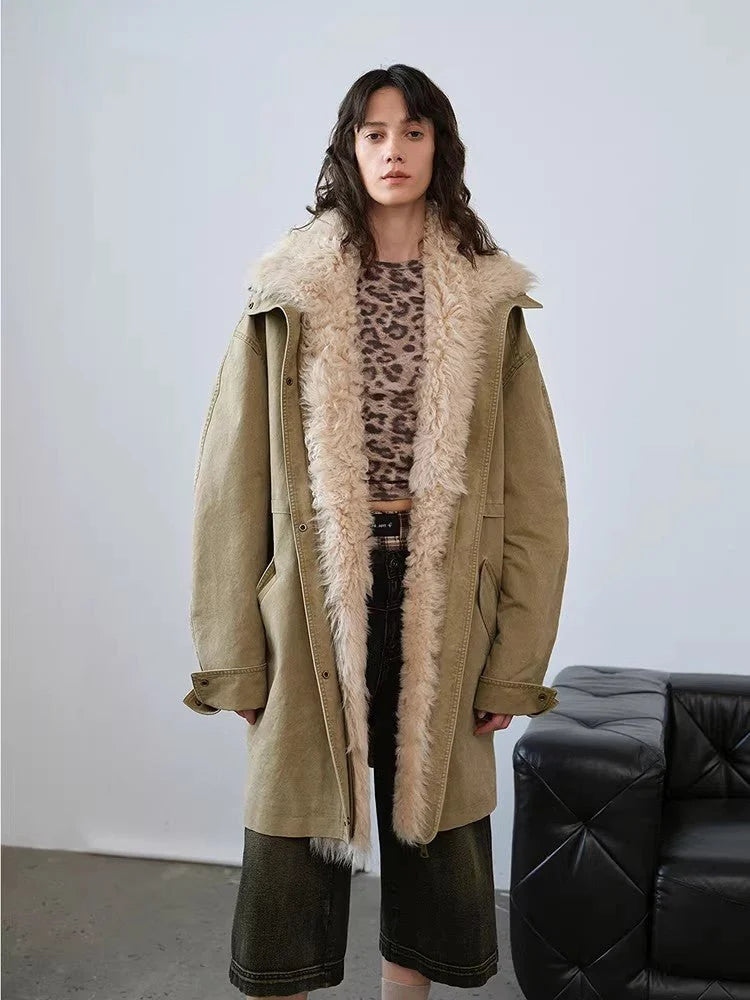
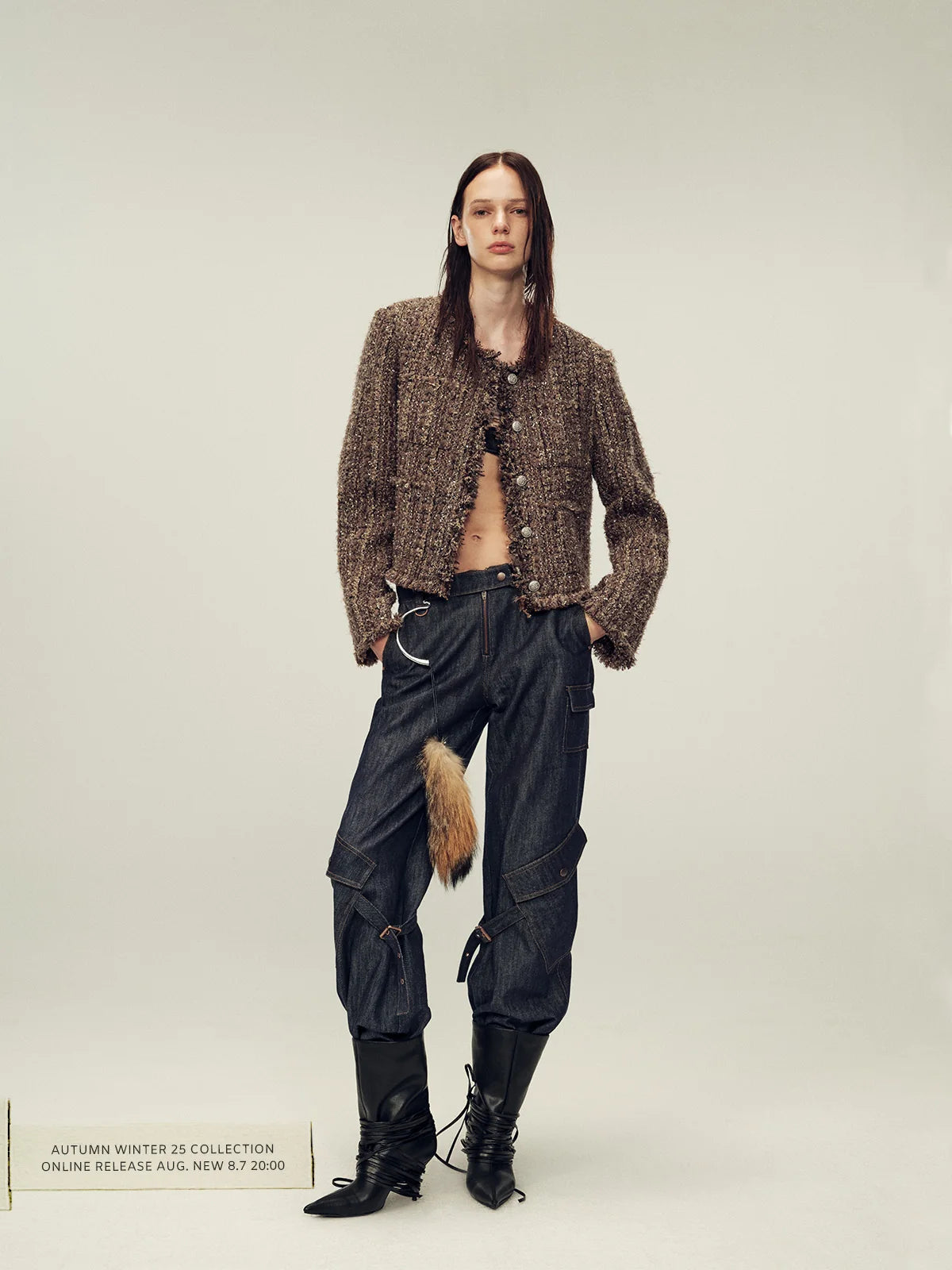
Use brown when black feels too severe
Brown boots, belts and bags are useful with black fur, cream fur, soft neutrals and warm color stories. Brown gives depth without the sharpness of black.
If the whole outfit is brown-led, use brown fur coat outfit ideas to avoid muddy middle tones.
Brown is especially helpful with cream fur, soft neutrals and warm colorful coats. It gives the outfit weight without making it graphic. If the coat is already brown, use range instead of repetition: darker boot, lighter knit, cream edge or blue denim.
Use brown when the outfit needs warmth at the edge: boot, belt, top-handle bag or a small leather detail. If brown spreads everywhere at the same depth, the outfit loses the clean line that made the color useful.
| Fur color | Easy pairings | Stronger pairings | When to avoid |
|---|---|---|---|
| Black | Grey, white, denim, black, silver. | Cream, red lip, leather boot. | When the outfit has no visible shape. |
| Brown | Cream, denim, black, camel. | Leather skirt, chocolate trouser, gold. | When every piece is the same medium brown. |
| Cream | Black, chocolate, charcoal, denim. | Winter white, taupe, soft grey. | Wet routes, heavy shoulder bags, clashing whites. |
| Colorful | Black, denim, grey, cream. | One repeated color from the coat. | Multiple bright colors without a plan. |
| Soft neutral | Brown, cream, taupe, denim. | Charcoal, black boot, suede. | All pale pieces with no depth. |
Let the shoe and bag settle the color story
If the outfit has too many colors, make the shoe and bag quieter. If the outfit looks flat, use the shoe or bag for one deeper tone. This is more reliable than adding another top, scarf or jewelry piece.
When the bag is the issue, read what bag works with a fur coat. With fur, the bag also touches the surface, so color is not the only concern.
Color matching should make the coat easier to wear again.
FireladyFur treats color matching as a repeat-wear tool. The best supporting colors should make tomorrow's outfit easier, not turn one coat into a styling project. For the broader brand and material lens, read About Firelady Fur.
 MinkUse when the outfit needs controlled polish and a dense surface.
 Fox FurUse when color, texture or collar volume is the main styling feature.
 Fur-Trim ParkasUse when the color mood needs weather, pockets and daily movement.
Color matching is one layer of the styling path. For the whole wardrobe route, use Fur Coat Styling Guide; for buying, care and material decisions, use Fur Coat Guide; for the full FireladyFur path, use Firelady Fur Guide.
Start with the pieces that leave the house
Color matching becomes practical when the shoe, bag and base layer are treated as part of the decision from the beginning.
Use a base, an anchor and a repeat
Most color matching becomes easier with three roles. The base is the largest visible clothing area. The anchor is the shoe or bag that grounds the coat. The repeat is a smaller color echo from the coat or base. For example: cream fur, black knit base, chocolate boot. Brown fur, cream sweater, blue denim. Colorful fur, black trouser, one repeated tone from the coat.
Do not force exact matching
Exact matching is rarely necessary and often risky. A bag that almost matches the fur can look accidental. A shoe that matches too perfectly can make the outfit feel staged. Contrast often looks more natural than a near match. Use depth, undertone and texture rather than chasing the exact coat color.
Let the route change the palette
A restaurant outfit can use more black, cream or shine. A daytime outfit may need denim, brown leather or softer neutrals. A party outfit can carry a brighter repeat if the room supports it. Color is not separate from where the coat is going. The same shade can be right or wrong depending on shoes, bag, weather and room.
Use the palette to reduce second-guessing
A good color formula should make getting dressed faster, not create a new matching problem every time the coat is worn.
Use color matching to reduce returns risk
A coat that clashes with the owner's everyday shoes and bags is more likely to sit unworn, even if the material is beautiful. Matching is not about perfection; it is about reducing friction every time the coat leaves the closet. Before buying or styling, check the coat against the shoes and bags that will actually be used. If none of them work, the color needs a new plan.
What to check in product photos
Look for images that show the coat beside skin tone, lining, hems and sleeve edges. Those clues tell more about color than a single front photo. If a product image is heavily filtered or too warm, do not overbuild the outfit around that exact shade.
Turn color matching into a real outfit test
The coat color has to work with the base layer, shoe, bag and route; a perfect product photo is not enough.
Start with the accessories you will actually carry
The most useful test is already in the closet: the shoes and bags already owned, because they decide whether the coat color can repeat. If the shoe and bag do not work, the coat color will be hard to repeat. Do not begin with a perfect color chart. Begin with the pieces that will leave the house with the coat.
Change the palette when the route changes
Color decisions should follow the actual route: dry dinner, work arrival, weekend errands, party storage or snowy sidewalk. A dinner palette can be cleaner and darker; a weekend palette may need denim or brown leather; a party palette can carry one brighter repeat. The same coat color can be right or wrong depending on where it is going.
Use photos to compare, not to guess
The practical photo test is this: place the coat beside the base layer, shoe and bag rather than judging the product photo alone. A coat can look beautiful alone and still fight the only boots that make sense for the route. If the product image is filtered, warm or too cropped, keep the outfit simple until the color is confirmed.
The color-matching mistake is trying too hard
The common mistake is chasing exact matching when contrast, undertone and texture would look more natural. A near match can look accidental. A deliberate contrast often looks more expensive and more natural.
Turn color matching into a shopping filter
Start with the coat color, then choose a product family only after the base, shoe and bag have a clear role. If the coat itself is not chosen yet, use Which Fur Coat Color Will You Wear Most before narrowing the collection path.
Use contrast instead of chasing exact matches
Most fur outfits look more natural when the palette has a base, an anchor and one repeat rather than a set of near-matching accessories.
Use base, anchor and repeat
Most fur color outfits become easier with three roles. The base is the clothing that remains visible. The anchor is usually the shoe or bag. The repeat is one color echo from the coat or base. Cream fur, black base, chocolate boot. Brown fur, cream knit, dark denim. Colorful fur, black trouser, one repeated tone. Simple formulas are easier to repeat.
Black and cream solve opposite problems
Black sharpens and frames. Cream softens and warms. If the coat feels too delicate, black may help. If the coat feels too severe, cream may help. Use these as tools, not rules. The right choice depends on the coat surface, the route and the shoes already owned.
Denim is the easiest casual bridge
Blue denim makes most fur colors feel more wearable. Black denim sharpens. White denim freshens brown and cream, but it needs dry conditions. If the coat looks too formal, try denim before changing the coat. If the coat still feels wrong, the issue may be length or texture rather than color.
Avoid near-match accessories unless the match is exact
A bag that almost matches the fur often looks accidental. A deliberate contrast usually looks better: black with cream, chocolate with ivory, denim with brown, grey with color. Exact matching can work, but it needs confidence and usually a cleaner outfit around it.
When the color formula should change
Weather, room, shoe and bag can make the same coat color feel polished one day and overworked the next.
Use the coat's undertone before the color name
Black, brown, cream and grey are not enough as labels. Warm brown and cool brown need different partners. Ivory and pure white need different shoes. Hold the coat near the clothes and accessories, not against a blank wall.
Let the most difficult item choose first
If the shoes are hard to change, match the outfit to the shoes. If the bag must be carried, solve the bag. If the coat collar is strong, solve the neckline. Color matching becomes easier when the hardest fixed item is named early.
One unexpected color can work if the rest is calm
A red bag, blue denim, green knit or burgundy boot can work with fur when the rest of the outfit is quiet. The unexpected color should feel like a decision, not an accident.
Color should make getting dressed faster
The best color formula is the one that gets repeated without overthinking. If every outfit takes too long, the color plan is too fragile. Choose combinations that can survive mornings, weather and real shoes.
The best color match is the one that survives the whole day
A color pairing can look right in a mirror and fail as soon as the coat opens, the bag moves to the shoulder, or the shoe meets wet pavement. Treat color as a full outfit test rather than a flat match between two objects.
Put the coat with the base layer, shoe and bag that will actually be worn. Then remove the coat and check the outfit again. If both versions make sense, the color match is useful. If only the closed-coat version works, the base needs more structure before the palette is finished.
The final match should make the outfit easier, not more fragile. When one shoe, one bag or one knit must be replaced every time the coat appears, the palette is too dependent on styling effort.
Color matching gets easier when the outfit has three jobs
Give the base layer one job, the shoe one job and the bag one job. The base can soften or sharpen the coat. The shoe can ground the route. The bag can either repeat a tone or stay quiet enough not to touch the fur story too loudly.
When all three jobs are clear, color matching becomes less fragile. The outfit does not depend on exact shade matching, and the coat can be worn again with small changes instead of a completely new formula.
Make the supporting color earn its place.
The best match should improve the outfit after the coat opens, not only make a product photo look coordinated.
FAQ
What color clothes go with a fur coat?
Black, cream, denim, grey, brown and one repeated tone from the coat are usually the easiest starting points.
Should shoes match the fur coat?
They do not have to match. Shoes should ground the coat color and fit the route.
Can I wear bright colors with fur?
Yes, but use one clear bright idea. Keep the base, shoes and bag calmer unless the event is intentionally bold.
Match color to repeat outfits
Build the base, shoe and bag first; then let the coat color finish the look.


