


Résumé de l'article
Essayez la fausse fourrure marron avec des mailles ivoire et un jean, une veste courte noire sur une robe verte, ou un manteau rose avec un pantalon gris anthracite et des accessoires bordeaux. Partez de pièces que vous possédez déjà, puis ajustez l'ourlet, le contraste des textures et la position du sac.
Commencez avec les vêtements que vous portez déjà
Choisissez les vêtements que vous souhaitez porter, puis utilisez la couleur et la coupe du manteau pour créer un lien entre eux. La veste marron ci-dessous fonctionne avec un pull ivoire et un jean bleu ; la veste noire courte laisse entrevoir une robe verte ; le manteau rose se porte sur une tenue habillée gris anthracite. Chacun possède ses propres chaussures et son propre sac, vous pouvez donc commencer par la combinaison la plus proche de votre garde-robe.
Si vous hésitez entre de la fausse fourrure, de la fourrure véritable ou de la peau lainée, comparez quel type de manteau vous porterez le plus. Les combinaisons présentées ici sont destinées à styliser un manteau en fausse fourrure sans chercher à imiter un autre matériau.
Commencez par la silhouette sous le manteau. Un jean droit laisse une jambe définie sous un ourlet volumineux ; un pantalon mat contraste avec une fourrure brillante. Choisissez une encolure qui se place confortablement sous le col, puis un sac qui contient ce dont vous avez besoin sans pousser la manche vers l'extérieur.
Un manteau volumineux ou coloré peut s'associer à des vêtements ordinaires. Le jean, une maille fine ou un pantalon mat en changent l'allure ; rien n'a besoin de ressembler à une garde-robe coûteuse. Gardez un accessoire fantaisie si vous l'aimez, puis voyez si sa couleur ou son échelle ne concurrence pas la partie du manteau que vous souhaitez mettre en valeur.
Fausse fourrure marron avec jean et baskets
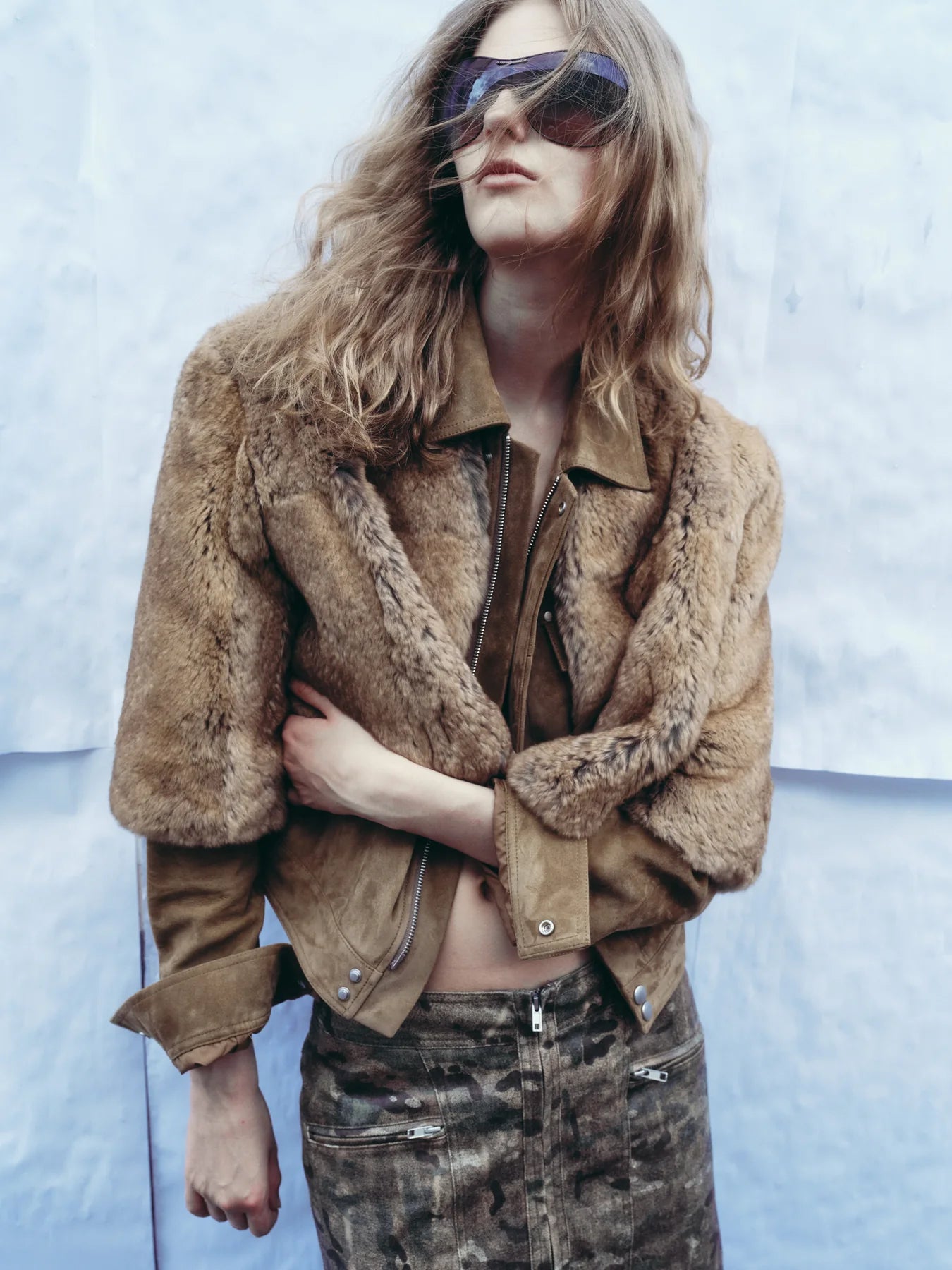
Une veste marron arrivant aux hanches pour un samedi ordinaire
Enfilez une veste en fausse fourrure marron arrivant aux hanches sur un pull ivoire à col rond et un jean bleu droit. Laissez le pull rejoindre la taille ou rentrez-le légèrement devant ; un long pull dépassant largement sous la veste ajoute un second bloc au niveau des hanches. Terminez avec des baskets basses crème et un petit sac à fermeture éclair marron. Le jean et les baskets en font une tenue de tous les jours sans nécessiter une autre pièce élégante.
Pour une longue journée de marche, utilisez les chaussures de soutien que vous trouvez déjà confortables et faites un ourlet au jean selon la hauteur de la semelle. Leur prix ne détermine pas si la tenue fonctionne. Ici, « meilleur » signifie une coupe adaptée, un état correct et une forme qui vous plaît par rapport à l'ouverture du pantalon. Un sac en toile souple peut également fonctionner ; il n'a pas besoin d'imiter un sac de luxe.
Lorsque vous retirez la veste dans un café, le pull et le jean restent une tenue complète. Par temps plus froid, privilégiez des chevilles couvertes et des bottines appropriées plutôt que de garder une version cheville nue uniquement pour la photo.
Une veste courte sur une robe midi verte
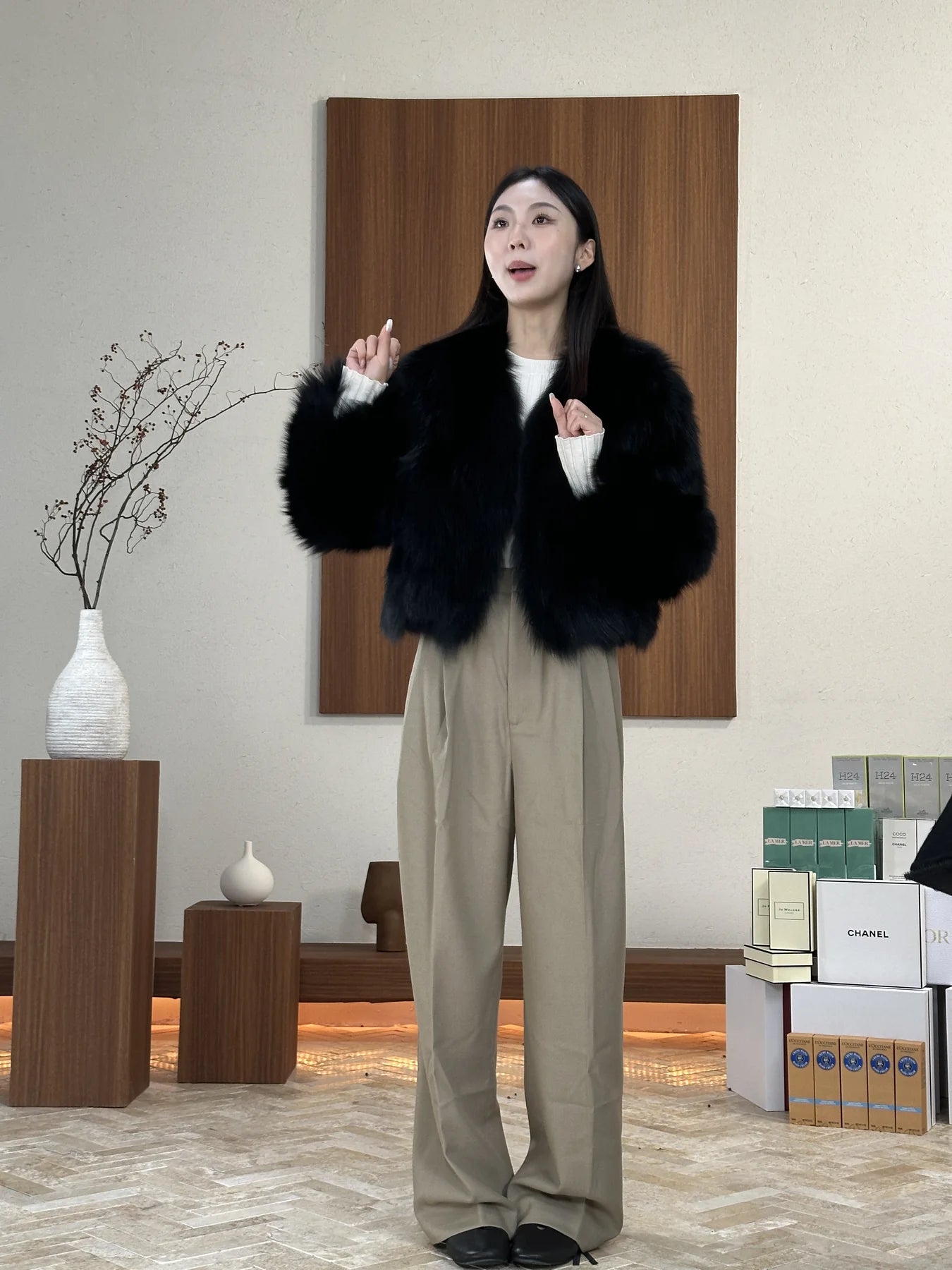
Un manteau court sur une robe de soirée
Une veste courte noire en fausse fourrure peut se porter au-dessus de la taille d'une robe midi vert foncé. Ajoutez des collants noirs, des bottines noires à talon stable et une petite pochette lisse. La veste courte expose la taille et la jupe de la robe au lieu de les couvrir jusqu'à mi-cuisse. Pour une robe plus droite sans couture à la taille, gardez la veste ouverte à l'intérieur et laissez voir l'avant de la robe sans interruption.
Un manteau long et ébouriffé donne à la même robe un effet différent : plus de couvrance et une silhouette plus large. Gardez la pochette à la main plutôt que de la coincer fermement sous le haut du bras, où elle pousserait la manche vers l'extérieur. Aucune des deux versions ne nécessite d'achat supplémentaire ; commencez par changer la longueur du manteau et comparez ce qui reste visible de la robe.
Rose, gris anthracite et bordeaux
Portez un manteau vif sans accorder tous les accessoires
Essayez un manteau rose en fausse fourrure longueur genou sur un haut en maille fine gris anthracite et un pantalon droit de la même couleur, avec des bottines bordeaux et un sac à main de la même teinte. Le gris anthracite unit les couches supérieure et inférieure ; le bordeaux ajoute une seconde couleur sans rivaliser avec le rose par sa luminosité. C'est une combinaison de couleurs possible, et non une règle stipulant qu'un manteau vif doit toujours être porté sur du noir.
Pour une alternative décontractée, remplacez le pantalon par un jean bleu foncé et gardez les bottines bordeaux. Laissez le manteau ouvert quand vous êtes à l'aise pour que la ceinture et la ligne du pantalon restent visibles. Si le manteau doit être fermé pour rester au chaud, jugez cette silhouette pour ce qu'elle est ; la base cachée ne peut pas assurer le travail visuel.
Une maille crème ou un jean noir offre une autre base simple pour un manteau vif. Répéter une couleur d'un manteau à motifs sur les bottines est également une option ; vous n'êtes pas obligée d'assortir chaque couleur de son poil.
La couleur et le poil ébouriffé attirent tous deux l'attention. Ajoutez une écharpe ou un sac imprimé si vous aimez la combinaison, puis vérifiez quelle part du manteau reste visible à côté.
Si le poil est long et ébouriffé, lisez notre guide de style pour manteau en fourrure à poils longs ; les règles concernant les accessoires sont similaires.
Changez les textures environnantes
Certaines fausses fourrures paraissent volumineuses à la lumière du jour et brillantes sous l'éclairage des restaurants ou des magasins. Pour réduire la réflexion ailleurs, essayez un pantalon noir mat et un sac lisse, non verni. Garder un accessoire verni reste une option si vous appréciez une tenue plus réfléchissante.
Avec un manteau coloré, essayez la tenue une fois sans écharpe imprimée ni sac fantaisie, puis ajoutez cet accessoire. La différence montre si vous préférez une seule pièce maîtresse ou plusieurs. Les baskets et un sweat à capuche ne sont pas automatiquement trop décontractés ; ils forment simplement une tenue différente de celle avec la robe verte et les bottines.
| Préférence de tenue | Un ajustement à essayer | Changement visible |
|---|---|---|
| Montrer davantage le manteau | Déplacez le sac de l'épaule à la main. | Plus de visibilité sur la manche et l'ouverture avant. |
| Réduire la réflexion | Essayez un pantalon mat avec le manteau. | Contraste entre le pantalon et le poil brillant. |
| Montrer moins de détails ludiques | Essayez la tenue sans l'accessoire fantaisie. | Une vue plus claire du manteau ; gardez l'accessoire si vous le préférez. |
| Séparer les couches | Essayez une maille plus fine au cou et aux manches. | Plus d'espace autour du col et des poignets. |
Supprimer un détail concurrent peut rendre le manteau plus facile à voir. Essayez d'enlever une écharpe à motifs lorsque le col remplit déjà l'encolure, ou déplacez un grand sac de l'épaule à la main. Conservez la couleur et la texture du manteau si ce sont les aspects que vous appréciez.
Essayez le manteau avec vos bottines habituelles et votre sac chargé. Vérifiez si l'ouverture du pantalon accroche sur la tige de la botte et si le sac déforme la manche ou le devant du manteau.
Savoir distinguer un ajustement de tenue d'un défaut de vêtement
Une encolure ou un ourlet de pantalon peut être modifié. Des coutures lâches, un envers exposé à la manche, une fermeture qui tire sur la poitrine ou une doublure qui restreint les mouvements nécessitent une intervention sur le vêtement lui-même. Changer les vêtements environnants ne réparera pas une couture et ne fournira pas plus d'aisance au niveau de la poitrine.
Respectez l'étiquette d'entretien du manteau avant de le laver, de le brosser ou d'appliquer de la chaleur. Les vêtements en fausse fourrure peuvent avoir des mélanges de fibres, des doublures et des garnitures différents ; une méthode autorisée pour une pièce peut être inadaptée pour une autre. Le comparatif d'entretien fourrure réelle vs fausse aborde ces limites indépendamment du style.
Pour les lecteurs qui envisageraient la fourrure animale naturelle, Artisan Fur propose une autre référence de couleurs et de silhouettes ; cette collection n'est pas une sélection de fausse fourrure. Si éviter la fourrure animale fait partie de vos choix, gardez votre manteau synthétique et utilisez les combinaisons vestimentaires ci-dessus. Le guide comparatif explique les différents choix de matériaux.
L'avis de FireladyFur sur le style en fausse fourrure
Choisissez la tenue autour du manteau
Les conseils de style de FireladyFur commencent par les trois combinaisons présentées ici : marron avec jean bleu, veste courte noire avec robe verte, ou rose avec gris anthracite et bordeaux. La couleur, l'ourlet et la position du sac sont des éléments que vous pouvez ajuster avec votre propre garde-robe. La densité du poil ou un sac coûteux ne remplacent pas une tenue que vous appréciez. Lisez la section À propos de Firelady Fur pour le contexte de la marque et les normes éditoriales de FireladyFur.
Plus de textures et d'idées de tenues
Utilisez l'article sur les poils longs pour les proportions adaptées. Le lien Artisan Fur est une référence optionnelle en fourrure animale naturelle pour les lecteurs qui considéreraient ce matériau ; il ne propose pas de produits en fausse fourrure et n'impose pas de changer votre préférence de matériau. Le comparatif d'entretien explique les limites de nettoyage distinctes pour la fausse fourrure et la fourrure naturelle.


