


Choose the layer people will see when the coat opens: smooth in the sleeve, warm on the way there, and polished enough to stand on its own indoors.
Dress for the first room you enter
The layer under a fur coat becomes visible in small moments: a restaurant lobby, office elevator, hotel corridor, car seat, coat-check line or winter party. It does not need drama. It does need to look like part of the outfit once the coat is open.
Good base layers sit close to the body but still look like clothes: a fine turtleneck, silk blouse, ribbed knit, bodysuit, shaped dress, crisp shirt or smooth tee under denim. If shoes and bags are still undecided, use what to wear with a fur coat; this page stays with the layer closest to the coat.
Silk blouse or fitted knit
Looks finished when the coat comes off.
Fine sweater or clean shirt
Survives hours indoors without looking like a base layer.
Thin thermal under a real top
Adds warmth without swelling the sleeve.
Keep warmth thin where the coat moves
A heavy sweater can feel comforting in the closet and still cause trouble once the coat is on. The shoulder lifts, the sleeve twists, the front pulls, and the coat begins to look smaller than it is. That is why thin warmth matters: merino, cashmere, silk, fitted thermals, close ribbing, or a bodysuit underneath a visible top.
If a coat looks beautiful over a camisole and awkward over your real winter sweater, do not treat the photo as the truth. Try the coat over the warmest layer you would actually wear. If it cannot handle that layer, either choose a thinner base or choose a roomier coat shape.
Give the face enough space
A turtleneck is not automatically elegant under fur. It is elegant when the fur opens away from the throat: V-neck mink jackets, collarless shapes, lower collars, open fronts. Under a high fox collar or plush stand collar, the same turtleneck can make the neck disappear.
When the upper half feels crowded, lower one element. Change a roll neck to a mock neck, a mock neck to a crew, a heavy necklace to a small earring, or a scarf to gloves. The fix is usually near the face, not in the whole outfit.
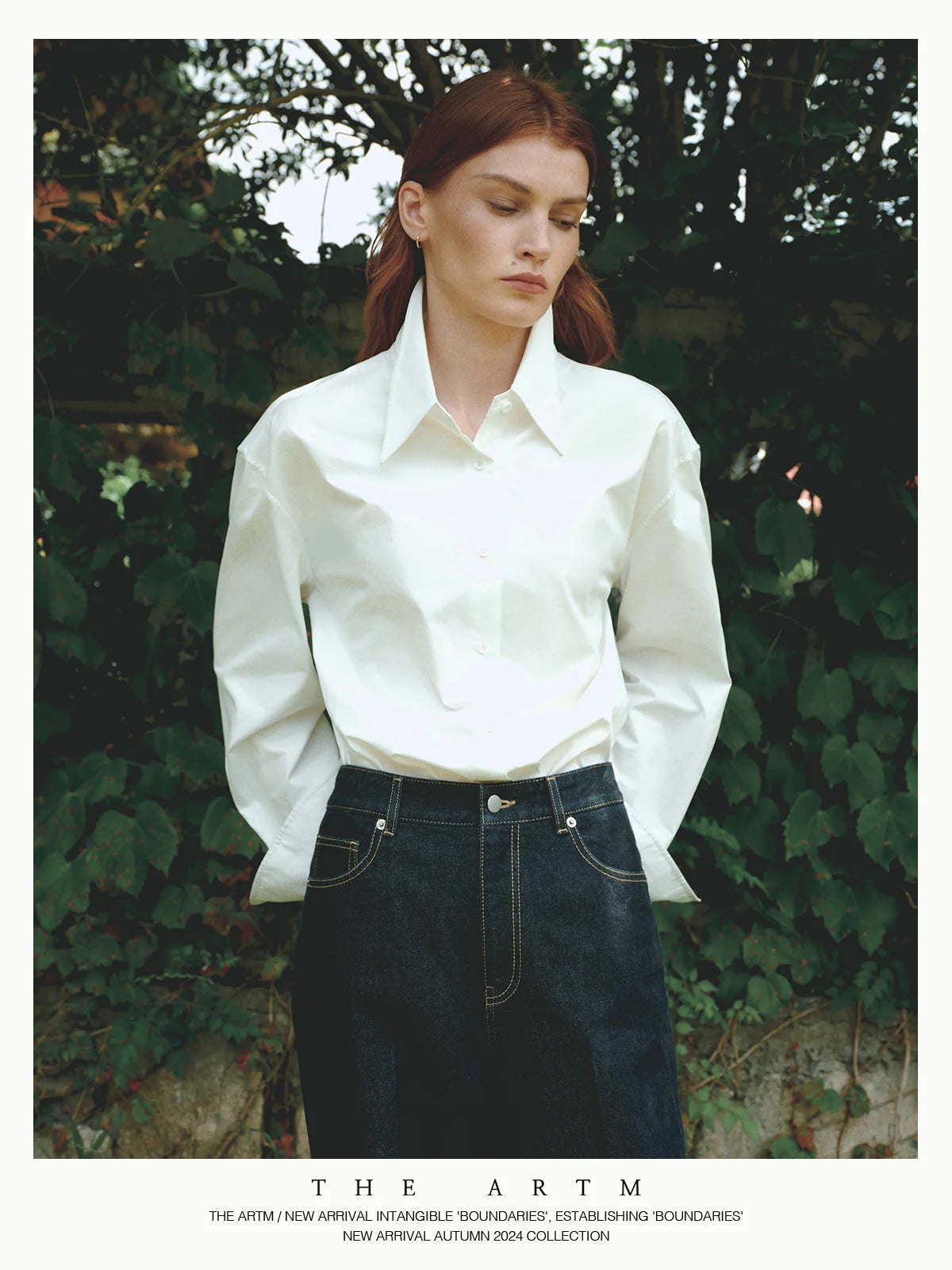
A blouse changes the coat more than people expect
A silk blouse, satin shirt, or crisp button-down gives fur a different mood from knitwear. It makes the coat feel more dressed, lighter indoors, and easier with trousers. The risk is warmth: the blouse may look perfect and still leave the wearer cold between car and door.
Use a blouse when the room matters as much as the sidewalk. If the whole outfit is for dinner or work, this can be the cleanest answer. If the day is mostly outdoors, move toward fine knitwear or read fur coat with knitwear outfit ideas before choosing.
Dresses need a layer that does not steal the dress
A sleeveless or slip dress can take a thin layer underneath, but only when the layer feels deliberate. Black under black, cream under cream, or a close tonal knit under a simple dress often works. A high-contrast thermal under a delicate dress usually looks like a weather compromise.
If the dress has shine, lace, straps, or a strong neckline, let the dress stay clean and use the coat for warmth. For dress-led decisions, fur coat with dress outfit ideas gives the hem, shoe, and bag order.
Denim and trousers need a top that earns the coat
With jeans, the base can be very simple: a clean tee, ribbed tank, fine sweater, denim shirt, or slim turtleneck. With trousers, the top usually needs more polish: a silk blouse, fitted knit, bodysuit, or shirt with a collar that sits cleanly under the fur.
The test comes after the coat is removed. If the base still looks dressed, the fur reads as a finish. If the base looks like something grabbed from under a winter coat, the fur starts to feel overdressed.
| Base layer | Best with | Watch |
|---|---|---|
| Fine turtleneck | Open-front mink, short jackets, trousers | High fur collars can crowd it |
| Silk blouse | Dinner, work, tailored pants | Needs warmth from the coat |
| Thin thermal plus visible top | Cold walks, city errands | Keep thermal hidden at cuff and neck |
| Knit dress | Restaurants, travel days, casual evenings | Texture can get heavy under plush fur |
Sleeves are the fastest fit test
Bend the elbow, reach for a bag, and close the coat. If the sleeve pulls across the upper arm, the base layer is too thick for that coat. If the lining catches on buttons, raised seams, or chunky ribbing, the outfit may feel irritating after twenty minutes.
A coat that looks best open can still be useful, but style it honestly. If the day requires the coat to close, the base layer needs enough room inside the sleeve and shoulder to keep the coat's shape clean.
A cardigan is useful only when it can disappear
A thin cardigan is useful for a train, flight, office day or long dinner because it can come off quietly. Choose one that folds small, slides under the coat, and has no bulky buttons or dropped shoulder seams that make the front look uneven.
If the cardigan is the warmest piece you own and you wear it constantly, choose the coat around that reality. A relaxed fur jacket, shearling, or practical outerwear may be smarter than forcing a narrow polished coat over everyday bulk.
Bring the layer you actually wear.
Do not test a winter fur coat over a thin showroom top if your real life uses sweaters. Test the coat over the warmest base that still looks like clothing indoors. That one try-on tells more than a size chart.
Color can quiet the layer or frame the fur
Black, ivory, camel, grey, chocolate and deep navy leave the fur surface easy to read. A lighter base under dark fur can frame the face; a dark base under pale fur can sharpen the coat. Prints can work when the scale stays calmer than the fur.
When the base layer is meant to disappear, match it to the trouser or dress. When it frames the coat, repeat the color in the shoe or bag so the outfit feels connected.
FireladyFur reads the layer after the coat has moved
FireladyFur reads base layers after the coat has been worn for a few minutes: the shoulder should stay relaxed, the sleeve should slide cleanly, the collar should leave the face open, and the outfit underneath should still look finished when the coat opens. If the layer makes the coat pull or twist, change the layer before blaming the fur.
Once the layer is settled, the next useful decisions are what shoes go with a fur coat and what bag works with a fur coat. Both change how the layer looks once the full outfit is moving.


The base layer should still work at coat check
Dinner, office and travel outfits all have a coat-off moment. A thin black turtleneck, silk blouse, ribbed bodysuit or clean knit dress needs to look intentional when the coat is on a chair or over an arm.
If the layer only works while hidden, the outfit will feel unfinished indoors. The coat should finish the look, not rescue it.
Use color to either disappear or frame the collar
Black, cream, camel, grey and chocolate sit easily under most fur colors. A lighter base under dark fur can frame the face; a dark base under pale fur can sharpen the coat. Prints can work, but they need to be calmer than the fur.
When the layer is meant to disappear, repeat the trouser or dress color. When it frames the coat, repeat that color once in the shoe or bag so the outfit feels connected.
Thin does not have to mean plain
A fine black knit, cream ribbed top, silk shirt, close bodysuit or smooth tee can look modest on the hanger and still be exactly right under fur. Those pieces let the coat keep its shoulder, sleeve and collar shape.
If the layer needs a scarf, loud jewelry and a big bag before it looks finished, it may be too weak for the outfit.
Dinner layers have to behave at the chair
At dinner, the coat may come off before the meal starts. The blouse, knit or dress underneath should still look intentional at the table, in warm lighting, and beside the bag.
A sleeve that catches the plate edge or a neckline that collapses after the coat is removed will make the entrance stronger than the evening itself.
Travel layers need a smooth surface
For flights, trains and long car rides, choose knits and tops that slide against the lining. Rough wool, raised seams and thick ribs can make the sleeve tiring because the coat keeps catching.
A smooth fine knit with a warmer scarf in the bag often works better than one heavy sweater trapped under fur.
If the sweater is non-negotiable, change the coat
Some wardrobes are built around heavy sweaters. If that is the real habit, choose a roomier jacket, shearling or fur-trim outerwear instead of forcing a narrow polished fur coat over bulk.
A practical layer can still look polished when the coat is chosen for the way it will actually be worn.
The lining tells you before the mirror does
Put the coat over the real top and move both arms forward as if holding a steering wheel or carrying a tray. If the sleeve lining grips the knit, twists at the elbow or pulls the shoulder upward, the layer is too rough or too thick for that coat.
This matters more than the front mirror. A layer can look clean while standing and still make the coat annoying during a car ride, dinner service or shopping day.
Once the layer works, build the rest of the outfit
After the clothing closest to the body feels right, browse by the way the outfit will actually be worn: polished dinner, city errands, travel, office layers, dry winter days or weather-aware outerwear.
 MinkUse when the outfit needs smoother polish and a closer surface.
 Artisan FurUse when the outfit can support a more designed outer layer.
 OuterwearUse when warmth and practicality matter more than visible fur.
FAQ
Can I wear a thick sweater under a fur coat?
Only if the coat has enough sleeve and shoulder room. Fine sweaters are usually easier because they warm the outfit without making the coat look swollen.
Is a turtleneck good under a fur coat?
A fine turtleneck works well under open collars and V-neck jackets. It can crowd a high fur collar, so check the side view before wearing it.
What should I wear under a fur coat for dinner?
Wear a dress, silk blouse, fine knit or tailored base that still looks finished after the coat comes off.
What base layer is best for cold weather?
Use thin warmth: fine wool, silk, thermal layers or a fitted knit. Avoid bulky layers that stop the coat from closing cleanly.
Fix the closest layer first
If the sleeve, shoulder or neckline feels crowded, change the base layer before assuming the fur piece is wrong.


