


Textured fur already has movement. The rest of the outfit should give it a frame: clean pants, calmer shoes, a simpler bag and enough space around the collar for the surface to read clearly.
Textured fur already has movement
Shaggy, curly, patchwork and long-pile fur do not need much help to be noticed. The outfit should give the texture a clean frame, especially around the collar, sleeve, bag and shoe.
Use the color decision article if the problem is shade. Stay here if the surface is the loud part: length, pile, curl, patchwork, collar or volume.
That movement is part of the pleasure of textured fur. The problem starts when every other piece also moves: a fringed bag, loose scarf, wide sleeve, distressed hem and heavy jewelry can make the coat look less expensive than it is.
Keep one still area in the outfit. It can be a clean trouser, a plain knit, a smooth boot or a small bag. The still area gives the texture a frame and keeps the look from feeling like every piece is asking for attention.
Keep the neckline simple
A busy scarf or large jewelry can make textured fur look crowded.
Watch bag contact
Long pile near a shoulder strap can flatten or twist.
Choose a grounded shoe
A clean boot or trouser break keeps volume from floating above the ground.
Use cleaner clothes around long pile
Long pile looks best beside clothes that know their job: straight jeans, tailored trousers, a narrow dress, a fine knit, a plain tee, a clean boot. The texture can be dramatic while the outfit remains simple.
If the base layer is fuzzy, ribbed, printed and oversized at the same time, the coat loses its outline. Let one surface carry the texture.
Cleaner does not mean boring. A pressed trouser, good denim wash or narrow knit can be very stylish because it gives the pile a boundary. The coat supplies the movement; the clothes underneath supply the line.
Before leaving, look at the outfit with the coat open. If the base still looks intentional without the fur doing all the work, the texture is probably framed well. If the base looks messy, simplify the neckline or lower half first.
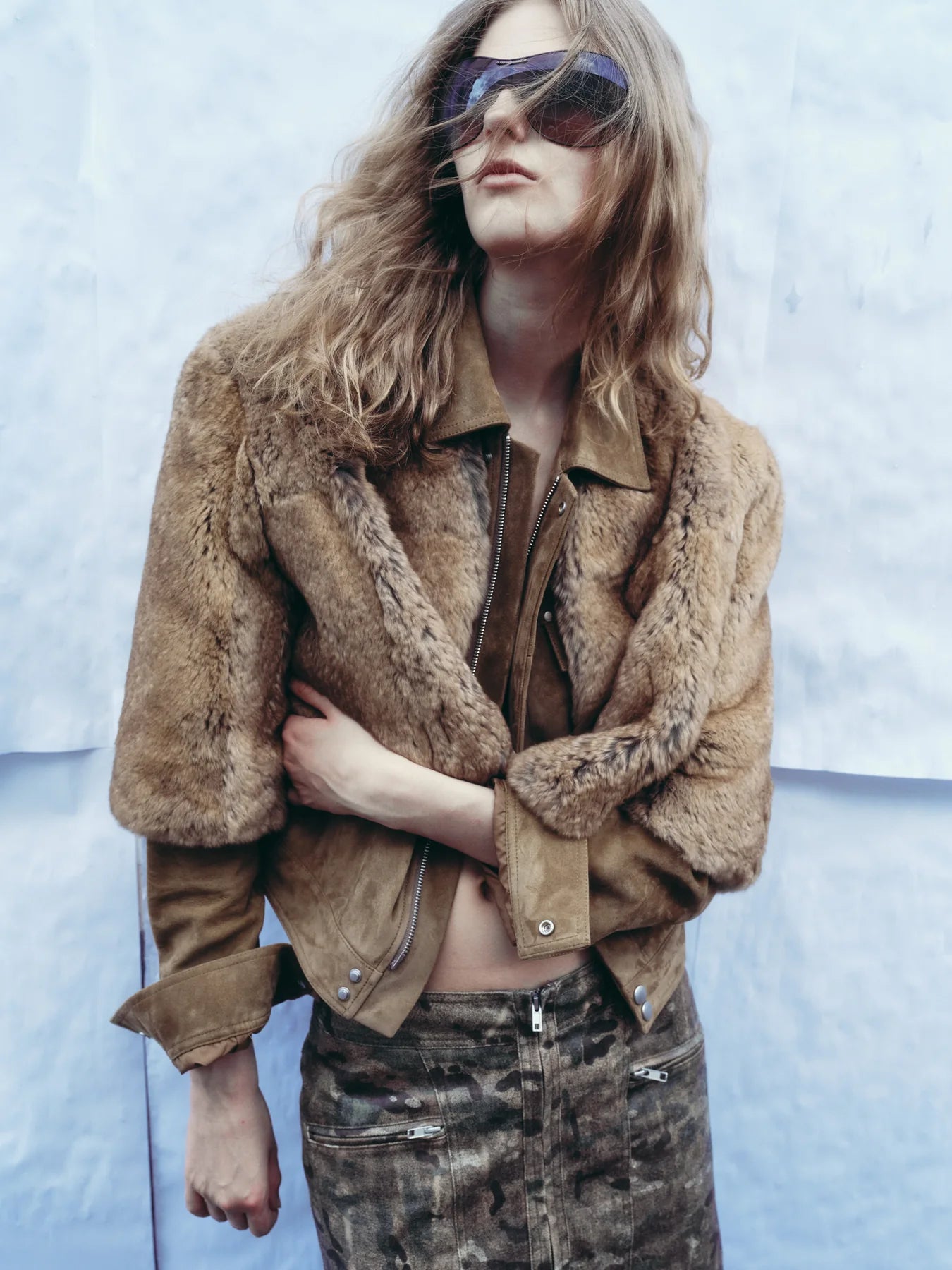
Patchwork and ombre need color restraint
Patchwork fur already creates a color story. Pull one shade from the coat for the base, shoe or bag, then leave the rest alone. A second print usually has to be very deliberate to work.
When color becomes the main issue, use how to style a colorful fur coat. Texture and color often arrive together, but one should be the main focus.
If the coat has several tones, choose the easiest one to repeat rather than the brightest one. A brown boot from an ombre coat, a black trouser from a patchwork panel or denim that echoes a blue section can make the styling feel calm without hiding the coat.


Smooth accessories help the surface read clean
A smooth boot, smaller bag, plain belt or simple earring can make textured fur look expensive. Big hardware, fringe, chunky scarves and heavily textured bags can make the whole outfit feel noisy.
For accessory contact, use what bag works with a fur coat before wearing a heavy shoulder bag with long pile.
| Texture | Best outfit support | Avoid |
|---|---|---|
| Shaggy | Straight denim, narrow dress, simple boot. | Fuzzy scarf and oversized bag together. |
| Curly | Tailored trouser, clean knit, low-profile jewelry. | A busy neckline that fights the pattern. |
| Patchwork | One repeated color from the coat. | Second print without a clear reason. |
| Long collar | Open neckline or simple turtleneck. | Large necklace and scarf at the same time. |
Texture should look deliberate from a real side view.
For textured fur, FireladyFur's practical test is side view and contact points. Long pile, patchwork or ombre should look designed around the collar, sleeve, bag and hem instead of uncontrolled once the wearer moves. Brand context: About Firelady Fur.
Artisan FurUse when the outfit can support color, pattern and a more designed surface. Fox FurUse when the color story should be dramatic but still wearable.
 FurUse when you want to compare color, texture and short shapes together.
If texture is deciding the whole purchase, not only the outfit, compare options in the Fur Coat Guide. The broader FireladyFur path sits at Firelady Fur Guide, while neighboring styling choices stay in Fur Coat Styling Guide.
Frame texture before adding more interest
Textured fur does not need the whole outfit to be plain, but it needs enough clean shape around it to look intentional.
Use plain pieces without making the outfit boring
Plain does not mean careless. A good plain piece has shape: straight denim, a pressed trouser, a close knit, a simple dress, a clean boot. Those pieces give textured fur a frame. If the base is too thin or unfinished, the fur looks like it is hiding the outfit. If the base is clean, the texture looks chosen.
Let the collar have space
Textured fur often changes the neckline first. Large collars, long pile and curly surfaces can crowd hair, earrings and scarves. Keep that area calmer unless the whole outfit is meant to be dramatic. A lower neckline, close turtleneck or simple crewneck can all work. What usually fails is a thick scarf, large necklace and high collar together.
Use photos to check volume
A textured coat can look smaller in a mirror than it does in a photo. Take one front view and one side view. If the side view looks bulky, simplify the bag, shoe or lower half before rejecting the coat. Volume is not a flaw. It simply needs a cleaner frame.
Use photos and accessories to control volume
Side view, collar height, sleeve volume and bag shape decide whether textured fur reads clean or crowded.
Texture changes the formality level
A smooth fur surface can look formal quickly. Shaggy or curly fur usually feels more expressive. Patchwork can feel artistic or casual depending on color. The more visible the texture, the more the base outfit should clarify the occasion. For dinner, keep the base polished. For weekends, denim and boots can help. For work, choose texture carefully and avoid anything that feels too theatrical for the room.
What to check in product photos
Look at side view, collar height and sleeve volume. Textured fur can look controlled from the front and much larger from the side. If the coat already has a lot of movement, plan a quieter bag and shoe. The product photo may not show how much space the surface takes in motion.
Give textured fur a cleaner frame
Long pile, patchwork and strong collars already create motion; the surrounding clothes should help the surface read intentional.
Give texture a frame before adding interest
Useful supporting pieces include straight jeans, plain knits, narrow dresses, smooth boots, simple bags and one clear neckline. They are not boring; they are the frame that lets texture look deliberate. The base can still be stylish, but it should not compete for the same attention as the fur surface.
Texture wants dry routes and enough space
Textured fur is strongest for dry cold days, dinners, weekends and events where texture can be seen without fighting rain or crowded storage. It does not love cramped storage, wet sidewalks or heavy shoulder straps. If the day involves those things, choose a shorter textured coat, a smoother fur or a practical outerwear layer with trim.
Side view is the honest texture photo
Use product photos and mirror checks for this: take a side view because texture often grows wider in motion than it looks from the front. Texture often looks controlled from the front and wider from the side. If the side view feels large, simplify the bag and lower half before deciding the coat is wrong.
The messy-texture mistake is usually near the collar
The common mistake is adding a scarf, jewelry, fuzzy knit and heavy bag around a coat that already has enough movement. Hair, scarf, jewelry and neckline all sit in the same area. Clear that area first and the whole outfit usually improves.
Choose texture only when the closet has calm pieces
Choose textured fox or artisan fur when the wardrobe has clean base pieces; choose smoother mink when the closet is already visually busy. When color is also loud, use How to Style a Colorful Fur Coat Without Letting It Take Over before adding print or bright accessories.
Let one part of the outfit stay quiet
The best textured-fur outfits usually have one calm zone near the collar, sleeve, lower half or bag.
The lower half should be simpler than the coat
Textured fur already creates motion near the upper body. Straight denim, tailored trousers, narrow skirts and cleaner boots help the coat look styled rather than chaotic. If the lower half is also bulky, fringed, shiny or printed, the outfit can lose its line before the coat even becomes the issue.
Hair and neckline need editing
Long pile and large collars sit close to hair, earrings, scarves and necklaces. Keep that area calmer unless the outfit is intentionally dramatic. A clean turtleneck, open neckline or simple crewneck usually works better than a scarf, necklace and high collar all at once.
Short texture is easier than full-length texture
A short textured jacket lets the lower outfit show. That makes denim, boots and trousers easier to use as structure. A full-length textured coat becomes a stronger statement and needs a quieter base. Choose the length according to how much of the outfit should be visible.
Textured fur can work for dinner if the base is polished
A textured coat is not only casual. It can work over a narrow dress, black trouser, silk blouse or clean knit when the shoes and bag are restrained. The mistake is pairing texture with too many other attention-seeking pieces. Let the coat provide the movement.
When texture needs more restraint
Texture can look expressive in one photo and messy in motion, so the outfit has to survive side view, bag contact and movement.
Texture should not hide a weak base outfit
A textured coat can make a simple outfit better, but it should not cover clothes that look unfinished. The base still needs shape, fit and a reason. If the outfit only works while the coat stays closed, rebuild the base.
Use earrings instead of necklaces with large collars
Large collars and long pile often leave little room for necklaces. Earrings usually add polish without crowding the neckline. If the collar is low and open, a necklace can work; if the collar is high or shaggy, keep the jewelry away from the pile.
A textured coat needs a cleaner bag silhouette
Soft, floppy, fringed or heavily textured bags can make the outfit noisy. A cleaner bag shape gives the fur a boundary. If the coat is short and playful, the bag can be more relaxed. If the coat is long, keep the bag sharper.
Texture is easier in one strong area
A textured collar, cuff or hem is easier than texture everywhere. Full texture can be beautiful, but it asks for more discipline from the rest of the outfit. Choose the amount of texture according to how simple the base wardrobe is.
Texture needs one calm zone
A textured coat can handle personality, but the outfit needs at least one calm zone: a plain neckline, clean trouser, simple boot, quiet bag or bare wrist. Without that calm zone, every part of the outfit competes with the fur.
The calm zone should sit where the coat is loudest. If the collar is large, simplify hair and jewelry. If the sleeve is long pile, keep the bag strap light. If the hem has movement, make the shoe cleaner.
The calm zone is what makes texture look intentional in motion. When the wearer turns, sits or reaches for a bag, the fur already shifts. A quieter supporting area keeps that movement from becoming clutter.
Texture should look intentional after the first photograph
Many textured fur outfits look exciting in a still image and become harder once the wearer starts moving. The collar shifts, the sleeve brushes the bag, the hem swings, and the side view gets larger. That movement is part of the appeal, but the supporting clothes have to stay disciplined.
Keep one area especially clean. If the collar is dramatic, simplify hair, earrings and neckline. If the sleeve is full, choose a lighter bag. If the whole coat has movement, let the lower half be straight, narrow or tailored.
This is the difference between texture that feels designed and texture that looks accidental. The coat can be lively; the outfit around it still needs control.
For a daytime version, denim and flat boots can make texture feel natural. For dinner, a narrow dress or clean trouser gives the same surface a more polished setting. The fur does not change; the supporting clothes change the room it belongs to.
If the coat is expensive or delicate, keep the texture away from rough straps and scratchy jewelry. A textured surface is beautiful because it moves; it should not be constantly disturbed by the pieces around it.
That restraint also helps in photos, because the viewer can read the coat surface without searching through competing accessories first.
Look at the collar, sleeve and bag contact.
Textured fur should still have a readable outline after walking, sitting and carrying a bag. If the pile looks crowded, simplify the base.
FAQ
How do you style shaggy fur?
Use simple clothes, cleaner shoes and fewer accessories so the shaggy surface can be the feature.
Can textured fur be elegant?
Yes. Pair it with tailored trousers, a narrow dress, smooth boots or a quiet bag.
What should I avoid with textured fur?
Avoid too many fuzzy, shiny, printed or oversized pieces around the collar and sleeve.
Frame the texture
Let the fur surface lead, then keep the base, shoe and bag steady.


