


Article Summary
First check that the fur coat fits and lets you move comfortably. To reduce visible bulk, clear the neckline, smooth the first layer and compare the bag and hem. Pulling or twisting needs a fit correction before styling adjustments.
Keep the Fullness You Like, Locate the Extra Width
A fur coat can look less bulky without losing its plush collar or generous sleeves. Start by finding where the extra width appears: at the neck, under the arms, beside a bag or where the hem meets the shoes. Change the piece next to that area before deciding the coat needs to be smaller.
Put on the winter layer you actually need and fasten the coat normally. If the shoulder pulls when you reach, the front strains or the coat twists as you walk, the problem is physical fit. A darker sweater or smaller handbag cannot correct it. Compare another cut or size, and ask a furrier about alterations rather than assuming the garment can be changed easily.
Comfortable closure and a steady fit point to the pile or intended shape as the source of width. Longer hair projects beyond the underlying garment; a dropped shoulder or broad sleeve adds a different kind of volume. The same coat may be comfortable and deliberately full. You can keep that feature while making the clothes around it quieter.
Take a front and side photo in the same stance, with your arms relaxed. Then take the same views without the bag or scarf. Do not change the pose to manufacture a slimmer result. Look for the specific difference: more neck visible, less fabric under the sleeve or an unbroken line below the hem. An adjustment that works only while you hold the coat open will not solve a day when the front must stay fastened.
Read the outfit from shoulder to shoe.
A full-body image matters because bulk often appears where the collar, sleeve, bag and shoe meet in one view.
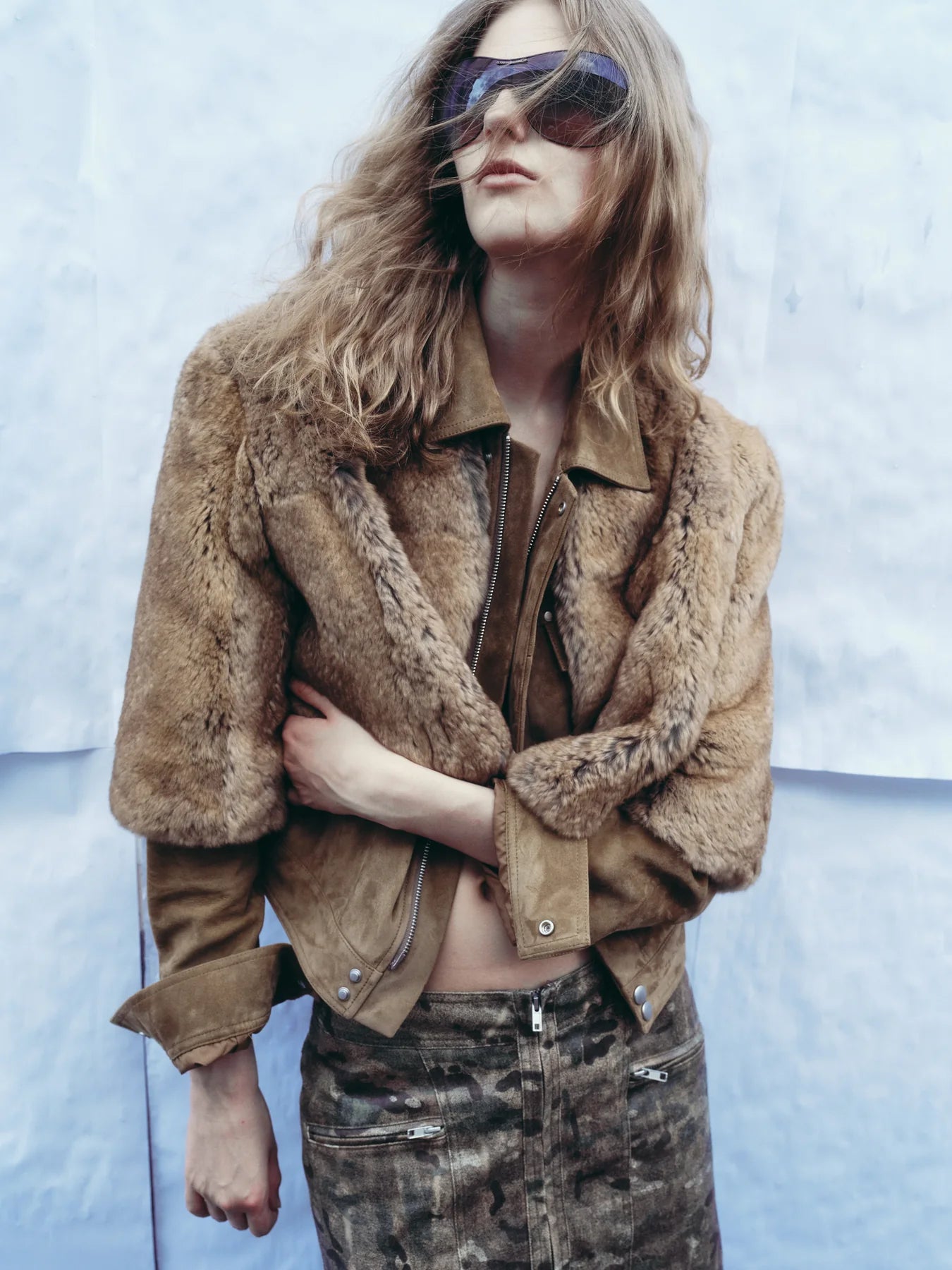
Clear the Neck and Flatten the First Layer
A large collar already frames the face. A chunky scarf, high sweater neck and hair tucked into the collar can make that area look crowded even when each piece fits. Try a fine-gauge crewneck or lower neckline, with the scarf removed indoors. Keep whatever warmth you need outdoors; the aim is to reduce stacked fabric, not to tolerate the cold for a photo.
Turn your head with the coat closed. A collar that presses under the chin or blocks the movement needs a construction and fit check. A comfortable collar that simply hides your earrings is a styling choice. Small earrings, hair kept clear of the collar or a quieter neckline can let the collar remain the main feature.
Under the arms, compare a thick hoodie with a smoother knit while keeping the trousers and shoes the same. The hoodie may add fabric at the shoulder, hood and sleeve at once. If the fine knit clears those folds and you can still reach comfortably, the first layer was contributing to the width. Continued binding means the coat's fit needs attention; changing the base layer further would only disguise it.
A fitted layer does not have to be skin-tight. Choose enough ease to sit, breathe and move. A straight knit dress or softly fitted sweater can lie flatter than a bulky cable knit without looking squeezed into the coat. The more detailed examples in balancing wide fur with slim layers help when the coat fits but the clothes underneath compete with it.
Build a Continuous Line Under an Open Coat
Wearing a coat open exposes the base outfit and breaks up a broad front. Try a black knit with black trousers, or a brown dress with boots close in color. The pieces do not need to match perfectly. A similar tone lets the eye follow the clothes beneath the fur without stopping at every waistband, belt and shoe.
This is useful for a dry, comfortable journey or a brief indoor moment. It is less useful when wind or cold means the front must remain closed. Judge the outfit both ways. A coat that looks balanced only when opened may still be the wrong shape for your ordinary winter use.
For a short jacket, a neat tuck can show where the jeans or trousers begin. A long untucked sweater may create another hem just below the fur, making the middle of the outfit look crowded. Try a partial tuck or shorter top if it sits comfortably; avoid forcing a heavy knit into a waistband that then bulges or pulls.
Contrast can stay in the outfit. A bright shoe, bag carried by hand or visible blouse can add interest away from the fullest part of the coat. If a large belt buckle and crossbody bag both sit across that area, remove one and compare. Do not tightly belt real fur just to create a waist: the pressure may flatten the pile, and the garment may not be designed for a belt.


Connect the Hem to the Shoe
A wide coat does not require a heavy boot or a high heel. What matters is how the coat hem, trousers and shoe meet. A straight trouser falling cleanly over an ankle boot can give a plush coat a calmer lower half. A trouser hem caught on a wide boot shaft adds bunching that may be mistaken for the coat's bulk.
Compare two shoes with the same clothes. With an ankle boot, check whether the trouser opening falls over the shaft or catches above it. With a loafer or flat, see whether the hem clears the ground and the toe remains visible. Walk and take a step up before choosing; a good still photograph does not settle whether the fabric drags or catches.
A chunky sole may work with a short textured jacket and straight jeans. If the coat is long and the jeans are wide, a cleaner shoe can leave more of the lower outline visible. Neither combination is a rule for every body. Wear the fuller combination when you like the shape and can move in it. Change it when the shoe disappears beneath several layers of fabric.
With a skirt or dress, check the coat-to-dress hem rather than trying to hide every difference in length. A narrow strip of dress peeking below a coat can look accidental; a clearly visible midi hem can look deliberate. The practical fur coat hemline and boot pairings cover the shaft and hem questions in more detail.
| What You See | Try First | Check the Result |
|---|---|---|
| Trousers bunch above the boot | A narrower shaft or a different trouser opening | The hem falls without catching when you walk. |
| Several contrasting lines below the coat | A shoe closer in tone to the trousers | You can follow the lower outfit without several visual stops. |
| The shoe disappears under a wide hem | A cleaner trouser break or shorter hem | The toe stays visible and fabric clears the ground. |
| The coat pulls across the shoulder | Compare another coat fit | A shoe change does not address this problem. |
Carry the Bag Away From the Pile
Try the bag with its normal contents. A filled tote can pull one shoulder down; a crossbody bag may push the front panels apart or add width at the hip. An empty bag in a photograph misses both effects. Carry it for a short ordinary movement check and look at the coat from the side.
A small top-handle bag or clutch leaves the shoulder and front clearer. It does not need to be tiny: choose one that carries what you need without forcing you to tuck it under the coat. If a shoulder bag is essential, compare a lighter load and a position that does not repeatedly rub or compress the fur. Follow the garment's care instructions where contact is unavoidable.
Compression is also a care consideration. The Canadian Conservation Institute's preservation guidance calls for space and support around fur objects. That supports avoiding cramped storage; it does not establish how long a particular handbag can touch a wearable coat without damage.
If the handbag keeps distorting the coat even after the outfit is simplified, use the fur coat bag guide to compare carrying methods. Let the coat's collar and sleeve remain the focus instead of adding a large bag beside them.
Try Two Complete Outfits Before Changing the Size
Straight Jeans for a Daytime Coat
Try straight dark jeans, a fine knit, flat ankle boots and a hand-carried leather bag. With a short plush jacket, a light tuck can show the waist; with a longer coat, let the jeans fall cleanly into the boot area. Leave the collar as the main feature and remove the thick scarf indoors. This combination tests whether the surrounding clothes were creating extra width.
A Simple Dress for an Evening Coat
Try a plain knit or softly fitted midi dress, boots or a low heel that works with its hem, and a compact bag. Choose a neckline that stays visible when the coat opens. If the dress and shoes already make a complete outfit, the fur can provide the texture without needing a second large accessory or ornate necklace beside the collar.
Photograph each outfit from the same distance, then sit and reach normally. Note one useful result: the cuff no longer catches the bag, the dress line remains visible or the front hangs evenly. A smaller-looking outfit that still limits movement is not an improvement in fit.
On a shorter frame, pay attention to where the sleeves and hem stop rather than assuming all long fur is overwhelming. Petite fur coat outfits address those scale decisions. If the broad silhouette itself is intentional, oversized fur coat styling helps you keep that shape without surrounding it with competing volume.
Compare the Same Coat in Two Outfits.
Keep the coat and camera position the same. Compare the daytime jeans outfit with the dress outfit, then note whether the neckline, bag or hem changed the fullness you see.
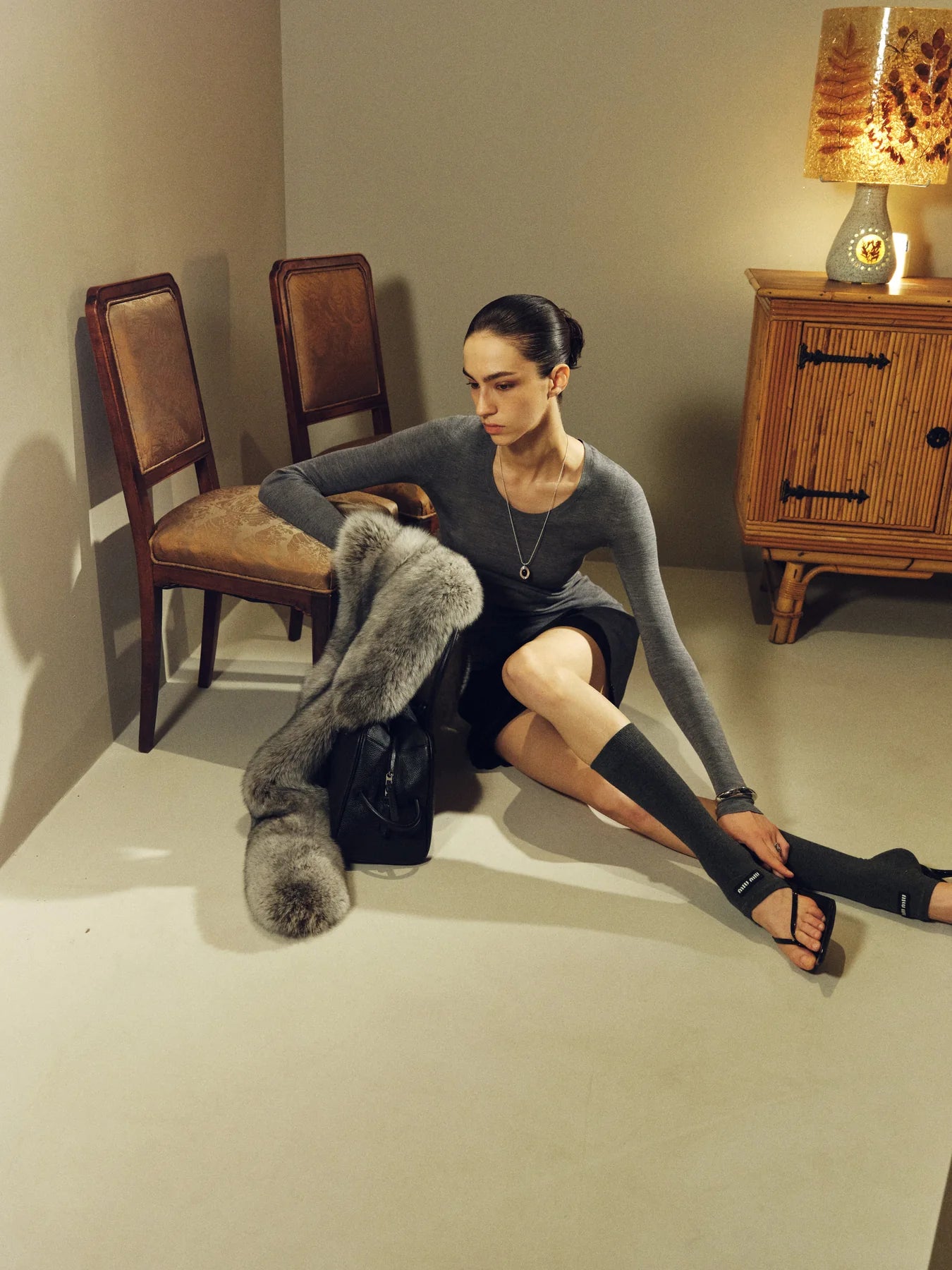
Keep One Deliberately Full Feature
A plush collar can stay. Clear the scarf and neckline beside it instead of trying to flatten the fur.
A full sleeve still needs usable length. If it covers the hand, catches at the table or restricts reaching, compare the sleeve construction rather than hiding the problem with a different bag.
A continuous base can calm the outline. Similar-toned clothes and a clean trouser break reduce interruptions without requiring tight garments.
Fit failures need a garment decision. Pulling, slipping or twisting that remains across both outfits is a reason to compare another cut.
Compare Another Cut Only When Styling Has Reached Its Limit
When the coat still looks fuller than you want but fits comfortably, compare a different collar, sleeve or pile length in a similar garment. A smoother mink surface may give the outline you prefer; a fox coat may deliberately retain more visible hair. The species name alone does not determine the finished width. Knitted, sheared, trimmed and differently cut garments can look very different within one material category.
Read the shoulder, sleeve and side views before choosing. A smaller size may reduce room for your actual winter layer without changing the pile or collar. For the broader length and volume choices, use fur coat proportions and the styling guide after identifying the specific shape you want to change.
 FurCompare the actual collar, sleeve and length.
 MinkLook for the smoother cut and surface you prefer.
 Fur TrimCheck the shell, pockets and fit for the intended use.
FireladyFur proportion advice
For FireladyFur, less visible bulk starts with a garment you can move in over your real layer. Keep the collar or sleeve you like, then compare one surrounding piece at a time. Read About FireladyFur and Editorial Standards for brand and editorial context. The Firelady Fur Guide and styling guide cover the broader garment and outfit choices.
Next step
Before comparing another coat, note which adjustment helped. If pulling or restricted movement remains, compare another fit or cut. Browse mink or fox fur by the actual collar, sleeve and surface you prefer. For fur-trim parkas, check shell and construction when weather protection is the job. Return to fur coat proportions for the broader length choice.
FAQ
What is the first thing to check with a plush fur coat?
First distinguish visual fullness from physical fit. Fasten the coat over your real layer and reach normally. If it pulls or twists, assess the garment fit; if it is comfortable, compare the neckline, first layer and bag before changing size.
Can this silhouette work casually?
Yes. Straight jeans, a plain knit and a familiar flat or boot can make a plush coat feel easier. Keep the part of the coat you like and change the surrounding piece that adds competing volume.
What makes this outfit look too bulky?
A thick first layer, crowded collar, filled shoulder bag or several contrasting hems can widen the outline. Compare those details one at a time. Slipping, pulling or restricted movement is a separate fit issue, not a reason to size down automatically.
Which FireladyFur collection should I compare?
Compare mink for the smoother-looking cuts you prefer or fox fur when visible texture is the feature you want. For fur-trim parkas, check the actual shell and construction when weather protection matters.
What should I check before buying online?
Look for the coat fastened as well as open, plus side and back views, length and relevant measurements. Photographs show the outline but do not establish fit, hidden condition or warmth. Ask about details the listing leaves unclear.


