


Article Summary
Keep the roomy coat and make the waist, hands and hems visible. A fine knit with straight denim, or a tucked top with wide trousers, gives you two options; adjust the boot and bag around the silhouette you prefer.
Keep Designed Volume; Correct Poor Fit
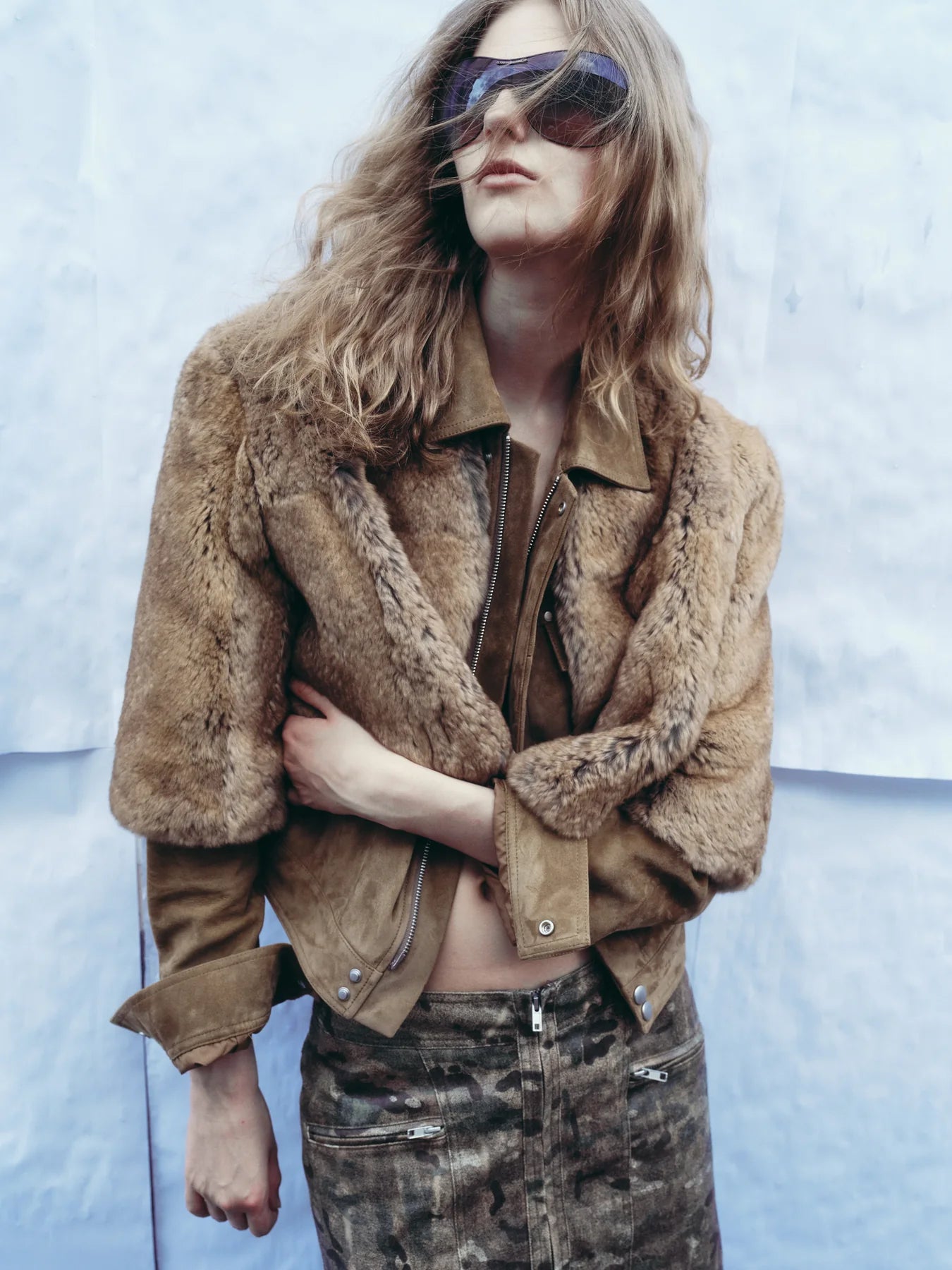
First find out whether the volume was designed into the coat. A dropped shoulder, generous sleeve and broad body can be a deliberate oversized or relaxed cut when the neckline, closure and hem still sit where intended. A coat that slides backward, twists on the body or cannot close over the planned layer is a different problem. A slim trouser can balance the first coat; it cannot fix the second.
Take front and side photographs with the coat open and closed. If only the open view works, decide whether your actual weather and route allow you to wear it that way. If the front needs constant hand-holding or the sleeve swallows the hand during ordinary tasks, compare another size or cut before trying to style the failure away.
If bulk is the recurring issue in an oversized fur coat, How to Balance Wide Fur With Slim Layers can help isolate whether the problem is neckline, sleeve, base layer or shoe-and-hem balance.
Straight Denim or Wide Trousers Under the Coat
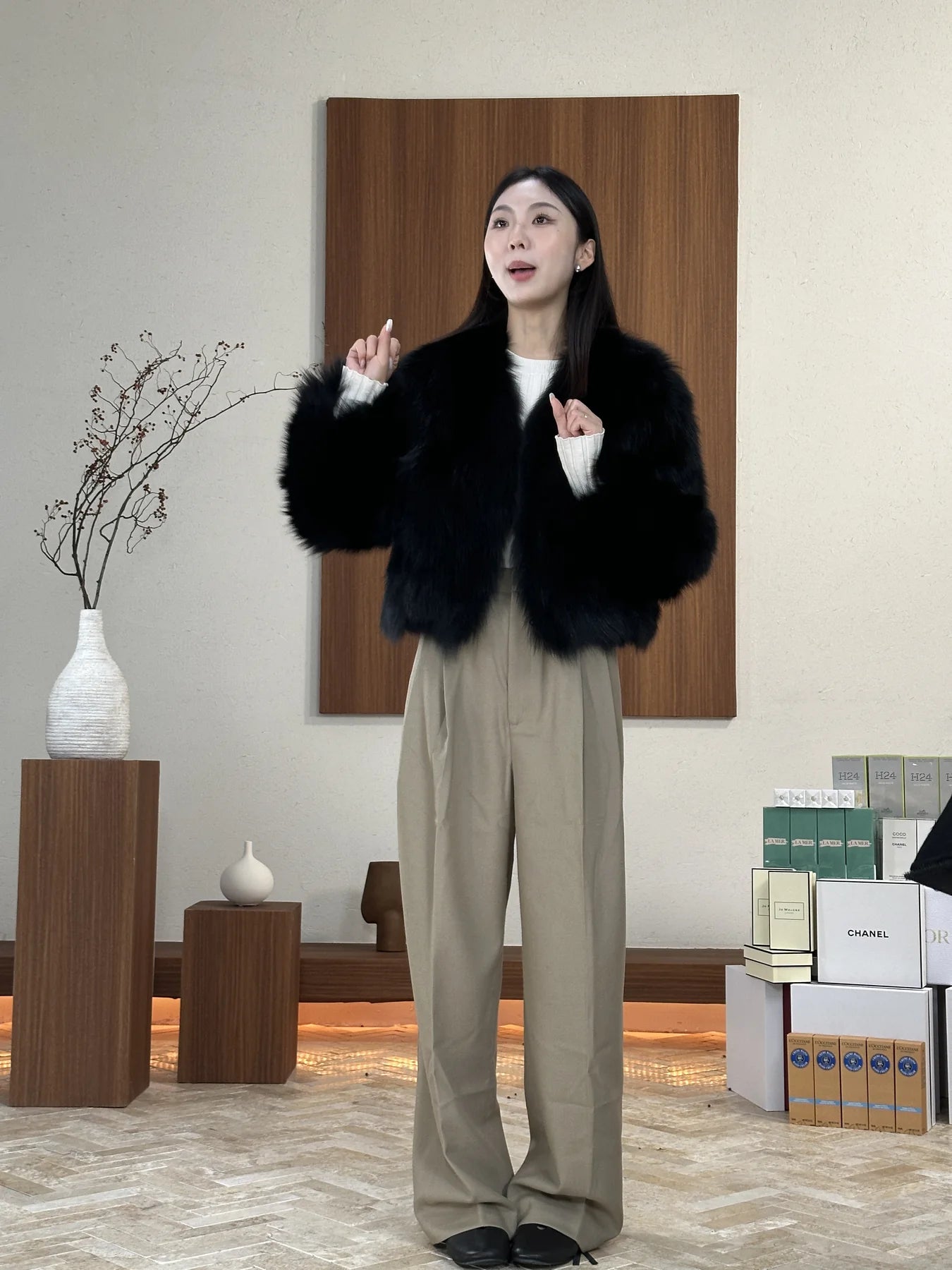
Build one outfit to test the intended scale: a fine dark knit, straight denim, a compact top-handle bag and a plain ankle boot. The coat can have a broad shoulder because the line below it stays readable. For a wider trouser, keep the top tucked or otherwise define the waist beneath the open coat, then choose a boot that does not disappear under the trouser hem. Wide-on-wide can work when both hems and the front opening remain clear; “always wear skinny bottoms” is too blunt a rule.
When the coat opens, a fine knit and straight denim leave a simple line beneath it. A hoodie is another casual option if its hood and sleeves fit comfortably under the coat; avoid stacking thick necklines when the fur collar already fills that area. A simple dress can provide the same uninterrupted line without needing trousers.
Choose a layer that lies flat at the shoulder and neck. A clean knit, simple dress, straight trouser or one-color layer keeps an oversized fur coat from feeling bulky without making the outfit tight.
If the layer underneath still looks like an afterthought after the coat comes off, solve that first. Use How to Make a Fur Coat Look Less Bulky when the problem is really the coat shape, not the fur itself.
Keep one clean anchor.
The coat can be roomy, but the shoulder still needs to look placed.
Move the arm.
Reach for a phone and hold a bag before approving the sleeve depth.
Ground the volume.
Straight denim, trousers or a steadier boot can keep the scale intentional.
Leave the Hands and Neckline Visible
Sleeves reveal proportion faster than the body of the coat, especially with an oversized fur coat. If the sleeve swallows the hand, blocks the bag handle or catches at the table, the outfit will feel bigger than it needs to be.
Reach for a phone, hold the loaded bag and rest your forearm on a table. These motions show whether the sleeve opening stays clear of the hand. A generous sleeve can remain part of the look when it does not need constant gathering.
If the sleeve is deliberately full, use a smoother sweater sleeve beneath it so the layers do not bunch together. A sleeve that keeps swallowing the hand may need a different fit or professional alteration; a smaller bag will not shorten it.
Collar volume changes how an oversized fur coat frames the face before it changes the rest of the outfit. A generous collar can look glamorous in a photo and still crowd lipstick, hair, earrings or a scarf in real life. Leave space at the neck before adding more texture.
Open the coat, close it and turn to the side. If a scarf or thick knit crowds the collar, try a smoother neckline. If the collar itself pushes against your chin, changing the base layer may not be enough; compare the coat’s fit at the neck.
When comparing fox fur and mink, look at the collar near the face before judging the whole coat. Fox brings more visible softness; mink usually keeps the surface closer, which can matter when an oversized fur coat already has enough volume.
Connect the Hem, Boot and Bag
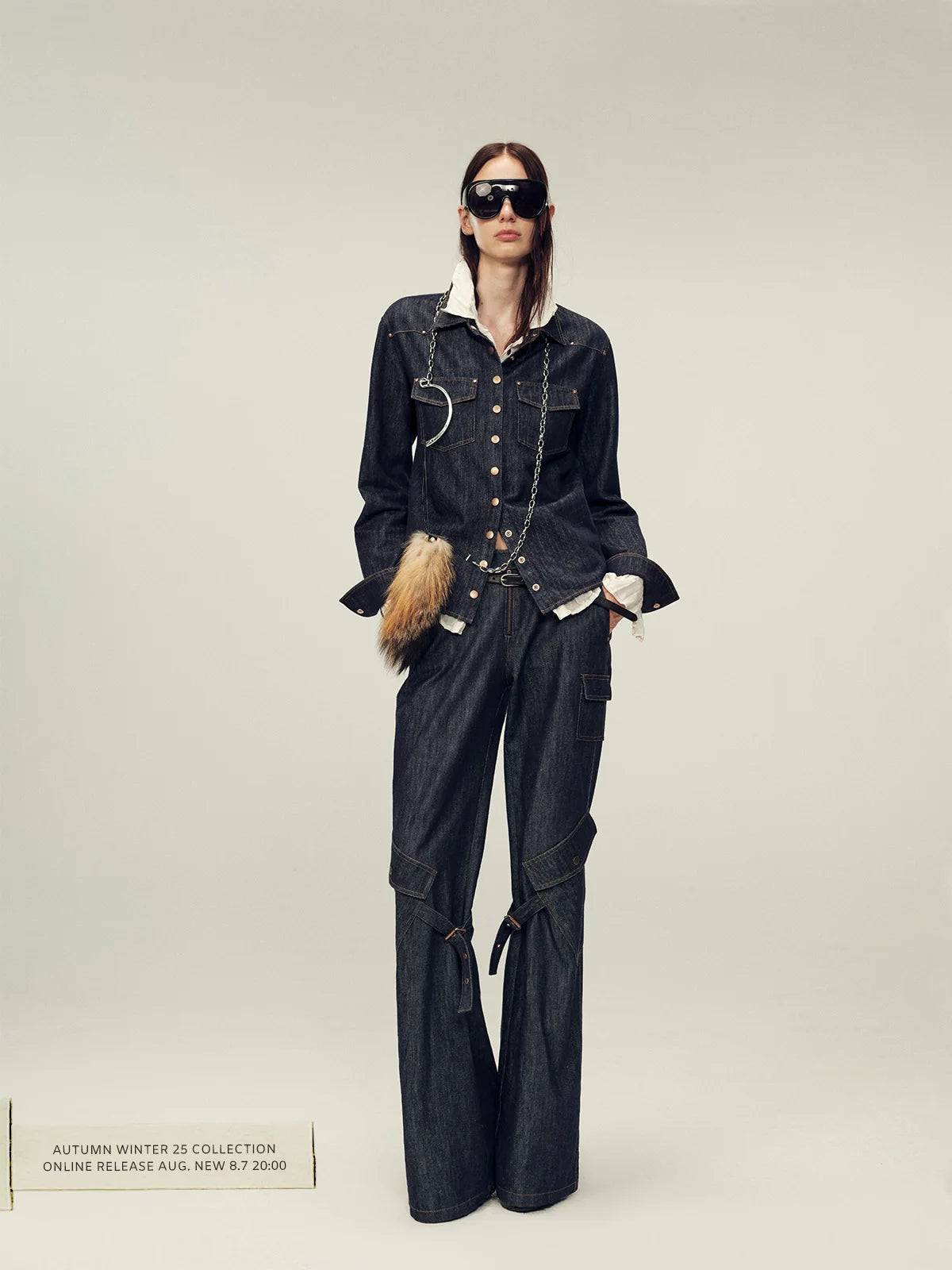
Footwear is not an afterthought with an oversized fur coat. A heavy coat can make a delicate shoe look stranded, while a bulky boot can make the bottom half stop too many times. The cleanest pairing leaves a little visual breathing room between coat hem, trouser break and boot shaft.
If this problem keeps repeating with an oversized fur coat, use Fur Coat Hemline and Boot Pairings for shaft height, hem distance and trouser break.
| If this happens | Change this first | Why |
|---|---|---|
| Neckline feels crowded | Simplify scarf, hair or base layer | Volume near the face reads fastest |
| Hem feels awkward | Change shoe or trouser break | The lower line finishes the coat |
| Coat looks too wide | Use a cleaner first layer | The base outfit needs to stay visible |
| Bag distorts the shoulder | Switch to a lighter bag | Strap pressure changes the silhouette |
Try the bag with its usual contents. A heavy shoulder bag can pull the coat to one side; a crossbody strap can interrupt the front opening. A smaller hand-carried bag leaves that outline visible, but use a larger one when you need it and check its carrying position.
For a laptop, water bottle and umbrella, try the loaded work bag beside the coat. Carry it by hand when the strap shifts the shoulder; if that is impractical for the day, compare another bag or outer layer. A structured coat does not make repeated strap pressure harmless.
The broader bag conversation sits in What Bag Works With a Fur Coat; here, the bag is a proportion check for an oversized fur coat before it is an accessory choice.
Color controls where the eye stops in an oversized fur coat. A dark column under a long coat can make the line cleaner; a light boot under a bulky hem can make the lower half feel brighter and wider. Use contrast where it helps the shape, not where the coat is already loud.
Repeat one color between the base and accessories: black boots with a dark knit, or a brown bag with the denim outfit’s belt. The coat and trousers do not all need to match. Put contrast at the waist or shoes if that is the part of the outfit you want to show.
If color becomes the main styling problem for an oversized fur coat, use the color and texture articles under the Fur Coat Styling Guide. Proportion comes first here, because even a perfect color plan fails if the outline is crowded.
Fix the base before blaming the coat.
For oversized fur, the decisive checks are shoulder placement, sleeve reach and whether the lower half gives the coat somewhere firm to land.

Choose the Amount of Volume for the Occasion
An outfit built around an oversized fur coat can change the moment the wearer sits down. Fur has depth, and that depth shifts at the lap, sleeve and front opening. A car seat, restaurant chair or stair rail is often the first honest test.
On a crowded train or in a narrow restaurant, try the full route before buying the silhouette: hold the bag you actually carry, pass through a doorway, sit and turn without repeatedly gathering the sleeves. If the coat catches or a shoulder strap drags it out of position, a less expansive cut may be easier for that use. For a short walk to a roomy dinner, the same volume may be exactly the point.
For a wet journey or a day carrying luggage, a fur-trim parka offers a different silhouette to compare. Check the individual garment’s weather specifications, sleeve room and bag position before choosing it for that use.
Compare actual pile depth and coat cut when deciding how much softness to add. A closer mink surface may make the outline easier to see, while fox can add a fuller edge; neither label guarantees a particular silhouette. A fur-trim parka concentrates texture around the trim while its shell supplies a different body shape. Check its own weather specifications rather than assuming every trim piece is protective.
Compare the actual collars and sleeves in mink and fox fur. A closer surface shows the cut more clearly, while longer pile adds a fuller edge. The animal name alone does not decide how wide the whole outfit will look.
 FurCompare coat lengths and deliberate volume.
 MinkCompare the actual collar and cut beside your outfit.
 Fur TrimCompare a shell-and-trim silhouette; check weather specifications.
FireladyFur’s Proportion Note
Show the Outline Under the Coat
FireladyFur would compare oversized coats over both straight denim and wide trousers. The important difference is where the waist, sleeve opening and trouser hems remain visible. Deliberate volume can stay; sliding shoulders or sleeves that obstruct the hands need a fit correction. For brand context, read About FireladyFur; find broader coat ideas in Firelady Fur Guide and Fur Coat Styling Guide
Compare the Outline You Want
Keep the straight-denim or wide-trouser outfit while comparing another coat. Browse mink for a closer surface, fox fur for more visible pile, or fur-trim parkas for a different shell-and-trim shape. Read fur coat proportions if the coat length is the remaining question. Check each garment’s specifications for weather use.
FAQ
What is the first thing to check with an oversized fur coat?
Check the neckline, closure and arm movement over your real layer. A deliberately dropped shoulder can look right; sliding, twisting or a front that pulls shut suggests a fit problem rather than a styling problem.
Can this silhouette work casually?
Yes. A fine dark knit, straight denim, ankle boots and a compact bag are one complete option. Wide trousers also work when the waistband and hems remain clear.
What makes this outfit look too bulky?
A thick neckline, hidden hands or a bag pushing the sleeve outward can obscure the shape. Adjust that particular part. Wide trousers can stay when the waist and hem remain visible.
Which FireladyFur collection should I compare?
Compare the actual cut in mink and fox fur, or explore the different shell-and-trim shape of fur-trim parkas. Pile and silhouette vary by garment; check its own weather specifications.
What should I check before buying online?
Look for full-body photos that show an oversized fur coat with shoes, plus a side view that reveals sleeve scale, collar height and where the hem actually stops.


