


Article Summary
Start with an indoor outfit that stands on its own: denim and a fine knit for daily wear, tailored trousers for city polish, or a dress for dinner. Then choose a fur coat whose hem, collar and sleeve room work with that base, the shoes and the route outside.
Four Outfits That Give the Coat a Clear Job
Start with the clothes that stay on indoors. A fur coat can make an ordinary outfit look finished at the door, but it should not be the only part that works. The easiest base for many days is a fine knit, straight jeans or trousers and a shoe that suits the route. For a dressier event, let a dress or tailored trouser do the work indoors and choose the coat as the outer layer. The coat's length, collar and surface then decide how much volume the rest of the outfit can carry.
| Route | Base and shoe | Coat that may work | Before leaving |
|---|---|---|---|
| Everyday denim | Straight blue jeans, fine knit, ankle boots | Short or hip-length fur jacket; fuller texture if the base stays simple | Check that the jacket hem does not meet the jean waistband at an awkward point. |
| Office or city | Tailored trousers, knit or shirt, neat boot or loafer | Compact jacket or longer coat with a clear trouser line | Remove the coat: the indoor outfit should still be complete and work-appropriate. |
| Dinner or event | Dress or tailored separates, appropriate evening shoe | A coat whose collar, length and opening suit the neckline and hem | Sit, open the coat and plan where it will go inside. |
| Cold casual day | Controlled knit, practical trouser, weather-suitable footwear | Fur only if weather and handling suit it; a suitable shell or fur-trim parka may be easier | Read the actual shell and care details rather than relying on a fur trim for weather protection. |
These are starting combinations, not rules about which material is “formal” or how many shoes to buy. Use the garment you own or are considering, your climate and the venue. A smooth mink jacket can work with denim; a fuller fox jacket can work over evening clothes. The fit, volume and supporting pieces make the difference.
Denim Keeps Fur Grounded Without Making It Sloppy
Dark straight jeans, a fine sweater and clean boots give a fur jacket a reliable daily base. The jeans bring a matte surface that contrasts with the pile. If the jacket is cropped, let the waistband be visible or use a longer untucked knit deliberately; a tiny gap at the waist can look accidental. If the coat is long, show enough jean and shoe below the hem to keep the lower half legible. Wide jeans can also work, but choose a coat hem and shoe that leave a clear break rather than three bulky layers meeting at the ankle.
Blue denim changes the color story. It is not an all-brown or all-black monochrome outfit just because the top and coat match. That contrast is often exactly what makes fur easier to wear. A plain tee may suit a mild day; a fine-gauge knit is more useful when the coat will open indoors. Avoid piling a high bulky collar under a high fur collar if it presses at the jaw or keeps the coat from closing comfortably.
The bag is part of the outfit and the garment's wear. A heavy shoulder strap or rough crossbody can press repeatedly against a fur sleeve or front. If that is your everyday bag, consider carrying it in the hand for a short route, choosing a smoother strap, or selecting outerwear that suits that contact better. No outfit formula compensates for a coat that makes your normal commute awkward.
Dresses Need a Hem and Neckline Conversation
Look at the dress and coat as two lengths. A long dress under a shorter jacket leaves the skirt to carry the lower line. A midi dress under a long coat can work, but check where both hems fall when the coat is open and when you sit. A dress hem that peeks out by a narrow, accidental strip may be less convincing than a deliberate difference in length. There is no requirement that a gown be paired with a long fur coat; a short evening jacket can leave the gown's shape visible.
The neckline matters just as much. A high fur collar above a high dress neck can crowd the face. A V-neck or collarless jacket may give a high-neck dress more room; an open neckline can let a fuller collar become the frame. Test with the hair, earrings and scarf you plan to wear. If the coat comes off at dinner, the dress and shoe must still make sense without it.
Do a seated check before treating the mirror photograph as proof. Sit as you would at the venue, then stand and let the coat fall naturally. Does the hem fold under you, does the collar push forward, and can you remove the coat without dragging it against the chair or the dress? The answer can change the bag or coat length without changing the entire outfit. For a dress-code-specific event, the occasion and dress-code guide starts with the invitation.
Knits Should Warm You Without Packing the Sleeve
Fine knitwear is often the easiest layer under fur because it adds warmth without competing with the coat's surface. Try the sweater you actually need on a cold day, not a thin substitute used only for a fitting-room photograph. Close the front, raise your arms and sit. If the sleeve bunches, the shoulder pulls or the collar presses into your neck, check the garment's measurements and the knit thickness. A bigger-looking coat does not always have more usable arm room.
Ribbed knit adds visible texture under a close-surfaced coat; a smooth turtleneck can calm a shaggy coat. With a cropped jacket, the knit hem and waistband need a clear relationship. Tuck a fine sweater or choose one that ends intentionally; avoid an unplanned long sweater tail below a very short fur hem. With a long coat, the knit is seen mostly at the neck and when the coat opens, so its collar matters more than its hem.
A hoodie can make a fur coat feel casual, but it also adds bulk at the back of the neck and may distort the collar. Try the hood under the coat before relying on this look. If the hood, scarf and fur all occupy the same space, remove one. The point is a comfortable outfit that can be repeated, not a stack of current-looking elements.
Trousers and Shoes Set the Lower-Half Proportion
Tailored trousers can make fur useful in a city wardrobe without requiring a dress. With a hip-length jacket, a straight or gently wide trouser exposes the waistband and keeps the outfit's structure visible. With a calf-length coat, a straighter trouser and a cleaner shoe often preserve a distinct line below the hem. Wide trousers under a long coat can work if the hem and shoe remain visible as separate shapes; try walking and sitting before ruling them in or out.
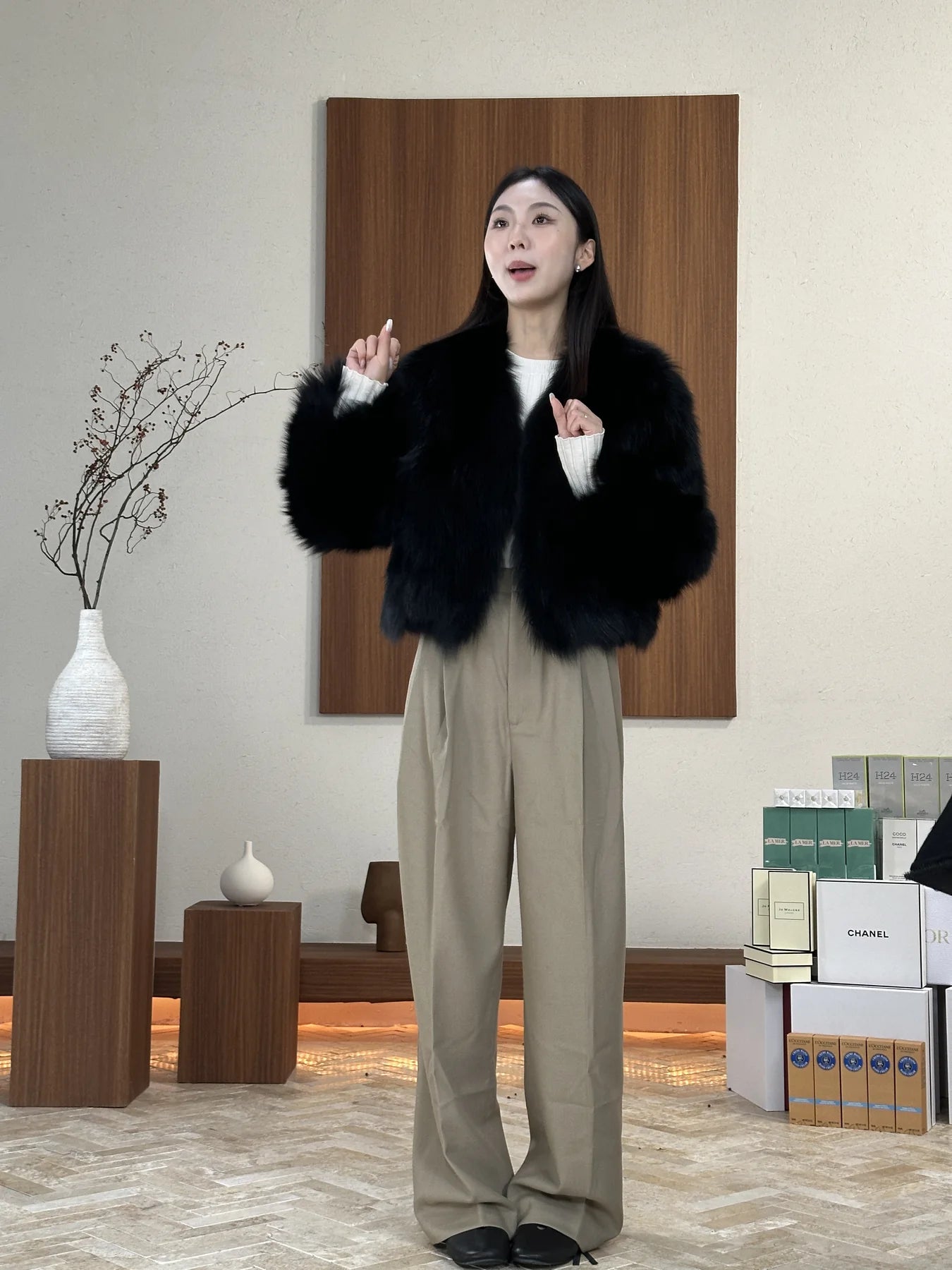
Boot height changes the break. An ankle boot under a cropped jacket leaves more trouser in view. A tall boot may be cleaner with a short skirt or dress because it bridges the exposed leg. Under a long coat, heavy wide-shaft boots plus broad trousers can crowd the final few inches; a narrower boot or less fabric at the trouser hem may solve it. There is no universal “right boot for fur.” The check is whether the coat hem, trouser hem and footwear have enough space to read together.
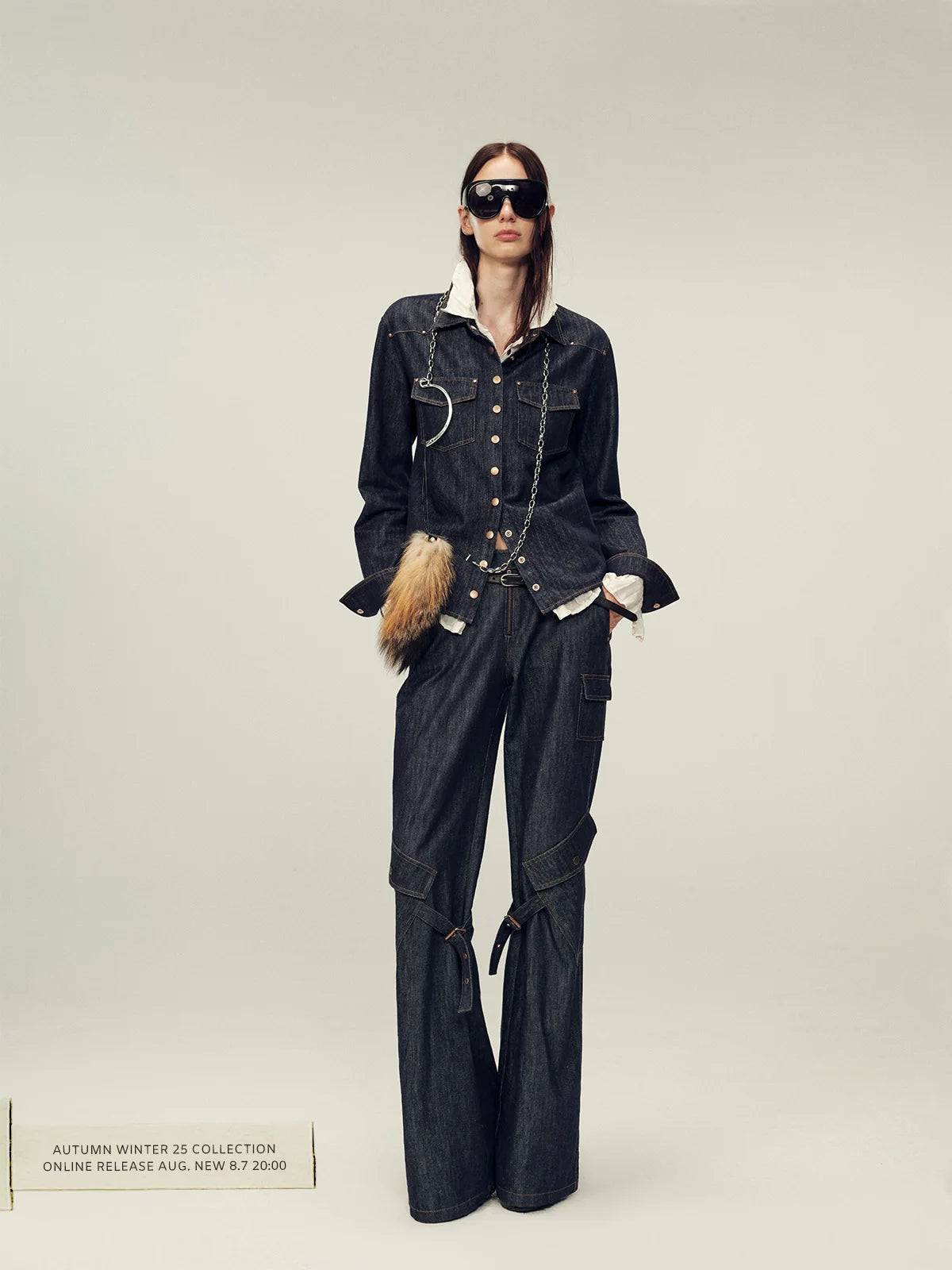
Shoes also set the route. A clean flat or low boot can make an expressive jacket practical for errands; a polished heel can move the same jacket toward dinner. A fragile shoe may be wrong for wet sidewalks even when it looks excellent in a product photograph. Choose a shoe for the journey and then decide whether the coat fits that journey.
Keep Bags, Jewelry and Hardware in Scale
Fur already has texture. A large logo bag, heavy chain, oversized earrings and shiny belt can make the outfit noisy, particularly with a full collar. Choose the piece that matters. A structured hand-carried bag can give a soft coat a clean edge. A compact crossbody may be convenient, but check where its strap runs across the fur and whether it rubs the same place on every wear.
Jewelry is most visible when the collar is open or the coat is removed. If the neckline is crowded, smaller earrings may do more than a necklace trapped under the pile. Metal hardware can be the small highlight in an all-black or brown tonal look. The accessory should finish the outfit you built, not rescue a coat and base that do not fit together.
Weather Can Change the Coat Category
A beautiful full-fur coat is not necessarily the best outer layer for a rainy or abrasive route. Heavy rain, a crowded commute or repeated bag contact may make a different shell more useful. A fur-trim parka can answer a need for pockets, hood or coverage, but its actual weather performance comes from the specific shell, seams and closures, not from the trim itself. Read the product details and the care label rather than assuming all parkas perform alike.
Plan the indoor transition as well. A warm coat over a thick sweater can be uncomfortable in a heated venue; if you will remove the coat immediately, let the base layer suit the room. If you will be outside longer, fit and warmth may take priority over a delicate evening shoe or a narrow neckline. A formula is successful when it survives both halves of the day.

Reed Flower Finnish Fox Fur Coat
The product page shows a short silhouette and several colors. Its fuller surface makes a plain trouser or dress base a useful place to start. Check the selected variant, garment measurements and care information; the featured image is a garment view rather than a completed outfit.
View the coat and size detailsFit the Outfit to the Day, Then Make One Adjustment
Put on the base, shoe and bag first. Add the coat, close and open it, walk a few steps and sit. If the collar is crowded, change the underlayer; if the bottom looks heavy, change the shoe or trouser hem; if the strap catches the pile, change how the bag is carried. One correction is usually more useful than replacing the whole outfit or buying more accessories.
When choosing a coat, compare a real outfit with the exact garment's dimensions and photographs. A studio close-up can show pile and color, but it cannot establish softness, comfort, movement or how the coat will sit over your own layers. The Fur Coat Styling Guide helps narrow the broader type, length and color decisions; this article's job is to make the pieces you already own work together.
Keep the base useful after the coat is gone.
Denim lowers formality. Let the jean and shoe make a clean lower line, then use the fur jacket as the texture.
A dress sets the event tone. Check the two hemlines, neckline and seating before deciding on coat length.
Knits need room. The warm layer has to fit inside the sleeve and collar without pulling the coat out of shape.
The route has a vote. Wet weather, a rough strap or a long outdoor walk may call for different outerwear even when the mirror outfit looks good.
Choose the fur after the base outfit is real.
FireladyFur's styling advice starts with what remains on when the coat comes off. We would compare the actual garment over your favorite trousers or dress, then check the sleeve room and the journey it must handle. Material and silhouette should support that outfit, not demand an entirely new wardrobe. Learn more about the brand's material-led edit and Editorial Standards.
Frequently Asked Questions
What is the easiest outfit to wear with a fur coat?
Straight jeans, a fine knit and clean ankle boots are an easy everyday starting point. Check where the jacket hem meets the waistband and whether the bag rubs the fur.
Can I wear a short fur jacket over a long dress?
Yes. A short jacket can leave the dress's length visible. Check the neckline, sleeves and how both pieces behave when you sit and remove the jacket.
What shoes go with a long fur coat?
Choose shoes for the route and for the visible break below the coat hem. A clean boot can work with trousers or a dress; the important check is that hem, trouser and shoe remain distinct as you walk.
What bag should I avoid with a fur coat?
Be cautious with rough or heavy straps that repeatedly press across the same fur area. Try a smoother strap, carry the bag by hand for a short route or choose different outerwear for high-contact days.
Does a close-up product photo prove how soft a fur coat feels?
No. It can show color and surface detail, but touch, movement, fit and comfort require the actual garment or reliable product and return information.
Find the coat that fits your existing outfit
Take one everyday base and one dressier base into the product comparison. If the unresolved question is the outfit underneath, start there before changing the outer layer.


