


Article Summary
A coat earns repeat wear when its texture, length and construction work with the clothes, weather and movements already in your week. Compare actual outfits before choosing among mink, fox, shearling, faux fur and a fur-trim parka.
Choose the type for the week you actually have
A dinner reservation and a wet school run ask for different coats. Begin with the route you repeat most: how long you are outside, whether you drive, what happens after the coat comes off, and which shoes and bag you already carry. A compact mink jacket may settle into black trousers and denim; a fox jacket may be the deliberate feature of two evenings a month. Neither frequency nor spectacle makes one inherently better. Frequency tells you how often you will use it; pleasure tells you what that use is worth to you.
Put one ordinary outfit on before a dressier one. Close the coat over the layer you would wear in winter, carry your filled bag, sit, then turn sideways. If only a new wardrobe or an imagined schedule makes the coat look right, call it an occasion purchase. That honest label is more useful than pretending a striking coat will become daily wear.


Use the normal outfit before the pretty one
The most revealing try-on is not the holiday dress or the sharpest evening shoe. It is the outfit that was already going to leave the house: hemmed denim, black trousers, a ribbed knit, a plain boot, a real bag with weight in it. The same piece can still be right for an occasion, but it will not become the everyday winter answer.
After that first test, add the polished outfit. A dress, satin skirt, higher boot, or small evening bag can make a good coat feel more special. Those pieces can lift the coat; they should not have to rescue it. If the coat only works after the entire outfit has been rebuilt around it, the price is not only the checkout number. Those extra wardrobe purchases count too.
Denim is useful because it lowers the formality without making the outfit careless. Clean straight denim, black jeans, and a neat boot show whether a smoother coat has enough ease or a fuller coat has too much volume. If denim is the repeated base in your closet, the more detailed fur with denim styling article can take over after the type decision is clear.
The second normal outfit is the one used for travel, errands, or daylight arrivals. That might be a trouser and knit, a sweater dress, a thermal layer under a parka, or a sheepskin coat over boots. The coat does not have to look quiet. It has to look believable on the route where it claims to belong.
Photograph the normal outfit from the side before adding better accessories. The side view catches volume at the sleeve, collar, and hem. It also shows whether the lower half is helping the coat or simply being hidden by it.
| Coat type | Best first test | Warning sign |
|---|---|---|
| Mink | Black trousers, clean denim, a fine knit, or a simple dress. | The outfit suddenly feels ceremonial in daylight. |
| Fox | A calm base color, compact bag, shaped boot, and little texture near the collar. | The sleeve, hair, scarf, and bag all fight for attention. |
| Shearling or sheepskin | Dry-weather denim, boots, ribbed knit, and a practical bag. | Warmth turns bulky indoors or the shoe looks too light. |
| Fur-trim parka | Zipped and open with gloves, pockets, hood, bag, and sidewalk shoes. | The trim looks good, but the shell or hood collapses the outfit. |
| Faux or long-hair fur | Daylight, side view, strap contact, and sleeve-edge detail. | The texture looks fun in one photo and cheap or shapeless in motion. |
Mink belongs in a cleaner, more polished week
Mink usually enters the fitting room with the advantage of polish. The surface is smoother, the mood is cleaner, and the outfit can look expensive without much styling. That advantage also explains why some mink coats feel too formal when they leave dinner and meet daylight.
The shorter mink shape often has the easiest modern life. It shows the waist and lower half, so straight denim, a trouser crease, or a narrow knit dress can keep the look current. Full-length mink can be beautiful, especially for evening routes and controlled transportation, but it asks for a cleaner shoe, a safer place to hang, and more patience with seating.
The denim test matters for mink because it exposes stiffness. A mink coat over black trousers may look obvious; mink over denim tells whether the wearer still feels like herself. If that is already the direction, the dedicated mink fur coat outfit article covers dresses, trousers, jeans, bags, and product-photo checks in more depth.
The mistake with mink is not choosing something classic. The mistake is stacking every classic cue at once: glossy coat, delicate shoe, tiny formal bag, jewelry, polished hair, and a dress that has no life without the coat. One traditional cue is enough. The rest of the outfit needs a present-day line.
On a first fur purchase, mink is strongest when the buyer can name two roles. Dinner plus clean denim. Office arrival plus knit dress. Hotel lobby plus black trouser. One perfect event look is not a problem, but it should be priced as a special piece rather than the coat that will solve winter.
Fox works when the coat has room to lead
Fox does not whisper. Even a short fox jacket changes the upper body, the face area, and the way the lower half needs to answer. That is the pleasure of it. The coat can make a simple outfit look intentional before jewelry or a print is added.
The cleaner fox outfit usually begins by removing one thing. Remove the thick scarf. Remove the busy top. Remove the oversized tote. Keep the base color calmer than usual and let the collar or sleeve carry the softness. A shaped boot helps because it gives the lower half enough weight without turning the look heavy.
Fox is often compared with mink because both can feel luxurious, but they solve different styling problems. Mink gives control and surface polish. Fox gives visible softness and movement. The Firelady comparison on fox fur versus mink fur coats is useful when the buyer is choosing between quiet polish and visible volume.
A fox coat becomes difficult when everything around it also wants the first look: large curls, hoop earrings, thick looped scarf, wide-leg pants, furry bag, platform boot. Any one of those can work. All of them together make the coat fight for air.
The more exact fox styling path belongs in the fox fur coat outfit article. Stay in this article while the question is still whether fox is the right type at all.
Shearling is a construction question before a style label
A genuine shearling garment is made from a sheep or lamb skin tanned with the wool attached; sheepskin names the skin more broadly. Listings also use “shearling look” for textile fleece, so read the material line before assuming the coat is leather-and-wool. A sheepskin jacket with its suede or leather face outward and fleece inside has a different surface and maintenance decision from a full fox or mink coat. The Woolmark description of shearling confirms the skin-and-wool construction; a soft photograph alone cannot.
On a dry Saturday with straight denim, sturdy boots and a fine sweater, the structure of a short sheepskin coat can look entirely at home. For an evening dress, check the actual cut: a long clean sheepskin can look refined, while a wide aviator collar may make the same dress feel too casual. There is no material-level dress code. Collar, finish, length and shoe determine the result.
Shearling can be substantial in the hand, and a thick sweater may crowd the armhole. Put the real knit underneath, zip or fasten the coat, then reach forward. Check the care label and seller's material description for that specific garment; neither the name nor the fluffy edge guarantees a particular level of rain protection.

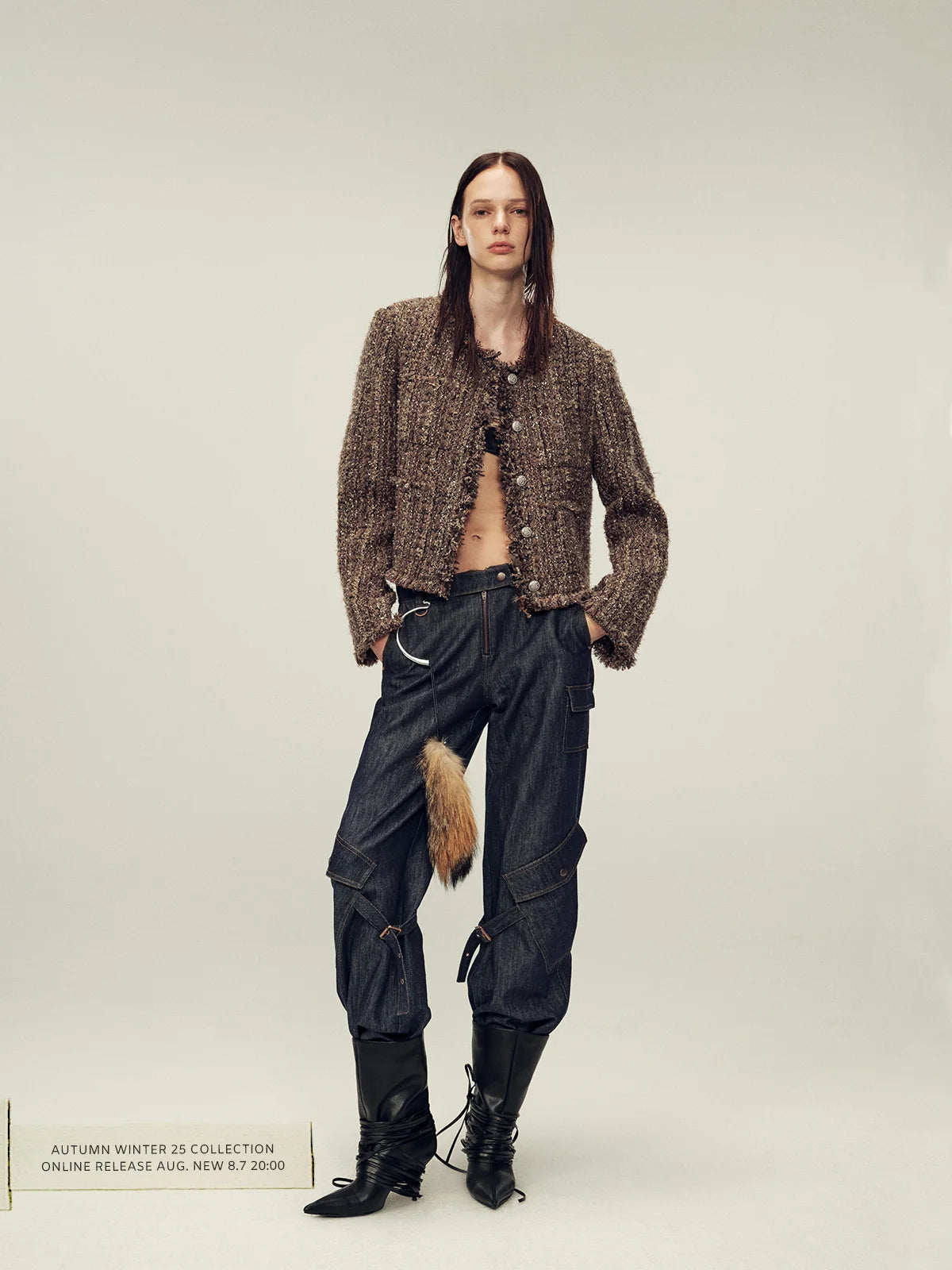
A fur-trim parka gets its weather role from the shell
Fox at the hood gives a different face frame from a full-fur coat, but the trim does not make the parka weatherproof. The useful questions are in the body: shell fabric or membrane, coating, insulated fill, seam design, front closure, hood adjustment and care instructions. A parka with a documented water-repellent shell is different from one sold on its decorative trim alone. Even a water-repellent finish is not the same claim as a waterproof membrane and sealed construction.
On a day of car doors, pockets and repeated outdoor stops, try the parka fully closed with gloves and the bag you carry. Then lower the hood indoors. A hood that crowds the neck even when down, or a body that pulls across a sweater, has failed the daily-wear test. For a controlled dinner arrival, a mink or fox coat may be the more satisfying choice. Choose the garment that performs the particular route, not an assumed hierarchy of materials.
The fur-trim parka styling guide takes this practical silhouette further. Confirm the shell specification on the exact product before relying on it for damp weather.
A short fur jacket exposes the outfit underneath
The short jacket is more than a smaller coat. It leaves the waistband, trouser rise, skirt length, belt, dress line, and boot visible. That visibility is why short fur often feels modern in restaurants and cars. It is also why weak denim, a tired sneaker, or a dress hem that fights the jacket shows immediately.
The base outfit has to look finished before the jacket goes on. A tucked knit, sharp waistband, straight denim, clean boot, narrow dress, or shaped trouser gives the jacket a clean stopping point. Without that base, the fur can look as if it ended the outfit too early.
A short mink jacket and a short fox jacket do not behave the same way. Mink keeps the line smoother. Fox adds more visual width. The article on fur jacket outfit ideas goes deeper into dinner, denim, and daily wear once the short length is already appealing.
Restaurants are a practical reason to like short fur. The jacket is easier to remove, easier to keep on a chair, and less likely to dominate the table. Once it comes off, the outfit underneath becomes the room outfit. That is another reason the base cannot be an afterthought.
For a first fur piece, a short jacket can be forgiving or unforgiving depending on the wardrobe. A clean lower half makes the cut forgiving. It becomes difficult when the coat is expected to hide a closet that still needs tailoring, hemming, or better shoes.
Faux fur and long-hair fur need better edges
Faux fur and long-hair textures can look playful, dramatic, and current. They can also tip into costume faster than smoother surfaces. The difference often sits at the edges: sleeve finish, closure, hem, lining, and how the pile behaves where the bag or chair touches it.
Daylight is the first test for faux. Some surfaces look plush in a warm product image and shiny in real light. A good faux coat does not need to imitate natural fur perfectly. It needs to look like a deliberate texture with enough density and finish to stand on its own.
Long-hair fur has a different problem. It expands in profile and reacts to straps, seats, and crowded storage. A clean column underneath helps, but only if the route gives the coat enough room. For that narrower styling problem, use long-hair fur coat outfit ideas.
Faux fur deserves the same product-photo discipline as natural fur. Look at the sleeve edge, the closure, the lining, the collar shape, and the side view. The article on faux fur coat outfit ideas is useful once the buyer knows the surface itself holds up.
Both types benefit from restraint around them. A quiet trouser, a simple boot, and a compact bag are not boring here. The fur remains the visible texture without another competing accessory.
Length changes the day after the entrance
Length is easy to admire while standing still. It is harder in the car, at a table, in a coat check line, on a narrow stair, or beside a crowded closet. A long coat gives more entrance and more coverage. It also creates more fabric to manage after that entrance is over.
A cropped jacket puts pressure on the waistband and shoe. A hip-length jacket leaves the lower half active. A mid-length coat can feel practical if the hem lands well with the most repeated boot. A full-length coat asks for a route that respects it: controlled weather, enough hanging space, and seating that does not turn the hem into a problem.
The broader proportion question belongs in the Firelady articles on long fur coat proportion, short fur jacket proportion, and fur coat hemline and boot balance. Use those once the material direction is no longer the main uncertainty.
Model height can make length look easier than it will feel at home. Heel height, shoulder width, car size, stair use, and the boot worn most often all change the result. A full-length style that looks elegant on a tall studio model can feel cumbersome in a small car or crowded coat check.
The best length is not always the most flattering standing still. It is the length that stays flattering after sitting, walking, opening, closing, and hanging.
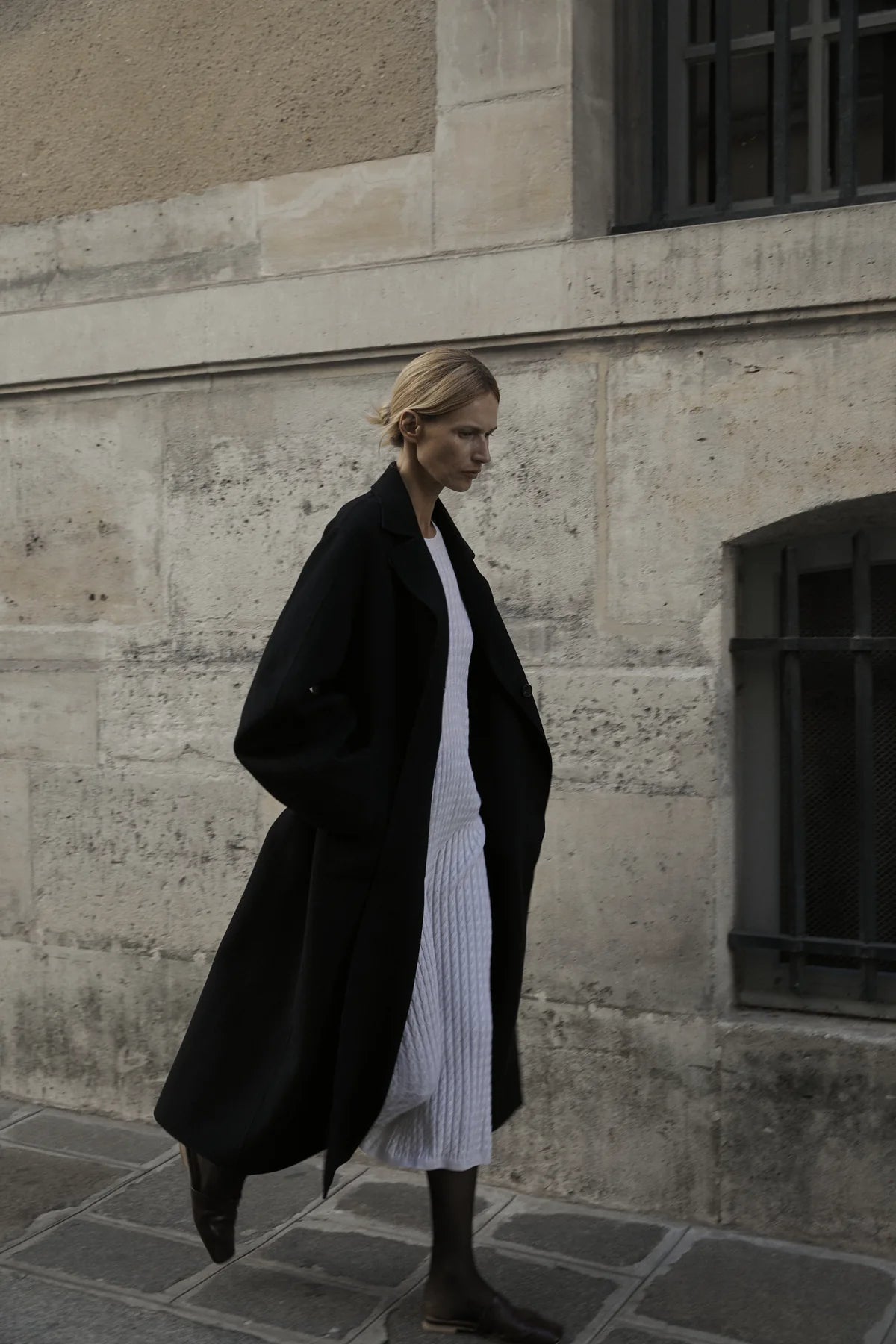

Let the collar, sleeve and bag set the outfit's volume
A full fox collar, a brushed scarf and long loose hair may all occupy the same space near the face. Try removing the scarf before rejecting the coat. With a short mink jacket, the problem may be the opposite: a very large bag or wide sleeve can interrupt an otherwise clean shoulder line. Use the mirror from the side as well as the front.
Carry the bag with its usual contents. A shoulder strap presses the pile and may slide against a rounded shoulder; a crossbody strap draws a strong diagonal through a fluffy front. A small hand-held bag suits a formal coat, but it is not a solution for someone who needs a laptop tote every weekday. If the coat only works when the real bag disappears, keep looking for a different sleeve or surface.
Product photos need to prove the hard angles
Every coat type has a flattering photo. Mink benefits from clean light on the surface. Fox benefits from a close crop around the face. Shearling benefits when the boot and denim are already styled. Parkas benefit when the trim is full and the shell is not being asked to move. Long-hair fur benefits before a strap or chair touches it.
Useful product photos show the places where the type can fail: side view, back view, open front, closed front, collar close-up, sleeve edge, hem, lining, and full-body proportion with shoes. A product video is better when it shows walking, opening, closing, and sleeve movement.
A missing angle does not make the coat bad. It means the buyer is accepting more guesswork. That uncertainty belongs in the value decision. A dramatic coat with missing side and closure views may still be tempting, but the hidden information is part of the price.
For fox, inspect collar scale and sleeve depth. For mink, inspect movement and side ease. For shearling, inspect lower-half context. For parkas, inspect zipped and hood-down views. For faux, inspect edge finish. For long-hair fur, inspect strap contact and profile volume.
The photo that feels least glamorous may be the one that saves the purchase. A seated image, a side image, or a plain open-front image tells more about daily wear than another cropped beauty shot.
- Side view with the real layer underneath.
- Open and closed front, not only the prettier version.
- Sleeve edge, cuff, and arm bend.
- Collar or hood shown with hair and scarf space in mind.
- Full-body image with the kind of shoe the coat will actually meet.
- Bag contact tested on the shoulder or in hand.
Let the route separate an occasion coat from a daily coat
A dinner guest may remove a dramatic coat at the door. A host has to move, reach and carry it between rooms. A commuter may fold it over a chair, sit in a car, and spend most of the day in an overheated building. Test the complete sequence, not just the entrance. Longer fur can be a beautiful choice for controlled arrivals with reliable coat check; shorter shapes and certain parkas can be easier for frequent transitions.
Weather changes the choice only after garment construction is known. On a dry, cold route, more fur and shearling options are plausible. For slush or unexpected rain, check the actual parka shell and closures rather than assuming the fur trim will protect the coat. Natural-fur and sheepskin care should follow the garment's label and a qualified specialist where needed; a fashion comparison cannot substitute for its care instructions.
Decide whether this is a first coat or a deliberate statement
A first fur purchase usually has to work across more of the closet. I would try a clean short mink jacket with a dress and with straight denim, or a well-cut shearling jacket with the same ordinary layers, before assuming an oversized fox is more versatile. That is a styling judgment, not a claim that those materials are always lighter, warmer or more durable.
A second coat can be narrower and still be a good buy. A large fox collar or full-length mink may earn its place through particular dinners or winter events. Name the events you already attend and the storage the coat will have. Purchase price divided by wears is only a simple use-frequency measure; it is not the garment's total cost or a measure of the pleasure you get from wearing it. Care, storage, alteration and eventual resale are separate considerations.
Pre-owned pieces need another check: age, lining, closures and prior storage can change whether a coat that photographs well is comfortable and sound enough to wear. Ask for interior and seam photographs and have a specialist inspect a suspect structure before treating a vintage label as a purchase reason.
Make the return-window try-on a real wear test
Before removing tags or assuming a return is possible, read that seller's current policy. At home, use one weekday outfit and one polished outfit with the same shoes and bag you normally choose. Close the coat over the real winter layer, sit for several minutes, reach forward, and walk through a doorway. Take a front and side photograph in daylight. This single test answers more than five extra close-ups of the fur surface.
Weight and layer room matter separately. A coat that is comfortable for a brief mirror view can feel heavy after a longer walk; a roomy body can still bind at the sleeve over a blazer. Sizing up may free the arm but displace the shoulder. Needing a different base layer and a different bag gives the coat a narrower wardrobe role than its product image suggests.
The Coat That Gets Worn Is Usually the One With Fewer Conditions
Match construction to the route. A parka's shell and closure govern wet-weather use; fur trim is a styling detail until the product specification says more.
Give volume one lead role. Fox or long-hair fur can carry the outfit if the collar, scarf, bag and boot do not all compete with it.
Test a genuine shearling's fit. The skin-and-wool construction deserves a closed-coat reach test over a real knit; a “shearling look” fabric must be judged on its own label.
Name the wearing schedule honestly. A coat for two polished evenings can be an excellent purchase without being marketed to yourself as a four-day-a-week coat.
FireladyFur's First Comparison for Each Wardrobe
FireladyFur would start a shopper who wears black trousers, simple dresses and clean denim with a short, relatively smooth mink shape, then test whether the surface still feels natural on an ordinary afternoon. Someone buying for visible texture may prefer fox, but should confirm collar and sleeve scale in a side view. For dry casual routes, compare genuine sheepskin construction and its actual fit. For repeated outdoor transitions, inspect the parka's documented shell, fill and closure before judging its fur trim.
This is a place to compare garments, not rank materials universally. About FireladyFur explains the store behind these recommendations.
Read our Editorial Standards for how we review garment examples and source claims.
 Louvre Mink V-Neck JacketUse this short V-neck shape to judge whether smooth fur works over both trousers and a dress.
 Black Sugar Fox CardiganCheck the V-neck, sleeve depth and side volume against a quiet base outfit.
 Frost Wild Fox-Trim ParkaCompare the removable hood, water-repellent shell description and closure for your own route.
Compare One Real Outfit Across Two Coat Types
Save the same daylight outfit and bag for both try-ons. The winner should solve the role you named at the start, whether that is a polished arrival, a dry casual weekend or a more demanding commute.
Frequently asked questions
Which fur coat type will I wear most often?
Start with the outfit and route you already repeat. Try each coat closed over that layer with your filled bag, walk, sit and take a side view. The type with fewer outfit and movement conditions is usually the easier repeat purchase.
Is mink always easier to style than fox?
No. A smoother, shorter mink shape can be easy with trousers, denim and a dress, while fox gives more visible volume. The actual cut, collar, sleeve and your existing clothes decide which is easier.
Is shearling different from sheepskin?
Genuine shearling is sheepskin or lambskin tanned with its wool attached. Sheepskin is the broader material term, and some products only imitate the look with textile fleece. Check the exact garment description before comparing fit or care.
Does fur trim make a parka weatherproof?
No. Check the specific shell, coating or membrane, seams, hood and front closure. Fur trim changes the look near the face; it does not establish the parka’s weather rating.
Which photographs help most when buying online?
Ask for a full front and side view, the coat open and closed, the collar and sleeve, and the lining or interior when relevant. Pair those views with garment measurements and the seller’s current return policy.


