


Article Summary
Inspect the coat before choosing its listing category or price. Cosmetic wear, uncertain material identification and structural damage require different responses; your return policy is a separate channel decision. The buyer should see the same garment you inspected.
Keep this checklist open before price talk begins. It separates a coat that can be listed with confidence from one that needs repair, as-is wording, a specialist opinion, or a different route inside the fur coat resale value guide.
A confident listing begins before the camera comes out
Most weak resale listings fail quietly. The coat is photographed from the front, described as beautiful, given a size, and published before anyone has checked the parts that decide trust. Fur attracts questions because it can look rich in one photograph and still carry dry leather, tired cuffs, old odor, missing closures, a torn pocket bag, or shedding that appears only when the garment is handled.
Inspect the coat in the order a buyer will encounter it, then record what you find. Perfection is not required for a sound coat to sell. It needs to be understandable. A careful buyer can accept a small lining opening, light cuff rub, a vintage label, or a missing belt when those details are shown clearly. The same buyer will back away from a listing that hides the collar edge, skips the lining, avoids the closure area, or uses soft language for a problem that will arrive in the box.
This page sits after the larger money question. To check whether the coat has a market at all, use how much you can sell a fur coat for first. Once a market looks plausible, come back here and decide whether the coat deserves a confident listing, a repair note, an as-is listing, or no listing yet.
Before you inspect, create a fair room for the coat
Use daylight near a window or a bright room without yellow bulbs. Hang the coat on a broad hanger, close it, open it, then let it sit for a few minutes before you judge the shape. A fur garment pulled out of a crowded closet often looks worse for the first minute because the pile is pressed and the hem is collapsed.
Perfume, steam, aggressive brushing and heat make the coat harder to judge. They may improve one quick photo, but they also create a worse conversation if the scent or texture changes again after shipping. Inspect the coat as it is likely to arrive, not as it looks after one hour of staging.

First sort: cosmetic wear, repairable wear, and stop signs
A small amount of cosmetic wear is common in pre-owned fur. Cuffs may show light rub. A lining may have a loose stitch. The pocket edge may look used. A button loop can loosen. These details belong in the listing, but they do not automatically make the coat unsellable.
Repairable wear is different. A loose closure, open lining seam, worn pocket edge, or split hem can often be handled by a furrier, but the repair affects buyer trust and sometimes price. Where repair cost and outcome remain uncertain, compare the issue with when fur coat repair is worth it before deciding whether to fix it first or sell as-is.
Stop signs are the conditions that make a normal resale promise hard to defend: a sour or damp odor that does not fade after airing, leather backing that feels hard or crackly, active shedding from several areas, bald patches, repeated rips along seams, water-stained lining with odor, or a coat that makes a dry tearing sound when gently moved. Those conditions may still have craft, costume, restyling, or project value, but they do not support the same type of listing as a wearable coat.
| What you found | What to do before listing | How to talk about it |
|---|---|---|
| Light cuff rub | Photograph both cuffs in daylight. | Call it light cuff wear if the hair is still present and the edge is not splitting. |
| Loose hook, eye, loop, button, or zipper | Show it closed and open; note whether it works. | Say if it closes securely, needs reinforcement, or is missing hardware. |
| Lining opening | Photograph the full lining and the opening close-up. | Separate lining wear from fur-body damage. Buyers read that distinction. |
| Closet odor | Air the coat in a cool, dry room away from sun and heat. | Disclose storage odor if it remains. Avoid promising removal. |
| Hard or noisy backing | Do not bend or stress the coat. Seek a furrier if value is high. | Avoid wearable-condition language until the backing is assessed. |
| Shedding from several zones | Test gently over dark fabric and photograph the result if needed. | Say where it sheds and whether it seems light, moderate, or active. |

The inspection order matters
Move from visual checks to gentle handling: overall shape, surface, edges, lining, closures, smell, then gentle movement. Start with a visual inspection; tugging seams or squeezing old pelts can cause damage. A vintage coat can be damaged by the inspection itself when the backing is already weak.
Judge the garment against ordinary storage, material and handling realities.
Check the front, back, sides, hem and collar before you look for tiny flaws
Stand six to eight feet away and look at the coat as a buyer will see it first: full front, full back, side profile, closed front, open front. Does the coat still hang evenly? Does one shoulder collapse? Does the hem wave because the lining is pulling? Does the collar sit cleanly, or does one side curl in a way that suggests old storage pressure?
This first distance check keeps you from overvaluing a coat with a pretty close-up. A small lining issue may be acceptable to a buyer when the whole garment reads balanced. They may not forgive a coat that photographs well at the sleeve but hangs crooked across the body.
Use a full-length mirror or a flat wall. Try the coat on if the size allows, then photograph it on the hanger as well. The hanger photo reveals structure; the worn photo reveals proportion. Pre-owned fur shoppers usually want both.
Surface condition: look for pile memory, shine, matting and bald areas
Run your eyes along the direction of the fur before touching it. Good surface condition usually has movement, depth and a consistent direction. Worn areas look flat, dark, shiny, crushed, or sparse. On fox and long-hair fur, thinning can hide under volume. On sheared or smooth mink, uneven shine can reveal pressure and abrasion.
The high-friction zones deserve separate attention: cuffs, pocket openings, front edge, collar, shoulder where a bag strap sat, back hem, seat area on shorter coats, and underarms. The body can be excellent and tired exactly where the buyer will look after the box opens.
For a closer look at wear that changes buyer decisions, use fur coat wear signs that lower buyer trust. The short version is this: wear that matches normal use can be accepted. Wear that looks hidden, damp, sticky, bald, or unexplained creates doubt.
Smell the coat before you choose the price
Odor changes the sale faster than most sellers expect. A light closet smell may be acceptable when disclosed and photographed alongside clear views of the coat. Smoke, heavy perfume, mildew, damp basement odor, pet odor, or a sour old-storage smell puts the buyer in a different conversation. They are no longer asking only whether the coat is pretty; they are asking whether the odor can be removed and whether it points to deeper storage damage.
Smell the collar, underarms, lining, pockets and hem. Let the coat sit in a neutral room for a few minutes, then leave the room and return. Any obvious odor belongs in the listing. When the odor source is unclear, say that rather than naming it softly as vintage scent.
If odor is the main issue, move to fur coat odor or dryness and resale value or the care article on how to handle odor in a fur coat. Spray or heat may briefly hide a problem from the camera without making the coat ready to sell.
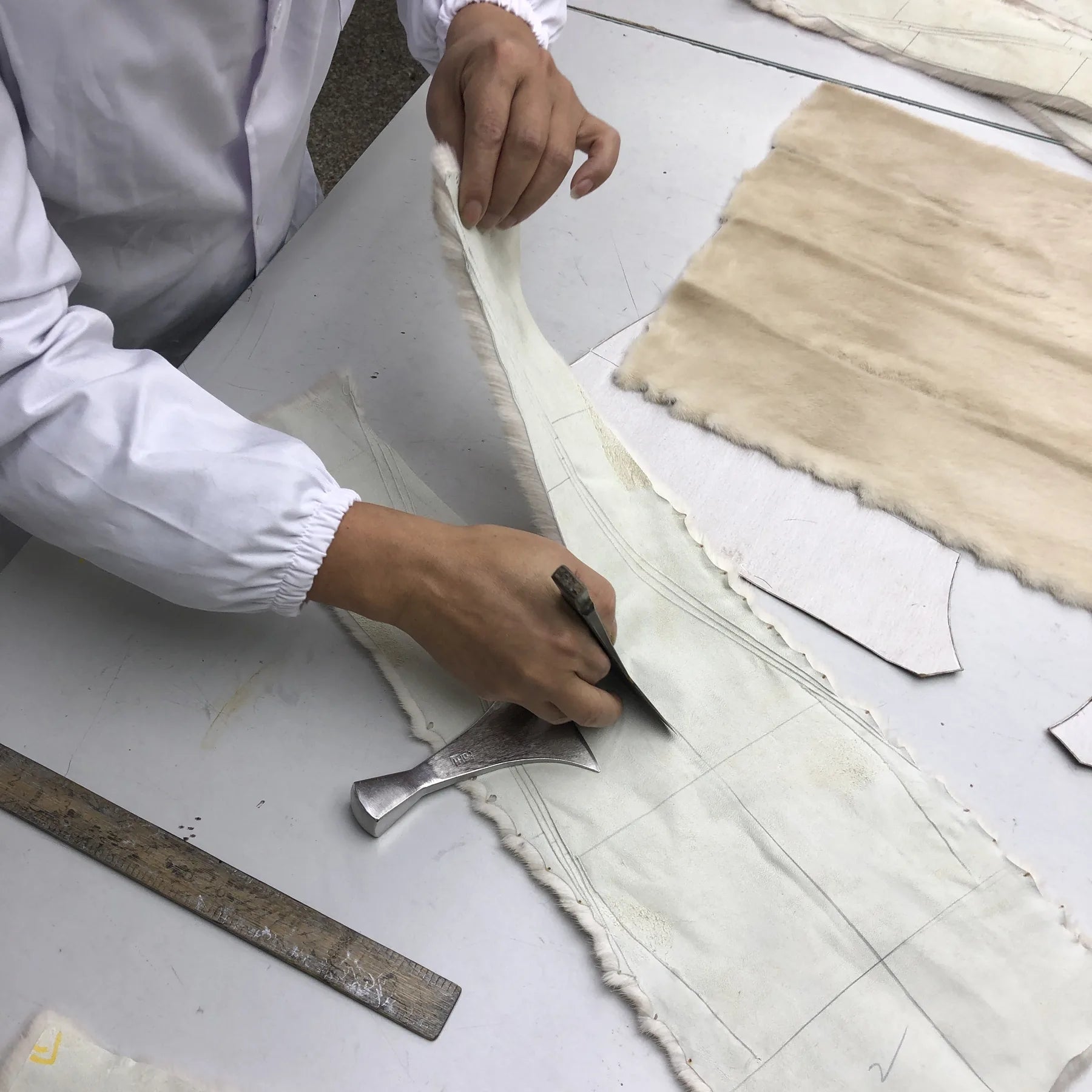
A stiff backing needs gentler handling
Fur hair can still look attractive while the leather backing underneath has aged poorly. Stiffness, crackling, tearing at seams and sudden shedding deserve more caution than a dull surface photo.
Dryness and storage history can change a beautiful coat into a cautious listing.
Hard leather and dry backing deserve a gentler inspection
The backing of natural fur is leather. When it dries, it can become stiff, brittle and weak. Sellers sometimes discover this only after they try to repair a seam or shake the coat for photos. By then, the damage is no longer theoretical.
Avoid scrunching the coat to test it. That can create cracks in a weak pelt. Instead, handle the garment lightly at natural movement points: shoulder, sleeve bend, side seam, hem. Listen for dry paper-like noise. Feel whether the body moves as a garment or resists like a shell. Look for repeated tiny splits along seams, previous patching, and areas where hair releases near an opening.
When the coat feels hard or sounds dry, read the focused article on hard leather in older fur before calling it ready to wear. A confident listing should not treat dry backing as a cosmetic note.
Lining is not just the inside
The lining is where buyer trust often gets made or lost. A seller who shows only the outside may still have a good coat, but the buyer cannot know that. Open the coat. Photograph the full lining, label, underarm lining, pocket bags, hem, monogram area, and any openings. Describe a loose, stained, torn, replaced or hem-strained lining plainly.
A torn lining does not always mean the fur itself is damaged. That distinction matters. A strong fur body may make a lining repair acceptable. They will be less comfortable when the lining is torn near a seam and the surrounding fur also feels dry.
For the detail pass, use lining, cuffs and closures to inspect before selling a fur coat. It gives those small zones their own space instead of burying them inside a general checklist.
Closures should be tested like a buyer will use them
Close every hook, eye, loop, button, snap, tie, zipper or belt. Then open them. A closure that works only while the coat lies flat may fail when worn. Show any stretched loop, loose hook, missing button or zipper that catches the lining.
Closures affect both value and return risk because they sit at the center of the first try-on. On a hanger, the coat can look clean and feel disappointing when the front will not secure. A missing belt is not fatal, but it changes silhouette and should not be hidden by cropped photos.
For fur-trim parkas and hooded pieces, include detachable trim, hood snaps, zipper tape, drawcords and pocket closures. A buyer choosing a practical winter piece will inspect those details more closely than a buyer choosing a formal evening coat.
Shedding is not one single problem
Some loose hairs are normal when a garment has been moved, stored or shipped. Active shedding is different. Put the coat over a clean dark cloth and handle the sleeves, collar and hem gently. For a few loose hairs, note it as light loose hairs if needed. If many hairs release from several areas, if hair comes out with small backing flakes, or if rubbing one zone creates a visible pile, do not treat that as normal.
Shedding near a seam, tear or brittle area carries more concern than a few loose guard hairs on a plush coat. The buyer will read shedding as a clue about age, storage and future wear. Show the condition clearly whenever possible. An unexplained change calls for restrained wording.
The dedicated fur coat shedding resale problem page separates loose hairs, storage crush, dry backing and active deterioration so the listing note does not sound evasive.
Photos should answer the questions before the buyer asks
A strong fur resale listing usually needs more than the glamour photo. Show full front, full back, side view, open front, closure close-up, cuff close-up, collar close-up, hem, lining, label, pocket, underarm area, measurements, flaw close-ups, and one daylight surface photo. Where the platform allows video, a slow open-and-close or sleeve movement clip can reduce uncertainty.
Measure more than the length. Fur buyers need shoulder width, bust or chest across, sleeve length, back length, sweep or hem width, and sometimes weight. Measurements are not a substitute for condition photos, but they prevent a different kind of return.
The full photo list lives in what photos a fur coat resale listing needs. Use it before writing the description so the copy can point to the actual marks instead of asking the buyer to trust adjectives.
| Photo | Why it matters | Common mistake |
|---|---|---|
| Full front, closed | Shows silhouette, length, closure and overall surface. | Cropping off the hem or sleeve ends. |
| Full back | Reveals shoulder shape, seat wear, hem and color consistency. | Skipping because it looks ordinary. |
| Open front | Shows lining, label area and how the coat hangs unfastened. | Only showing one tight lining crop. |
| Cuffs and pocket openings | These are daily-contact zones. | Calling wear minor without showing it. |
| Collar and underarm | Odor, matting and pressure show here first. | Using a scarf, hanger or pose to hide the area. |
| Flaws in daylight | Prevents a buyer from feeling surprised. | Hiding flaws in dim or warm light. |
Condition language should be exact enough to survive delivery
Words like excellent, good, wearable, vintage, and minor mean very little unless photographs and a condition note support them. Before using any condition word, ask what the buyer will see first when the coat comes out of the box. With a fresh lining, clean closure and soft surface, your language can be more confident. Storage odor, a torn pocket or a dry-sounding sleeve calls for a more careful condition grade.
A useful condition note names the area, the severity, and the buying consequence. For example: light rub at both cuffs, shown in photos, does not affect closure or wear. Or: lining has a three-inch opening near right pocket, fur body not visibly torn at that area. That kind of sentence gives a buyer a reason to keep reading.
For copy examples, use how to describe fur coat condition honestly and condition notes fur coat buyers actually read. They are written for the listing itself, not for another abstract value discussion.
Decide the listing path after the inspection, not before
There are four practical outcomes. The coat is ready to list as wearable. The coat is listable with clear disclosed flaws. The coat should be repaired or assessed before listing. Or the coat should be sold only as a project, restyle, craft, costume or display piece. A fifth option also exists: keep it, donate it, or retire it instead of forcing a sale that will disappoint both sides.
Ready-to-list coats have a coherent story: visible surface, stable lining, working closure, manageable or absent odor, no alarming shedding, and enough photos to prove the claim. Disclosed-flaw coats can still sell, but price, return terms and buyer expectation must match the flaw. Repair-first coats need a cost decision. Project coats need language that avoids wearable promises.
When the coat sits between options, use what to do with old fur coats and how care history affects resale value to decide whether records, storage, cleaning or repair records can support the listing.
A seller's note that sounds credible
Pre-owned mink coat with soft surface and working closures. Full lining shown; small opening near right pocket and light cuff rub shown in photos. No smoke odor detected; light closet smell after storage. Shoulder, bust, sleeve and length measurements included. Please review cuff, lining and closure photos before purchase.
That note is not glamorous. It is useful. It tells the buyer where to look, what matters, and where the seller has been honest.
Material type changes what you inspect first
A smooth mink coat needs close attention to shine, panel direction, sleeve bend and the front closure line. Uneven shine or stiffness can show quickly on a clean surface. A fox coat needs a look at collar volume, sleeve depth, underlayer density, and whether long pile is hiding thinning at cuffs or pockets. A sheared or textured piece needs edge finish, pile consistency and a closer read on whether flat spots look intentional or worn.
Shearling and sheepskin bring a different condition language. The leather or suede side, seam edges, worn elbows, pocket pressure and dry-weather history matter more than a glossy fur surface. Fur-trim parkas add shell condition, zipper, hood, detachable trim, snaps, pockets and drawcords. A seller who uses the same checklist for every material will miss the reason that buyer is considering that type.
Someone still comparing material appeal rather than listing condition should send that decision back to the main fur coat guide. This article assumes the coat is already in hand and the question is sale readiness.

A strong coat can still need a cautious listing
A coat may pass the visual inspection and still need conservative language because care history is unknown, storage was imperfect, or one concern is unresolved. Confidence comes from what can be shown, not from optimism.
The inspection should lead to a route, not just a nicer description.
When professional inspection is worth the delay
A professional furrier opinion is not necessary for every low-value or clearly as-is coat. It becomes useful when the coat appears valuable, when the seller wants to use stronger condition language, when the backing feels questionable, when odor might be treated, when repairs could preserve sale value, or when the buyer pool will expect a higher standard.
Heavy repair spending rarely makes sense when comparable sold coats would not repay it; sentimental value is a separate reason. A cleaned and repaired coat can still sell slowly if the style, size or buyer channel is weak. Condition is one part of resale value, not the whole engine.
To decide whether to put money into the coat first, use the repair value article and the resale value article together.
What an as-is listing still owes the buyer
As-is does not mean information-free. An as-is fur listing should still include why the coat is being sold that way, which flaws are visible, what the seller has not tested, whether it is represented as wearable, and what type of buyer might use it.
Good as-is language protects both sides. It tells a restoration buyer, costume buyer or craft buyer what they are receiving. It also prevents a fashion buyer from assuming the coat is ready for winter. A low price is not a substitute for an accurate promise.
Use as-is when the coat has uncertain structure, active shedding, strong odor, hard backing, significant lining damage, missing essential closure, unknown material, or no return path. Use normal pre-owned language only when the coat can be judged as wearable from its disclosed condition.
| Listing path | Condition standard | Buyer expectation |
|---|---|---|
| Wearable pre-owned | Stable surface, lining, closures and odor story. | Can be worn with ordinary care after delivery. |
| Wearable with flaws | Specific flaws shown and priced in. | Buyer accepts repairs or cosmetic wear already disclosed. |
| Repair-first | Problem may be worth fixing before sale. | Seller delays listing or discloses professional estimate. |
| As-is/project | Wearable promise is not supported. | Buyer uses it for restoration, costume, display, craft or parts. |
| Hold the listing | The concern is unresolved or the buyer cannot see the affected area. | Seller gets assessment, better photos or a different plan. |
How to choose which flaws belong near the top of the listing
Put a flaw near the top when it affects wear, trust or price. Odor belongs near the top. Broken front closure belongs near the top. Active shedding belongs near the top. Dry backing belongs near the top. Lining opening can sit lower if it is small, photographed and not connected to structural damage. Light cuff rub can sit in the condition note if it is clearly shown.
A buyer will not mind reading a detailed listing when the order makes sense. What feels evasive is a listing that uses several paragraphs of style language before admitting that the coat has strong smoke odor or a non-working closure.
Photographs and description work together: photos prove the detail and description names it. Both are needed.
Separate three kinds of uncertainty
A small cosmetic mark is a known condition fact. A missing maker or species label is an identification gap. A hard backing or widening seam is a possible structural problem. All three may affect how you write the listing, but they do not automatically put the coat in the same “project” category. A wearable coat with a photographed cuff rub may still be sold as pre-owned clothing. A sound coat with an uncertain maker can be described by its visible features while the maker remains unclaimed. Suspected brittle pelts call for a furrier's opinion before a wearability claim.
| Finding | What can be said now | What needs another step |
|---|---|---|
| Light, localized surface rub | Wearable pre-owned with location and photographs | Move to repair only if the wear affects use or the buyer's expectation |
| Animal or maker not verified | Describe visible texture, cut and surviving labels without a guessed identity | Specialist identification if an exact claim would change the sale |
| Hard backing, split pelt or active shedding | Do not promise ordinary wear while the structure is unresolved | Furrier assessment before repair or a clearly limited sale route |
| “No returns” selected on a marketplace | State the channel's current return terms accurately | Still disclose condition; a policy choice cannot repair a description mismatch |
For a used garment, eBay's clothing condition guidance says visible imperfections should be shown and described. Its Money Back Guarantee can allow a return when the item does not match the listing even where a seller does not offer ordinary returns. Another channel may have different rules, so check the terms there before posting. The practical rule for every channel is simpler: do not use “as-is” or a return setting to conceal a defect you saw during inspection.
When a furrier should see the coat before a buyer does
Prioritize a specialist when handling suggests a structural issue: leather backing that feels board-like, a seam opening into the pelt, active loss concentrated around a panel, or a repair that could tear further if tested. The priority comes from risk to the coat and uncertainty about whether it can be worn, not from whether the species has a high reputation. An inexpensive garment can be too fragile to mail safely; an expensive label does not make a cracked backing sound.
Bring photographs of the whole coat and the suspect area. Ask what is damaged, whether repair is technically possible, how the intervention might change appearance or movement, and what the estimate includes. A furrier can inspect a hidden edge more safely than a seller pulling at the lining. If an estimate is unavailable or the likely sale would not cover the work, keep the listing claim narrow rather than implying the damage is a minor sewing job. The repair-before-sale guide helps decide whether the cost is worth pursuing after structural feasibility is known.
Turn the inspection into a listing a buyer can verify
Write one concise condition paragraph after the photo set is complete. Lead with the material or a clearly qualified identification, garment type, size measurements and whether the coat closes. Then describe each issue by location, size and effect: “left cuff pile flattened over about two inches,” “lining seam open near right pocket,” or “a musty odor remains after airing.” Do not call a coat odor-free merely because you have become accustomed to its smell.
Use a full front and back, side silhouette, interior lining, label, closures and the actual worn areas. For a reversible coat, repeat the relevant views on both sides. A photo cannot prove how soft a coat feels, but it can show surface evenness, scale of a flaw and whether the closure is present. Photograph in steady light; do not blur or heavily filter a patch you plan to describe as minor.
Try the draft against the box-opening moment. Will the buyer find a closure that works as described, a cuff mark in the place you named, and an odor status consistent with your note? Missing a view of the cuff? Take it before posting. Uncertain whether a pelt seam is sound? Ask a furrier or state that you have not verified it. The listing mistakes guide covers avoidable description gaps after the coat passes inspection.
The inspection result before the asking price
Cosmetic wear can be listed with context. Name and photograph localized rub or a small lining flaw without presenting it as structural failure.
Unknown identity is a claim limit. A sound coat does not become a project because its maker is missing; describe what is visible and avoid guessing species.
Suspected structural weakness pauses normal wear claims. Hard backing, split pelts and active shedding warrant a furrier's view before the coat is offered as wearable.
Return settings are separate from condition. Check the chosen platform's terms, then disclose what a buyer will encounter regardless of policy.
Price follows the route. Comparable sales only make sense after the coat has been placed in wearable, disclosed-wear, repair-first or limited as-is condition.
FireladyFur's pre-listing standard
We would put a coat on a broad hanger, open the lining, check the closures, smell the interior and photograph the worn edges before discussing a price. A label or beautiful front image should not overrule the condition of the coat in hand. If inspection changes the decision from selling to replacing, use our Fur Coat Guide to compare a new garment on its own material, fit and care terms.
Publish the condition you can defend
Keep the inspection note beside the final photographs. If one statement about material, odor, structure or wear still rests on a guess, resolve it or narrow the claim before the listing goes live.
What should I check before selling a fur coat?
Inspect the full shape, surface wear, cuffs, collar, lining, backing, odor, closures and any shedding. Photograph each meaningful issue before choosing a condition category or price.
Does a missing material label make a coat an as-is project?
No. If the coat is otherwise sound, describe its visible construction and surviving labels without guessing the animal or maker. Seek specialist identification if the exact claim matters to the sale.
When should a furrier inspect a coat before it is listed?
Ask for a specialist assessment when the backing feels hard, a pelt or seam is opening, shedding is active around a weak area, or ordinary handling may worsen the damage.
Does a no-returns or as-is setting replace condition disclosure?
No. Check the current rules of the selling channel and describe all known issues. A return setting does not make an inaccurate condition description reliable.


