


Article Summary
A long coat can protect a gown and give a cold arrival a continuous line; a short jacket can frame the waist of a dress or sharpen evening trousers. Wear each over the actual outfit, then test the hem, closure and coat-check routine before deciding.
The answer starts with the outfit, not the invitation
A long gown or a dress with a delicate skirt may need a coat that covers the waist and most of the dress. It can protect the outfit during the arrival and leave the vertical line intact. With a cocktail dress, tailored trouser suit or brief walk to dinner, a short fur jacket may be the cleaner choice. Neither length is automatically more formal: the point where the fur ends, the volume around the shoulders, and the garment underneath decide how the whole outfit reads.
Put the actual dress and shoes on before making this decision. A jacket that looks elegant over jeans can cut straight across the waistband of a gown; a long coat that looks grand on its own can conceal the careful shape of a short dress. The useful comparison is the complete outfit from front, side and back, with the outerwear both fastened and open.
Three evening outfits, three different hem decisions
Try a longer coat for a cold arrival. Confirm that it closes over the bodice and that the two hems do not catch when you walk. A cropped jacket deliberately shows the gown's waist and skirt.
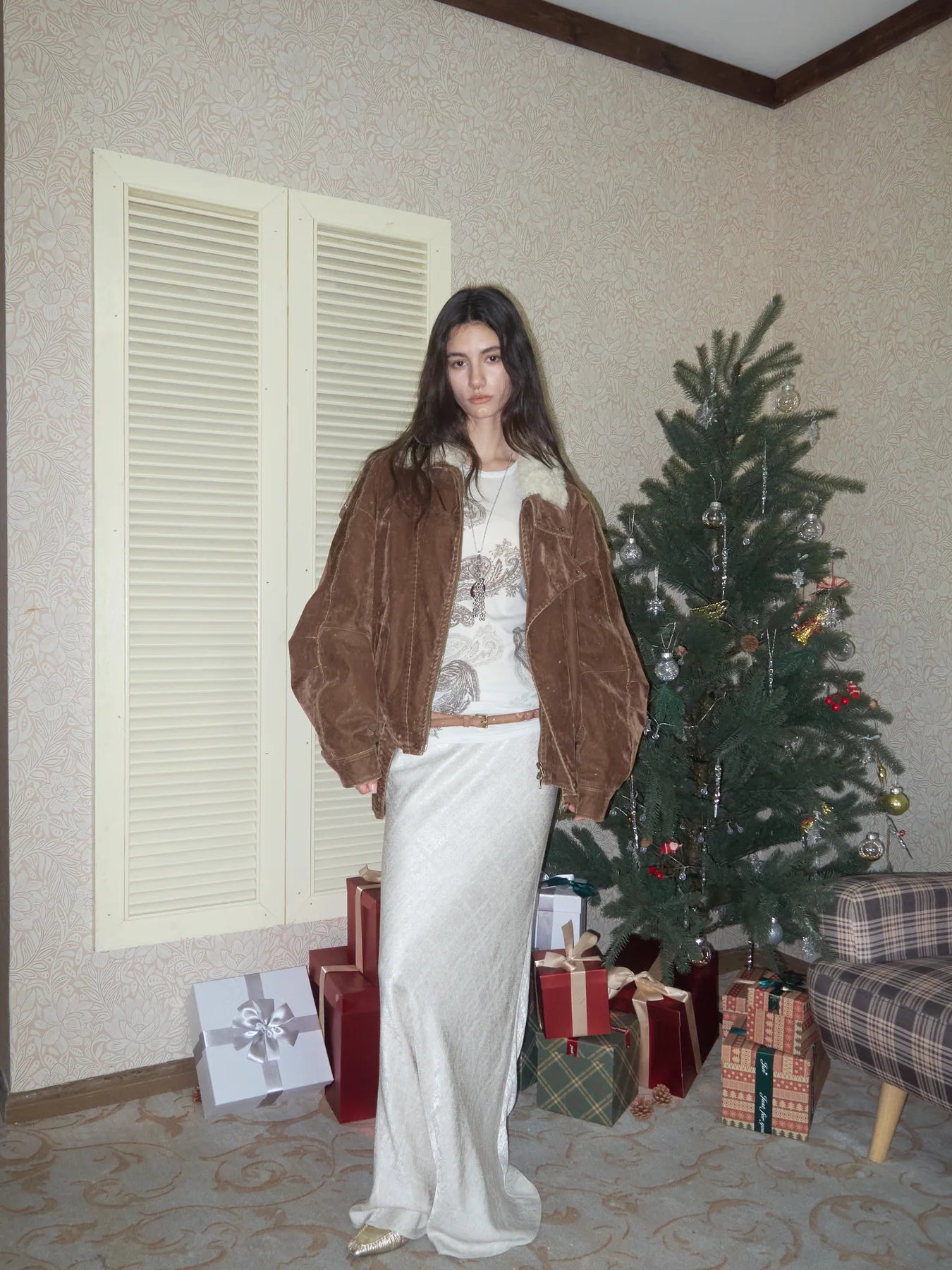
Compare a jacket ending above the waist with one covering the hip. A hem across the dress's fullest point can make both pieces look heavy. Test coat and dress lengths together.
A short jacket keeps the trouser line visible and is easier to carry indoors. If both jacket and trousers are wide, check the side view. A straight coat may suit a colder, more formal arrival.
A long coat helps during the journey but does not protect bare legs once removed. A short jacket may balance the dress visually; include tights, boots and the outdoor wait in the warmth decision.
The lesson from these examples is proportion, not a rule that gowns require long coats. Fashion styling references show both near-matched lengths and deliberate short-over-long contrast. Choose the effect you can see working on your own outfit, then check whether it survives the weather and the venue.
A column dress and a full-skirted gown create different problems even when both reach the floor. A straight coat can follow the column without adding much shape at the waist; over a wide skirt, the same coat may pull at the front or trap fabric as you step. A cropped jacket keeps the skirt free but puts its own edge near the bodice. Photograph each combination from the side with the outerwear closed, then take three normal steps. If the dress lifts, twists or bunches, change the cut or leave that outer layer for another outfit.
Rehearse the arrival and the coat check
Evening outerwear is seen most clearly in transition: stepping out of a car, crossing a lobby, waiting at a door and taking the garment off. A full coat may make that entrance feel composed and shield a dress from the wind. It also needs a place to go. Without a coat check, a long garment hung over a chair can crowd the table or touch the floor.
- Close it over the finished outfit. Raise both arms, hold a bag and turn sideways. If the front pulls across the bodice or the sleeves crush a dress sleeve, the photograph has hidden a fit problem.
- Walk, sit and stand again. Watch for a long hem under the chair or a short hem riding above the waist. A jacket that looks neat while standing can bunch around the back when seated.
- Remove it as you will at the venue. Check that jewelry, hair and dress details do not snag and that the outfit underneath looks complete without the fur.
An arrival with outdoor photographs, a queue or a long walk from parking makes coverage more valuable. Moving straight from a heated car into a restaurant favors an easier-to-handle jacket. During longer outdoor waits, compare the actual closure and layers as well as length; an open coat is a poor substitute for a fastened garment.
At a seated dinner, put the outerwear in the place it will actually occupy. A long coat folded over a narrow chair may touch the floor or crowd the person beside you; a short jacket can often be hung or carried more easily. At a theatre, ask where coats are stored before assuming you can keep a bulky piece at the seat. At an outdoor ceremony, the opposite may be true: the garment remains on long enough that coverage and an easy front closure matter more than how compact it is once removed. These details can change the purchase even when the two garments look equally good in a mirror.
Consider a wedding with portraits outside, a heated dining room and a return trip after dark. The long coat may be the strongest choice for the first and last stages, but only if the venue will store it safely while you eat and dance. A cropped jacket may flatter the dress in photos and be easier to keep nearby, yet leave an exposed skirt or legs during the wait for a car. If you cannot solve both parts with one piece, choose the outerwear for the colder interval and plan the indoor outfit separately. That is a more useful decision than matching the invitation's formality alone.
Read the garment's volume as carefully as its length
Collar, pile, color and the point where the hem meets the outfit can change the result as much as coat length. Judge the complete look while the outerwear is fastened as you would wear it outside, then check it again in motion.
Neckline and shoulder
A large collar or long-haired surface adds width near the face. Give an ornate neckline, broad sleeve or heavy jewelry room; a quieter surface, smaller collar or closed front may work better. Over a slip dress, check that the shoulder sits naturally rather than sliding back or hiding the intended neckline. See the fur-coat length and styling guide when the outer layer changes the dress's proportions.
Color under evening light
A pale coat may frame a dark dress; a dark one may calm a pattern. Evening light can change how the color and pile appear. Look for on-person images and request shoulder, sleeve, chest and total-length measurements when they are missing. The buying guide covers those broader product checks.
Where the layers meet
A cropped layer with a wide collar may hide a dress's neckline; an open long coat may split a clean column of color. With a trouser suit, avoid a short-fur hem landing at the same point as the blazer. Check that beading, a raised flower or a large sleeve has room under the closure. These are fit and styling checks; fur type alone cannot settle formality.

For a concrete long-coat reference, see the FireladyFur Fairy Mountain Dew listing and compare its stated garment measurements with a coat you already own. The product photograph illustrates the outline; it does not establish an evening warmth rating.
Choose warmth for the route, not for the room
Most evening venues are heated. The difficult interval is often the pavement, entrance queue or return journey. A long coat covers more of the dress and upper legs, but warmth also depends on closure, collar, cuffs, lining and the clothes underneath. The University of Alaska Sea Grant's cold-dressing guidance treats length and closing gaps as separate considerations. It does not establish a temperature rating for any particular fur coat.
Imagine the return trip as carefully as the arrival. A gown worn with delicate shoes may feel fine at the start of dinner but uncomfortable at a late taxi stand. When the outerwear is the only warm layer, choose a shape that closes and lets you move. In milder weather, a shorter jacket can be chosen for proportion even though it covers less of the lower body. The full-length coverage guide goes deeper into that trade-off.
Do not use one cold night to justify a coat you would struggle to store and wear. A rare event may be served by another polished outer layer already in your wardrobe. Frequent winter dinners, theatre visits and formal work events make repeated use more plausible. The garment's place in your calendar matters alongside its place over the dress.
A purchase should work beyond one photograph
Before browsing, name the two or three outfits and events in which you would actually wear the piece. A formal coat that only works with one gown may still be a deliberate occasion purchase. A jacket that works for a dinner, a gallery opening and a tailored daytime outfit may offer more use. What matters is whether that repeat use is real for your wardrobe, not a promise of versatility made by the product category.
For the broader category choice, see the coat-versus-jacket guide. For a weekday-first purchase, the daily-wear comparison gives sitting, driving and outfit rotation greater weight. The Fur Coat Comparison Guide keeps those related decisions together.
For an evening purchase, FireladyFur would start with the finished outfit and the trip to the venue. Choose the coat when coverage and a continuous line solve both problems. Choose the jacket when it frames the dress or trousers better and the journey does not demand more coverage. A beautiful garment that fails the seated or closed-front test is the wrong evening garment for that outfit.
Read more about FireladyFur and our editorial standards.
Compare evening shapes in the collection
Look at the hem in a full-length product view before choosing by color or fur surface. The Artisan Fur collection is a starting point for more statement-led pieces; mink offers another surface and shape comparison. Check the garment's actual measurements and closure before ordering.
Frequently Asked Questions
Does a floor-length gown require a long fur coat?
No. A long coat may protect more of the gown during a cold arrival, while a cropped jacket can intentionally show the waist and skirt. Try both with the actual gown and compare the front, side and movement.
Where should a fur jacket end over a cocktail dress?
There is no universal hem point. Compare a cleanly cropped line above the waist with a jacket that covers the hip, and watch for a hem cutting across the dress's fullest area.
What if the venue has no coat check?
Include the whole evening in the test. A bulky or long coat may be awkward at a table; a shorter jacket may be easier to handle, provided it gives enough protection for the journey.
Can a short fur jacket look formal?
Yes. A clean shoulder line, restrained collar, polished closure and appropriate dress underneath can make a short jacket feel formal. Judge the complete outfit, not length alone.


