FIRELADY FUR

Born of Nature, Bred in Warmth.65 years of focus on fur

Banner Image
Back to Blog Home

Fur Coat Proportions: Length, Volume and Silhouette That Work

Inserito da Neil Brow il giorno

Length, volume and silhouette

A fur coat can look impressive on a hanger and still feel wrong once shoes, a bag and an indoor layer enter the picture. The stronger choice is the coat that still looks natural after walking, sitting, opening the front and repeating the outfit more than once.

Bring the coat into a real outfit before choosing it

Most proportion mistakes happen before the coat is even styled. A shopper sees a beautiful surface, a dramatic collar or a rich color, then imagines the rest of the outfit will somehow fall into place. Fur is less forgiving than that. The shoulder, sleeve, opening, hem and shoe line all show whether the coat belongs to the clothes already in the closet.

Put the coat beside the pieces that would actually leave the house: the boots used in winter, the bag that carries keys and a phone, the knit or dress that shows when the front opens. If the outfit starts to look awkward at that point, the problem is not usually color. It is proportion.

A full-length mink coat may look calm over a simple dress and too severe over a broken trouser hem. A short fox jacket may make denim look intentional and make a weak waistband look even weaker. A cropped fur piece may be perfect on a high-rise skirt and confusing over a low-slung jean. These are not small styling details; they decide whether the coat gets worn.

For the wider FireladyFur library, the broader Firelady Fur Guide, Fur Coat Guide and Fur Coat Styling Guide sit nearby. This article stays with the mirror test: length, volume, shoes, bag, movement and the first layer people see indoors.

First Read

Shoulder and collar

The upper body tells you whether the coat frames the face or overwhelms it.

Second Read

Hem and shoe

The lower line decides whether long fur looks elegant or heavy.

Final Read

Open front

The inside outfit has to survive the moment the coat comes off.

Length changes what the rest of the outfit must finish

A long coat covers most of the clothes, so the shoe and the visible first layer carry more weight. A short jacket leaves the waist, trousers and skirt in view, so the bottom half has to look deliberate. A cropped jacket makes the waist the point of the outfit. None of these shapes is automatically easier; each one gives a different job to the clothes around it.

Try the same base outfit under three lengths and the difference becomes obvious. A black knit dress can look polished under a long mink coat, relaxed under a short fox jacket and unfinished under a cropped piece if the waist has no shape. Length changes the mood before color or material has a chance to help.

It also changes repeat wear. A full coat may need cleaner sidewalks, a steadier shoe and more storage room. A short jacket may repeat more often, but it asks more from denim, trousers and bags. The choice is not only about drama; it is about the winter routes the coat will actually meet.

For long-coat examples, open Long Fur Coat Outfit Ideas. For shorter shapes, Short Fur Jacket Outfit Ideas gives the waist, trouser and shoe checks more room.

Long coats work best when the lower line is quiet

A long fur coat already creates a strong vertical line. The outfit loses that ease when the boot, trouser break, dress hem and bag all add their own interruptions. The fix is often smaller than people think: a cleaner boot, a straighter trouser, a dress hem with space to move, or a bag that does not pull the front out of shape.

Judge the coat in the real shoes. Barefoot, the hem may look perfect. Add a high-contrast boot or a heavy sole and the whole coat can feel slower. If the hem catches, hides the shoe completely or stacks against the trouser break, adjust the lower half before adding jewelry or another accessory.

Long fur can still look relaxed. Dark denim, low-contrast boots and a simple knit can make a full coat feel modern when the route is dry and the indoor outfit still looks finished. What matters is not formality; it is whether the eye can travel from shoulder to floor without getting stopped every few inches.
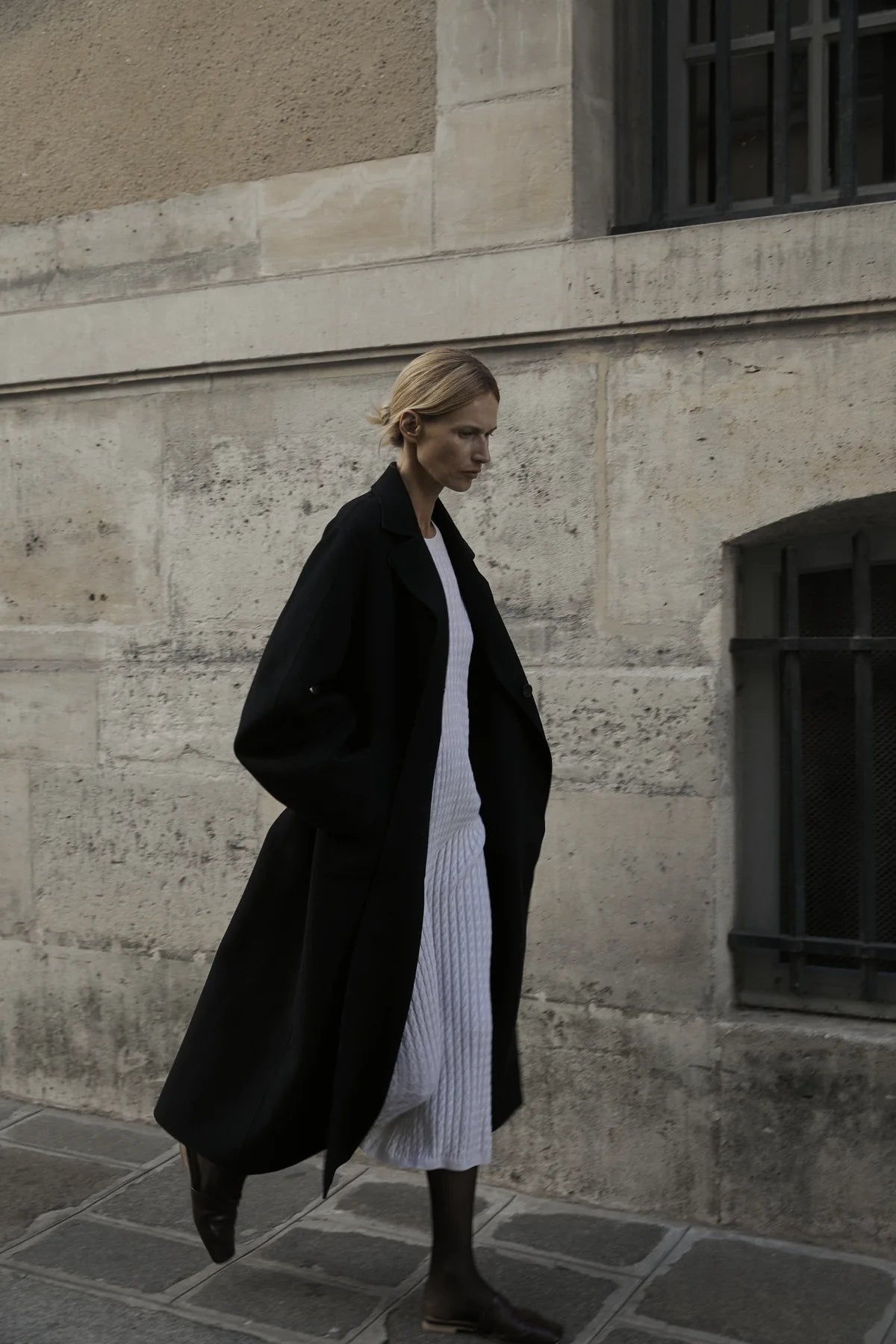
Long fur coat hem and boot proportion reference
The lower line decides whether long fur looks fluid or heavy once real shoes are added.

Short jackets need the base outfit to look finished

Short fur gives texture quickly, which is why it works so well with jeans, trousers and dresses that already have shape. It also shows every weak point underneath. A messy waistband, a shirt that bunches, or a shoe that makes the lower half feel accidental will become more visible once plush texture sits above it.

The easiest short-fur outfits usually begin with clothes people already trust: straight denim, a high waist, a ribbed knit, clean trousers, a compact bag or boots with enough weight. The jacket then adds softness and presence rather than trying to rescue the outfit.

Try it open before styling it closed. If the waist still looks good, the jacket has a place to stop. If the lower half only works when the jacket covers it, the outfit will feel uncertain the moment the coat opens indoors.

For daily short-fur styling, continue with Short Fur Jacket Outfit Ideas. If the stopping point is higher and sharper, How to Style a Cropped Fur Jacket is the narrower page to use.

Cropped jackets ask the waist to be ready

A cropped fur jacket needs the waist to look planned. High-rise denim, a slim skirt, a knit dress or a clean trouser waistband gives the short hem a reason to stop where it does.

The mistake is treating cropped fur like a smaller version of a long coat. It is closer to a styling layer. The clothes below it carry more responsibility, especially when the jacket is worn open indoors.

When the crop is the main question, use How to Style a Cropped Fur Jacket instead of stretching this page into every outfit option.

Before buying, look for a full-body image. If the product photo cuts off the lower half, you are missing the exact view that shows whether the crop works.

The strongest version is often simpler than the first styling attempt. Fur already brings texture; the surrounding clothes do not need to repeat the same volume. For shorter fur, the waist and first layer are more visible, so the outfit underneath should still look finished after the jacket opens or comes off.

Think about where the coat will wait after the first entrance: a chair, coat check, car seat, office hook or closet hanger. Silhouette affects those moments as much as the photo at the door. A short piece is worth buying when the wearer already owns the base layers that make the stopping point look intentional.

Oversized fur should still have fit points

Volume looks better when it has an anchor. An oversized coat can carry drama, but the shoulder, sleeve opening, first layer and shoe need to prove that the size is intentional.

Keep the layer underneath calm. A narrow knit, straight denim, a close dress or a quiet trouser gives the coat a steady base before the fur expands around it.

If the coat keeps reading too large, compare Oversized Fur Coat Styling, How to Balance Wide Fur With Slim Layers and How to Make a Fur Coat Look Less Bulky. Each page solves a different version of the same mirror problem.

Do not solve bulk by sizing down too fast. Fur needs some room to sit over layers; the first fixes are neckline, sleeve, bag and lower line.

Use indoor reality as a check. Lobbies, cars, elevators and restaurant seats show whether the coat is comfortable enough to repeat. For volume, keep the first layer calm enough that the coat does not become the only thing anyone sees.

Use price as a discipline tool. The more expensive or delicate the coat, the more ordinary outfits it should be able to improve without becoming difficult. A roomy coat should be bought because you like that generous shape, not because the product photo hides sleeve length, shoulder drop or side volume.

Silhouette problem Better first move Specific page
Coat feels too long Clean up shoe and lower line Long fur coat outfit ideas
Short jacket feels unfinished Build waist and lower half first Short fur jacket outfit ideas
Coat looks too wide Use a slimmer visible layer wide fur with slim layers
Hem fights boots Plan shaft, gap and trouser break hemline and boot pairings

Wide fur needs a quiet first layer

Choose one place for fullness to live. If collar, sleeve, body, bag and shoe all add weight, the coat stops looking intentional. Keep the strongest volume and quiet the rest. Keep the answer tied to the shoes and bag that will actually be worn.

At home, put on the shoes first, then the base layer, then the coat. If the shoes make the hem look heavy or unfinished, solve the lower half before blaming the coat. For volume, keep the first layer calm enough that the coat does not become the only thing anyone sees.

Before buying, try the coat with one polished outfit and one easy outfit. A coat that works with both will leave the closet more often than a coat that needs one perfect dress. A roomy coat should be bought because you like that generous shape, not because the product photo hides sleeve length, shoulder drop or side volume.

Long

Let the coat own the vertical line.

Use a calmer base and shoes that finish the hem.

Short

Give the waist more discipline.

The visible outfit needs to look complete.

Oversized

Keep the first layer calm.

The base layer keeps roominess from looking careless.

Petite proportions need fewer interruptions

Scale is not permission or prohibition. A petite wearer can wear volume and a tall wearer can still look overwhelmed. The question is how many breaks the eye has to cross before the outfit reads as one shape.

For smaller frames, edit collar height, sleeve length, bag size and boot contrast. For taller frames, watch pacing: a very long coat still needs a lower line that feels deliberate rather than endless.

The petite page, Fur Coat Outfits for Petite Proportions, is better for broken color bands, compact bags and shoe height.

Use the side photo. Scale problems often hide in straight-on images and appear when the coat turns.

Turn sideways before trusting the front mirror. The side view shows whether volume sits near the body, whether the sleeve has too much depth and whether the bag changes the line. For scale, count the interruptions: collar height, sleeve length, bag size, boot contrast and color breaks matter more than the label on the size tag.

If the product page shows only cropped or seated images, look for another reference before deciding. Sleeve depth, hem placement and the full lower line carry too much of the purchase risk to be guessed. A scale problem often costs less to solve with shoes, bag size or color rhythm than with a different fur material.

Tall proportions still need pacing

A tall frame can carry a longer coat, but length still needs pacing. If the coat, trouser, boot and bag all stretch the outfit in the same direction, the look can become flat instead of elegant.

Break the line deliberately. A quiet boot, a visible cuff, a small bag or a softer neckline can keep a long coat from reading like one uninterrupted block. The goal is not to make the wearer look shorter; it is to give the eye one place to pause.

This is especially useful with smooth mink or a full-length coat. The surface may already look controlled, so the outfit needs a human detail: hair over the collar, a softer first layer, a boot with shape or a bag that changes the rhythm without fighting the coat.

Remove one competing line before adding another accessory. A cleaner neckline, shoe or bag often changes the coat more than another styling trick. For scale, count the interruptions: collar height, sleeve length, bag size, boot contrast and color breaks matter more than the label on the size tag.

A good wardrobe piece should not require a new bag, new boots and a new base layer all at once. One planned purchase is normal; rebuilding the whole outfit around the coat is a warning sign. A scale problem often costs less to solve with shoes, bag size or color rhythm than with a different fur material.

Belts help only when the coat accepts the waist

A belt should refine a waist the coat already understands. On a wrap coat, a smoother mink coat or a softer long silhouette, it can make the front line cleaner. On a stiff, fluffy or boxy coat, it can pinch the pile and make the whole piece look forced.

Try the coat open first. If the shoulders sit badly, the sleeves are too deep or the front panels refuse to fall straight, a belt will not solve the fit. It will only move attention to the middle of a coat that still has problems above and below the waist.

The narrower belt question belongs in How to Wear a Belt With a Fur Coat. Here, the decision is simpler: use a belt only when it makes the silhouette easier to read after the coat is already working.

This affects shopping as much as styling. A coat with one perfect outfit may still be worth owning, but it should be treated as a special piece. For shorter fur, the waist and first layer are more visible, so the outfit underneath should still look finished after the jacket opens or comes off.

Material comes after this check. Mink, fox, shearling and fur trim can all look right when the shape has a clear job, and all can look wrong when the shoes and hem feel unfinished. A short piece is worth buying when the wearer already owns the base layers that make the stopping point look intentional.

Boots finish the hemline

The shoe finishes the coat. A hem can look expensive in a product photo and awkward the moment it meets the wrong boot shaft. Check the gap between coat, trouser or dress and shoe before judging the material.

Ankle boots solve many outfits because they give the coat a clear stopping point. Knee boots can look beautiful with dresses and longer hems, but spacing needs to be exact or the lower half becomes crowded.

When this is the blocking issue, use Fur Coat Hemline and Boot Pairings. It treats shoes as the main decision rather than a styling afterthought.

Weather matters here. Slush, stairs and train platforms can turn a delicate shoe plan into a practical mistake.

The strongest version is often simpler than the first styling attempt. Fur already brings texture; the surrounding clothes do not need to repeat the same volume. For shoes, judge the coat after walking, because a hem that looks balanced while standing can catch, stack or disappear once the wearer moves.

Think about where the coat will wait after the first entrance: a chair, coat check, car seat, office hook or closet hanger. Silhouette affects those moments as much as the photo at the door. If the right shoe is rare or uncomfortable, the coat will be harder to repeat no matter how strong the upper half looks.

Long coat hem and dark boot reference
Boot shaft, trouser break and coat hem need to look connected when the wearer walks.

Bags can distort the shoulder and front opening

A bag changes fur through pressure. The shoulder may flatten, the front opening may pull sideways, and a crossbody strap can draw a line across the pile. Test the bag with weight inside.

If the bag must carry a laptop, makeup pouch, umbrella and water bottle, the coat needs to be chosen around that day. A delicate full-fur piece may be better kept for routes where the bag is lighter.

For practical routes, compare fur-trim parkas; for polished evenings, a smaller top-handle or clutch usually protects the silhouette.

The bag should support the coat's shape, not explain why the coat looks uneven.

Use indoor reality as a check. Lobbies, cars, elevators and restaurant seats show whether the coat is comfortable enough to repeat. For bags, add real weight before judging. A light prop bag hides shoulder drag and strap pressure that will show up during the actual day.

Use price as a discipline tool. The more expensive or delicate the coat, the more ordinary outfits it should be able to improve without becoming difficult. A buyer who carries heavy daily bags should consider fur trim or practical outerwear before choosing a delicate full-fur shoulder.

Sitting changes the coat more than the mirror shows

Movement is where proportion becomes real. Sitting, driving, climbing stairs and hanging the coat all reveal problems that a standing mirror hides.

A long coat needs room around the seat and hem. A short jacket needs the base outfit to stay polished when the coat comes off. An oversized coat needs sleeves that still let the hand work.

Repeat wear depends on these small frictions. If a coat needs one perfect route, one perfect bag and one perfect shoe, it may still be special, but it will not be the easiest piece in the closet.

When daily practicality is part of the decision, compare the main Fur Coat Guide with the styling page rather than buying by image alone.

At home, put on the shoes first, then the base layer, then the coat. If the shoes make the hem look heavy or unfinished, solve the lower half before blaming the coat. For movement, use the least glamorous tests first: sitting in a car, climbing stairs, carrying the bag and hanging the coat after arrival.

Before buying, try the coat with one polished outfit and one easy outfit. A coat that works with both will leave the closet more often than a coat that needs one perfect dress. The more expensive the coat, the more these ordinary moments matter. They decide whether the coat feels special in use or difficult after the first photo.

Driving and stairs reveal length problems

Long fur should be tested away from the mirror. Sit in a car, climb a few stairs and reach for a door handle. Those small movements show whether the coat has enough ease around the seat, sleeve and lower hem.

A coat that looks graceful while standing can become irritating if the hem has to be lifted at every step or the sleeve blocks the hand. That does not make the coat wrong, but it changes its role. It may be an entrance coat, not the daily layer.

For shoppers, this is where price and use meet. A dramatic length is easier to justify when the wearer has routes that protect it: dry dinners, short walks, car service, coat check and enough storage space after arrival.

Turn sideways before trusting the front mirror. The side view shows whether volume sits near the body, whether the sleeve has too much depth and whether the bag changes the line. For length, the important evidence is near the floor: boot shaft, trouser break, skirt hem and whether the coat still moves cleanly after a few steps.

If the product page shows only cropped or seated images, look for another reference before deciding. Sleeve depth, hem placement and the full lower line carry too much of the purchase risk to be guessed. A long coat earns its price when it works with more than one lower half: at least one boot, one trouser or dress, and one indoor outfit after the coat opens.

Mid-length coats are the easiest compromise

A good fur coat does not need the whole outfit to disappear. It needs one clear relationship with the clothes around it: length with shoe, volume with base layer, collar with neckline or material with occasion.

The easiest mistake is adding more styling when the shape needs editing. Remove one competing element before adding another accessory.

Look at the coat open, closed, seated and from the side. Those four views usually explain why an outfit feels heavy, unfinished or surprisingly right.

If the issue becomes narrow, use the closest sibling page from the Fur Coat Styling Guide instead of solving every detail here.

Remove one competing line before adding another accessory. A cleaner neckline, shoe or bag often changes the coat more than another styling trick. For length, the important evidence is near the floor: boot shaft, trouser break, skirt hem and whether the coat still moves cleanly after a few steps.

A good wardrobe piece should not require a new bag, new boots and a new base layer all at once. One planned purchase is normal; rebuilding the whole outfit around the coat is a warning sign. A long coat earns its price when it works with more than one lower half: at least one boot, one trouser or dress, and one indoor outfit after the coat opens.

Walking view for fur coat movement and proportion
Movement check

The coat should sit, walk and carry a bag.

A side photo and seated check reveal volume problems faster than a front mirror shot.

Front openings change the visible outfit

The upper body decides whether the coat feels luxurious or crowded. Collar height, sleeve depth and the front opening frame the face and hands before anyone notices the hem.

A strong collar can be beautiful, but it needs a quiet neckline. A wide sleeve can look dramatic, but the hand still has to carry a bag, hold a phone and sit at a table.

Check these points with real hair, jewelry and base layers. Product photos often simplify the neckline in ways that daily outfits do not.

If the face area feels crowded, remove a scarf, lower the neckline, smooth the first layer or choose a cleaner surface before rejecting the coat.

This affects shopping as much as styling. A coat with one perfect outfit may still be worth owning, but it should be treated as a special piece. For the upper body, test the coat with hair, earrings, lipstick, scarf and the real first layer; a bare fitting-room neckline is too forgiving.

Material comes after this check. Mink, fox, shearling and fur trim can all look right when the shape has a clear job, and all can look wrong when the shoes and hem feel unfinished. Upper-body discomfort usually becomes visible fast: pushing the collar down, pulling sleeves back or avoiding a bag are all purchase warnings.

Sleeve volume changes the whole upper body

Test the sleeve while doing something ordinary: carrying a bag, reaching into a pocket, holding a phone or sitting at a table. Sleeve volume is attractive only when the hand can still move naturally. Keep the answer tied to the shoes and bag that will actually be worn.

The strongest version is often simpler than the first styling attempt. Fur already brings texture; the surrounding clothes do not need to repeat the same volume. For volume, keep the first layer calm enough that the coat does not become the only thing anyone sees.

Think about where the coat will wait after the first entrance: a chair, coat check, car seat, office hook or closet hanger. Silhouette affects those moments as much as the photo at the door. A roomy coat should be bought because you like that generous shape, not because the product photo hides sleeve length, shoulder drop or side volume.

Collar scale decides face space

Leave enough air around the face for hair, earrings, lipstick and the first layer. If the collar looks good only when everything else is removed, the styling will feel difficult once the outfit leaves the fitting room. Keep the answer tied to the shoes and bag that will actually be worn.

Use indoor reality as a check. Lobbies, cars, elevators and restaurant seats show whether the coat is comfortable enough to repeat. For scale, count the interruptions: collar height, sleeve length, bag size, boot contrast and color breaks matter more than the label on the size tag.

Use price as a discipline tool. The more expensive or delicate the coat, the more ordinary outfits it should be able to improve without becoming difficult. A scale problem often costs less to solve with shoes, bag size or color rhythm than with a different fur material.

A dress base needs different checks than denim

Use the a dress base needs different checks than denim question inside one real outfit rather than as a general fur rule. The more specific the shoes, layer and bag become, the easier it is to see whether the coat belongs in the wardrobe. Keep the answer tied to the shoes and bag that will actually be worn.

At home, put on the shoes first, then the base layer, then the coat. If the shoes make the hem look heavy or unfinished, solve the lower half before blaming the coat. For this check, trust the outfit in the mirror more than the name of the coat.

Before buying, try the coat with one polished outfit and one easy outfit. A coat that works with both will leave the closet more often than a coat that needs one perfect dress. If the coat needs several new supporting pieces before it looks natural, the purchase is narrower than the product image suggests.

Mink jacket for clean proportionMinkChoose when the outfit needs a smoother surface.Fox fur for visible volumeFox FurChoose when the coat should carry softness and texture.Fur trim parka for practical routesFur TrimChoose when weather, pockets and movement matter.

Travel routes need lower visual risk

Travel outfits need a little forgiveness. Airport seats, train platforms, car doors and luggage handles can distort a coat that looks perfect in a still image. A practical route should not require a fragile lower line.

Use darker boots, a steadier bag and a coat that does not need constant holding. Fur trim often works well here because the body of the coat can handle movement while the collar keeps the outfit soft.

If the trip ends in a polished setting, pack one better indoor layer rather than forcing the travel coat to do everything. The coat can make the arrival feel finished, but it should not make the journey harder.

Turn sideways before trusting the front mirror. The side view shows whether volume sits near the body, whether the sleeve has too much depth and whether the bag changes the line. For movement, use the least glamorous tests first: sitting in a car, climbing stairs, carrying the bag and hanging the coat after arrival.

If the product page shows only cropped or seated images, look for another reference before deciding. Sleeve depth, hem placement and the full lower line carry too much of the purchase risk to be guessed. The more expensive the coat, the more these ordinary moments matter. They decide whether the coat feels special in use or difficult after the first photo.

Storage and repeat wear should affect silhouette

A coat that cannot be stored well will not be repeated often. Deep sleeves, long hems and fuller collars need room on a hanger, space in a closet and a route that does not crush the pile every time the coat is worn.

Think about the end of the day. Will the coat be placed on a chair, checked at a restaurant, hung in an office or folded into a car seat? Those moments decide whether the silhouette remains beautiful after the first outing.

For care after the styling decision, use the Fur Coat Care Guide. Proportion and care meet here because a difficult shape usually becomes harder to maintain.

Remove one competing line before adding another accessory. A cleaner neckline, shoe or bag often changes the coat more than another styling trick. For movement, use the least glamorous tests first: sitting in a car, climbing stairs, carrying the bag and hanging the coat after arrival.

A good wardrobe piece should not require a new bag, new boots and a new base layer all at once. One planned purchase is normal; rebuilding the whole outfit around the coat is a warning sign. The more expensive the coat, the more these ordinary moments matter. They decide whether the coat feels special in use or difficult after the first photo.

Use product photos in a stricter order

Photos can make fur look cleaner than it will feel in a full outfit. Read product images from top to bottom: shoulder, collar, sleeve, opening, hem, shoe and bag if shown.

Color should support the outline. A dark column can lengthen a coat; a light shoe can soften it; a high-contrast bag can either sharpen the look or interrupt it. Place contrast where the shape needs attention.

Side views matter more than close-ups for proportion. A texture shot can tell you pile and shine, but it will not tell you whether the coat overwhelms the base layer.

If product evidence feels thin, use the Fur Coat Guide before choosing between collections.

This affects shopping as much as styling. A coat with one perfect outfit may still be worth owning, but it should be treated as a special piece. For color and photos, trust the full-body image more than the close-up; the surface can be beautiful while the outline still fails.

Material comes after this check. Mink, fox, shearling and fur trim can all look right when the shape has a clear job, and all can look wrong when the shoes and hem feel unfinished. If the product page does not show the hem, sleeve and side profile, treat the color impression as incomplete.

Choose fox when volume is the point

Material changes the amount of outline the coat creates. Mink usually stays closer and smoother. Fox and longer-haired furs add visible softness. Fur trim keeps texture near the face while the body handles weather and carrying.

Choose material after the silhouette has a job. If the outfit needs polish, smoother fur is easier. If the outfit needs a statement, volume can be the point. If the route is practical, trim may do more work than a full-fur coat.

Browse mink, fox fur and fur-trim parkas with that role in mind.

The question is not which material is more impressive. The question is which surface makes the chosen shape easier to wear.

Choose mink when the surface needs control

Mink is useful when the outfit already has length, color or strong accessories and the surface needs to stay calm. The pile usually reads closer to the body, so the coat can look polished without adding as much outline.

That does not make mink the automatic answer. If the outfit feels plain, fox or a fuller texture may do more for the wearer. Mink is strongest when the goal is a cleaner line: dinner dressing, office polish, a long coat over a simple base or a jacket that should not overwhelm the face.

Compare mink after the silhouette passes the mirror test. Surface control helps only when the length, sleeve and lower line already make sense.

Use indoor reality as a check. Lobbies, cars, elevators and restaurant seats show whether the coat is comfortable enough to repeat. For the upper body, test the coat with hair, earrings, lipstick, scarf and the real first layer; a bare fitting-room neckline is too forgiving.

Use price as a discipline tool. The more expensive or delicate the coat, the more ordinary outfits it should be able to improve without becoming difficult. Upper-body discomfort usually becomes visible fast: pushing the collar down, pulling sleeves back or avoiding a bag are all purchase warnings.

Use fur trim when the route is practical

Fur trim can be the smarter proportion choice when the day includes weather, luggage, errands or a heavier bag. It keeps softness near the face while the body of the coat handles movement, pockets and a less careful route.

This matters when a full-fur coat would need too many instructions. If the wearer has to avoid every shoulder strap, wet sidewalk, crowded train seat and coat hook, the outfit may look beautiful but work poorly for the day.

For that kind of route, compare fur-trim parkas before treating full fur as the only luxurious option. Trim can give the styling effect without asking the whole outfit to behave like an evening look.

Use color to support the silhouette

Color should help the eye understand the shape. A dark base can make a long coat feel leaner; a low-contrast boot can soften a short jacket; a repeated bag or belt color can connect the upper and lower half.

Avoid using color as a distraction from bad proportion. A brighter coat may look exciting in a close-up and still feel wrong if the sleeve is too deep, the hem fights the boot or the bag cuts across the widest part of the fur.

When color becomes the main question, move to the color and texture pages inside the Fur Coat Styling Guide. This page uses color only when it helps length, volume or silhouette.

Turn sideways before trusting the front mirror. The side view shows whether volume sits near the body, whether the sleeve has too much depth and whether the bag changes the line. For color and photos, trust the full-body image more than the close-up; the surface can be beautiful while the outline still fails.

If the product page shows only cropped or seated images, look for another reference before deciding. Sleeve depth, hem placement and the full lower line carry too much of the purchase risk to be guessed. If the product page does not show the hem, sleeve and side profile, treat the color impression as incomplete.

Photo checks should include front and side views

A front photo flatters many coats. The side view is stricter. It shows how far the fur sits away from the body, whether the sleeve has too much depth and whether the bag changes the line.

Ask for full-body images when possible. Cropped product photos can hide the exact problem the shopper needs to solve: hem length, boot spacing, waist placement or the amount of volume through the side.

Use texture close-ups later. They matter for material quality, but they cannot answer whether the coat belongs with the real clothes in the closet.

Remove one competing line before adding another accessory. A cleaner neckline, shoe or bag often changes the coat more than another styling trick. For color and photos, trust the full-body image more than the close-up; the surface can be beautiful while the outline still fails.

A good wardrobe piece should not require a new bag, new boots and a new base layer all at once. One planned purchase is normal; rebuilding the whole outfit around the coat is a warning sign. If the product page does not show the hem, sleeve and side profile, treat the color impression as incomplete.

The first purchase should solve the missing role

Use the the first purchase should solve the missing role question inside one real outfit rather than as a general fur rule. The more specific the shoes, layer and bag become, the easier it is to see whether the coat belongs in the wardrobe. That is the difference between a good product photo and a coat that works in the closet.

This affects shopping as much as styling. A coat with one perfect outfit may still be worth owning, but it should be treated as a special piece. For a first purchase, the coat should solve a real wardrobe job rather than require a new wardrobe around it.

Material comes after this check. Mink, fox, shearling and fur trim can all look right when the shape has a clear job, and all can look wrong when the shoes and hem feel unfinished. A first fur purchase should improve at least one common winter outfit, not only one occasion photo.

A long coat can be casual with the right base

Let the coat be the long line and keep the support pieces quieter. A long fur coat can handle drama, but the shoe, bag and base layer should not all compete with the same amount of attention. Check it once with the coat open and once closed.

The strongest version is often simpler than the first styling attempt. Fur already brings texture; the surrounding clothes do not need to repeat the same volume. For length, the important evidence is near the floor: boot shaft, trouser break, skirt hem and whether the coat still moves cleanly after a few steps.

Think about where the coat will wait after the first entrance: a chair, coat check, car seat, office hook or closet hanger. Silhouette affects those moments as much as the photo at the door. A long coat earns its price when it works with more than one lower half: at least one boot, one trouser or dress, and one indoor outfit after the coat opens.

A short jacket can still look polished

The clothes below the fur do more work than usual. The jacket may bring the texture, but the waist, trouser, skirt or dress needs to make the outfit look complete once the coat opens. Use the side view before trusting the front mirror.

Use indoor reality as a check. Lobbies, cars, elevators and restaurant seats show whether the coat is comfortable enough to repeat. For shorter fur, the waist and first layer are more visible, so the outfit underneath should still look finished after the jacket opens or comes off.

Use price as a discipline tool. The more expensive or delicate the coat, the more ordinary outfits it should be able to improve without becoming difficult. A short piece is worth buying when the wearer already owns the base layers that make the stopping point look intentional.

Oversized does not mean uncontrolled

Oversized fur should still have a plan. A relaxed shoulder, wider sleeve or fuller body can look intentional when one line underneath stays clean. Without that line, the coat starts to look borrowed rather than styled.

The easiest anchor is a calm layer under the coat: a fine knit, straight denim, a slip dress, slim trousers or one simple color from top to shoe. The anchor does not have to be tight; it just has to keep the outfit from becoming all fur.

If the coat keeps growing in the mirror, move to Oversized Fur Coat Styling or How to Balance Wide Fur With Slim Layers. Those pages handle volume as a styling problem, not a size problem.

Cropped does not mean incomplete

The clothes below the fur do more work than usual. The jacket may bring the texture, but the waist, trouser, skirt or dress needs to make the outfit look complete once the coat opens. Keep the answer tied to the shoes and bag that will actually be worn.

Turn sideways before trusting the front mirror. The side view shows whether volume sits near the body, whether the sleeve has too much depth and whether the bag changes the line. For shorter fur, the waist and first layer are more visible, so the outfit underneath should still look finished after the jacket opens or comes off.

If the product page shows only cropped or seated images, look for another reference before deciding. Sleeve depth, hem placement and the full lower line carry too much of the purchase risk to be guessed. A short piece is worth buying when the wearer already owns the base layers that make the stopping point look intentional.

Petite styling is about scale, not permission

Petite styling is not a list of forbidden coats. It is a scale check. Collar height, sleeve depth, bag size, boot contrast and hem placement decide whether the coat frames the wearer or takes over the outfit.

A smaller frame can wear volume when the outfit removes extra interruptions. A continuous base color, compact bag, cleaner boot and open neckline often do more than switching from one fur material to another.

For the narrower version, use Fur Coat Outfits for Petite Proportions. It spends more time on broken color bands, shoe height and how much sleeve volume a small frame can carry.

A belt is an option, not a rescue tool

A belt works only when the coat has a waist to follow. On smooth mink or a wrap shape, a belt can make the line elegant. On a fluffy boxy coat, it can crush pile and create pressure without improving the fit.

Check the coat open first. If the shoulder, sleeve or front opening already looks wrong, a belt will not fix the problem. It will simply draw attention to a structure that was never meant to be cinched.

For placement, width and pressure details, use How to Wear a Belt With a Fur Coat.

The best belt looks like part of the outfit. It should repeat a shoe, bag or base color rather than become a second statement competing with the fur.

This affects shopping as much as styling. A coat with one perfect outfit may still be worth owning, but it should be treated as a special piece. For belts, pressure is part of the decision. The waist should look better after the belt is removed, not only while the belt is holding the coat in place.

Material comes after this check. Mink, fox, shearling and fur trim can all look right when the shape has a clear job, and all can look wrong when the shoes and hem feel unfinished. If the belt is the only reason the coat works, compare wrap shapes or smoother mink before committing to a belted look.

The hem and boot should move together

The lower line is where many fur outfits fail. The coat can look strong from the waist up, then lose balance when the hem meets a weak boot, a busy trouser break or a shoe that disappears under the length.

Walk before judging. If the hem swings cleanly over the boot, the outfit reads as one decision. If it catches, stacks or hides the shoe completely, the coat may need a different boot shaft, a cleaner trouser or a shorter length.

The detailed shoe path is Fur Coat Hemline and Boot Pairings. Use it when the coat is already chosen and the problem has moved to the ground.

Less bulky styling starts at the neckline

Bulk often begins near the face, not at the hem. A high collar, heavy scarf, thick hair, large earrings and a chunky first layer can make the top of the outfit feel crowded before the coat itself has done anything wrong.

Open the neckline first. Use a smoother knit, a lower crew, a fine turtleneck or a cleaner blouse. Then check the sleeve and bag. If those areas calm down, the coat may not be too large; it may simply need less competition around it.

When the whole outfit still feels heavy, use How to Make a Fur Coat Look Less Bulky. That page stays with the edits that reduce visual weight without flattening the fur.

Choose the coat that works without special effort

The best silhouette is usually the one that survives an ordinary outfit. It should work with at least one real base layer, one real shoe and one real bag, not only with the product styling that made it look perfect online.

A special coat can still be worth buying, but it should be named honestly. If it needs a certain dress, dry weather, a small bag and a short route, it is an occasion piece. If it improves denim, knitwear, trousers and a dinner outfit, it has a wider role.

That distinction protects the purchase. It keeps a beautiful coat from becoming a difficult coat, and it helps the shopper choose between mink polish, fox volume, fur trim practicality or a shorter jacket before price becomes the only filter.

Try the coat with two real outfits

One styled outfit is not enough. Try the coat with one polished look and one easy look: for example, a knit dress and boots, then straight denim and a clean sweater. If the coat only works with the first outfit, buy it as an occasion piece rather than a daily winter layer.

This test is useful because fur can make a simple outfit feel intentional, but it can also expose weak clothes underneath. If the easy outfit suddenly looks unfinished, the issue may be the base layer, shoe or bag, not the coat itself.

Before buying, decide whether that narrower role is acceptable. A dramatic fox jacket, long mink coat or belted wrap can still be worth owning, but the purchase should match how often that exact kind of outfit appears in real life.

Turn sideways before trusting the front mirror. The side view shows whether volume sits near the body, whether the sleeve has too much depth and whether the bag changes the line. For this check, trust the outfit in the mirror more than the name of the coat.

If the product page shows only cropped or seated images, look for another reference before deciding. Sleeve depth, hem placement and the full lower line carry too much of the purchase risk to be guessed. If the coat needs several new supporting pieces before it looks natural, the purchase is narrower than the product image suggests.

Check the outfit after the coat opens indoors

A coat that looks perfect at the door still has to work after it opens in a lobby, restaurant, office or car. The first layer, neckline and waist become visible, and that is where many fur outfits start to look less finished.

Build the indoor outfit first. A fine turtleneck, silk blouse, fitted knit dress, clean trouser waistband or dark denim base gives the coat something believable to frame. Then add the fur and see whether it improves the outfit instead of carrying it alone.

This matters most with short jackets, cropped pieces and open-front coats. They show more of the clothes underneath, so the base cannot be treated as hidden insulation.

Remove one competing line before adding another accessory. A cleaner neckline, shoe or bag often changes the coat more than another styling trick. For this check, trust the outfit in the mirror more than the name of the coat.

A good wardrobe piece should not require a new bag, new boots and a new base layer all at once. One planned purchase is normal; rebuilding the whole outfit around the coat is a warning sign. If the coat needs several new supporting pieces before it looks natural, the purchase is narrower than the product image suggests.

Use bag weight as a silhouette test

A bag changes the coat more than most product photos admit. A shoulder strap can press the pile, a crossbody can cut across the front opening, and a heavy tote can pull one side lower than the other.

Fill the bag before judging the outfit. Add the phone, wallet, keys, makeup pouch, gloves and anything else that would actually be carried. Then look at the shoulder, sleeve and front opening again.

If the coat only looks good with an empty prop bag, choose a smaller evening bag, a top-handle style or a more practical coat category. Fur trim can be the smarter choice when the day requires a heavier bag.

This affects shopping as much as styling. A coat with one perfect outfit may still be worth owning, but it should be treated as a special piece. For bags, add real weight before judging. A light prop bag hides shoulder drag and strap pressure that will show up during the actual day.

Material comes after this check. Mink, fox, shearling and fur trim can all look right when the shape has a clear job, and all can look wrong when the shoes and hem feel unfinished. A buyer who carries heavy daily bags should consider fur trim or practical outerwear before choosing a delicate full-fur shoulder.

Let storage change the silhouette decision

The best silhouette is not only the one that looks good for five minutes. A long hem, deep sleeve or high collar also needs room after the coat comes off: a hanger, coat check, car seat, office hook or closet space.

If the coat will often be draped over a chair, squeezed into a car or hung on a narrow hook, choose a shape that can survive that reality. Fuller fur needs more air around it; smoother mink and practical trim are easier when storage is imperfect.

This is not a reason to avoid drama. It is a reason to buy drama with a plan. A special full-length coat can be right for dry dinners and proper coat check; a shorter jacket or trim parka may be better for busy days.

The strongest version is often simpler than the first styling attempt. Fur already brings texture; the surrounding clothes do not need to repeat the same volume. For movement, use the least glamorous tests first: sitting in a car, climbing stairs, carrying the bag and hanging the coat after arrival.

Think about where the coat will wait after the first entrance: a chair, coat check, car seat, office hook or closet hanger. Silhouette affects those moments as much as the photo at the door. The more expensive the coat, the more these ordinary moments matter. They decide whether the coat feels special in use or difficult after the first photo.

FireladyFur proportion judgment

Use the fireladyfur proportion judgment question inside one real outfit rather than as a general fur rule. The more specific the shoes, layer and bag become, the easier it is to see whether the coat belongs in the wardrobe. Keep the answer tied to the shoes and bag that will actually be worn.

Use indoor reality as a check. Lobbies, cars, elevators and restaurant seats show whether the coat is comfortable enough to repeat. For this check, trust the outfit in the mirror more than the name of the coat.

Use price as a discipline tool. The more expensive or delicate the coat, the more ordinary outfits it should be able to improve without becoming difficult. If the coat needs several new supporting pieces before it looks natural, the purchase is narrower than the product image suggests.

Use the right next page after the mirror test

After the first mirror test, choose the next page by the problem you can actually see. If the lower half is wrong, read about hems and boots. If the coat feels too wide, read about slim layers. If the waist is the problem, read the belt or cropped-jacket page.

This keeps the styling process from becoming vague. The coat does not need every possible tip at once. It needs the one edit that removes the obvious friction.

When no single detail explains the issue, return to the full proportion order: length, volume, upper body, lower line, bag, movement, storage and purchase role. That order is slower, but it prevents replacing a good coat for the wrong reason.

FireladyFur note

FireladyFur looks at wear before drama

FireladyFur proportion editing begins with the parts that change wear: shoulder, collar, sleeve, front opening, hem and how the coat behaves over the layers already in the closet. A beautiful surface is not enough if the piece makes the outfit harder to repeat. For brand background, read About FireladyFur. For category context, use the Firelady Fur Guide and the Fur Coat Styling Guide.

Next step

Choose the coat after the neckline, hem, shoe and bag have been tested with real clothes. Then compare mink for polish, fox fur for volume, or fur-trim parkas for practical routes.

FAQ

What fur coat silhouette is easiest to wear?

The easiest silhouette is the one that works with your real shoes, base layers and bag. A clean short jacket or mid-length coat often repeats more easily than a dramatic full-length piece.

Does a long fur coat always look formal?

Often, but not always. Long fur can become casual with denim, knitwear and clean boots when the route is dry and the lower line stays simple.

How do I make fur look less bulky?

Open the neckline, use a smoother first layer, choose a supportive shoe, simplify the bag and avoid placing contrast at the widest point.

Can petite wearers choose oversized fur?

Yes. The shoulder, sleeve, collar and shoe line need stricter control, and the outfit should avoid too many broken color bands.

Should I choose material or silhouette first?

Start with silhouette when the problem is outfit balance. Once length, volume and hemline work, choose the material that fits the role.

Fur coat styling guide

Post meno recente Post più recente

Scrivi un commento

If you have any questions about fur, please leave a message, and our 24-hour customer service team will respond promptly.

100% secure payment
Apple Pay, CB, Visa ou Paypal
Customer service
05 47 31 90 00
Free returns
Within 30 days EU & UK
Free shipping
European Union & UK