


Some faux fur photographs beautifully. The test is whether texture, movement, pile direction and scale still look convincing when the coat is seen from more than one angle.
Look past the first product image
A convincing photo does not prove the garment will look convincing in motion. Product pages often show the best angle, best light and most flattering surface. Ask how the coat looks from the side, back, sleeve, hem and collar, and whether the pile still has depth after movement.
Faux fur can look close to real fur in a small image, especially when the color is dark, the lighting is soft or the pile is long. Real fur can also photograph poorly if the light flattens its depth. The comparison needs more than one frame.
A product image freezes the best second of the garment. The better test is whether the surface keeps its character across front, side, back, sleeve, hem, and collar photos.
If every photo is taken from the same flattering angle, ask what the seller is not showing: pile direction, side volume, lining condition, and whether the surface collapses when the coat is no longer perfectly posed.

Texture and movement are stronger clues than shine
Shine is unreliable. Some real fur is glossy; some faux fur is intentionally matte. Movement is more useful: how the surface lifts, bends, separates, falls and recovers around sleeves, side seams and hem.
If you cannot inspect the coat in person, combine this page with How to Compare Real and Faux Fur Texture in Photos. The photo guide turns this visual judgment into a seller-photo checklist.
Watch the hem
A coat that swings naturally usually reveals more than a still front photo.
Compare panels
Uniform pile across every panel can look synthetic; uneven damage can also signal poor care.
Use body context
Texture reads differently on a cropped jacket, long coat, collar trim or oversized parka.
Pile direction creates depth or exposes uniformity
Real fur often carries subtle changes in direction and density. Faux fur can be engineered to imitate this, but a very repetitive surface, identical pile length or flat direction across large panels may look less natural once seen from the side.
Do not treat irregularity as automatic quality. Damage, matting, old storage and poor cleaning can also create uneven texture. The task is to separate natural movement from wear problems.
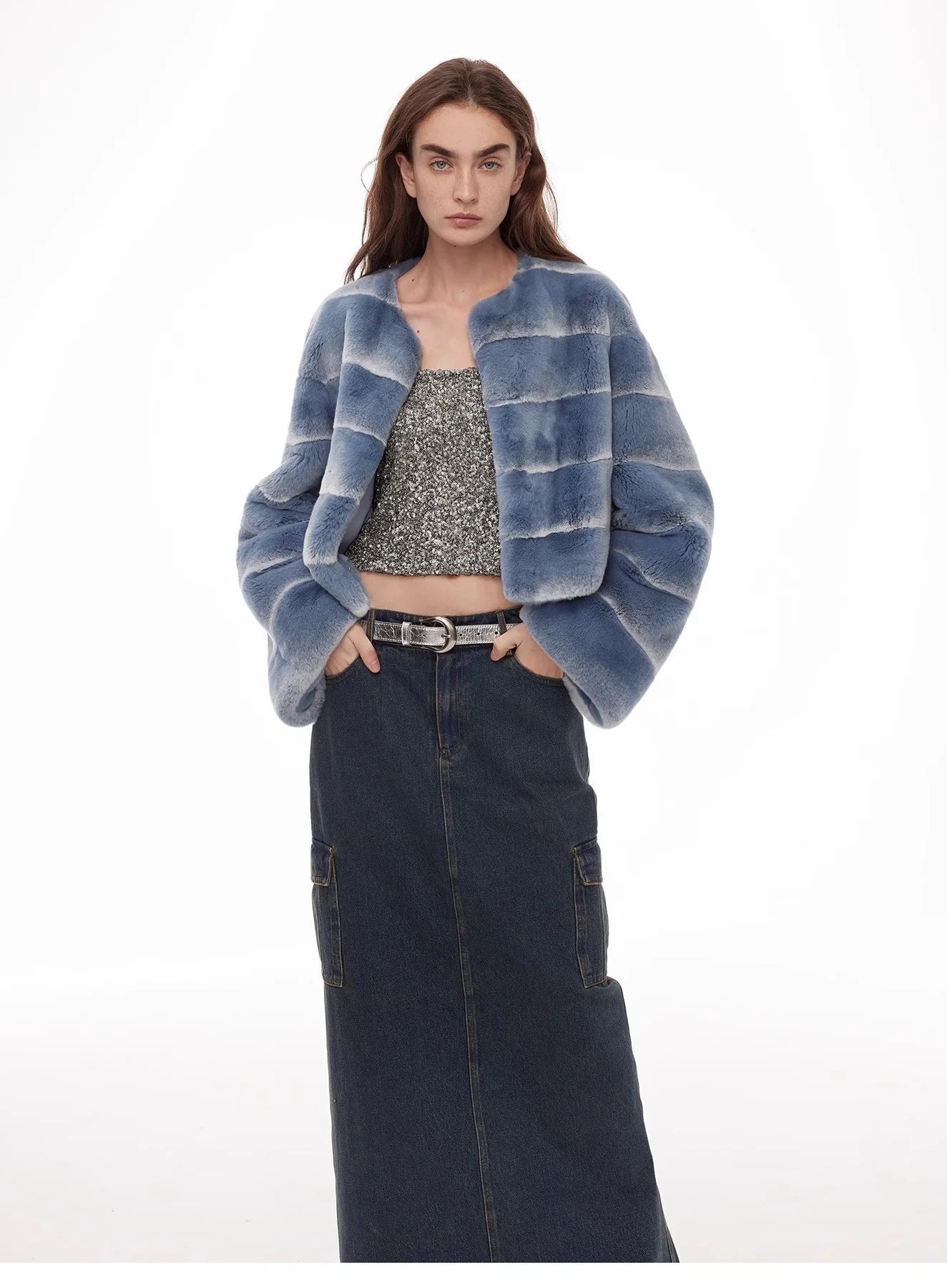
Direction changes the silhouette
A good comparison includes the way pile follows the sleeve, collar and side body, not only how it shines under one light.
Lighting, compression and filters can distort the answer
Bright light can turn both materials harsh. Soft light can hide weak pile. Compression from shipping, a crowded rack or a seat belt can temporarily flatten both real and faux fur. A filtered image can hide everything.
Ask for normal room light, a side view and a quick movement shot if the coat is being sold online. If the seller only supplies studio-perfect photos, you still do not know how the material behaves in ordinary use.
| Photo issue | What it can hide | Better evidence |
|---|---|---|
| Single close-up | Scale, lining, side volume and movement. | Front, side, back and hem images. |
| Soft lighting | Flat pile, shine, color variation or matting. | Room light plus close detail. |
| No movement | Recovery, drape and pile direction. | Short video or swing photo. |
| No inside photo | Backing, lining and edge construction. | Parted pile and lining-edge photo. |
Appearance should serve the way the coat will be worn
A coat that looks dramatic in a still image may overpower ordinary clothes. A coat that looks quieter online may become more useful because it works with boots, denim, dresses, knitwear and evening pieces. The better visual choice is the one you will actually repeat.
When appearance starts turning into a purchase decision, return to the Ultimate real vs faux guide or move to long-term value so the surface is judged with wear frequency and care burden.
Use the visual check before shopping by mood
If the look you want is depth and natural variation, compare Artisan Fur. If the look is casual, weather-ready or lower commitment, compare parkas and shearling before choosing by image alone.
Judge realism after the coat starts moving
Still photos are generous. Movement is less forgiving. A convincing faux fur surface in a cropped product image may look flatter when the wearer turns, sits, raises an arm or layers the coat over knitwear. Real fur can also look too dramatic for a simple wardrobe if the cut, color or volume does not match the owner's life.
The visual test should include distance and motion. Look at the coat from the front, side and three-quarter angle. Notice whether the pile separates naturally, whether the hem moves as one heavy block, and whether the collar keeps shape without looking stiff. The point is not to prove authenticity from a video. The point is to understand whether the look will survive real use.
Full outfit
Realism should work at body scale, not only in cropped texture shots.
Turn and sit
Watch whether the surface moves with the garment or looks fixed and flat.
Wardrobe fit
A material can look convincing and still be wrong for the owner's styling habits.
A good faux fur does not have to imitate everything
Some faux fur works best when it is honest about being a fashion texture. It may not copy the depth of real fur, but it can deliver color, volume, ease and lower commitment. That can be the better choice for trend shapes, occasional styling or buyers who do not want real fur ownership.
The mistake is forcing every faux coat to pass as real. A stronger comparison asks whether the garment creates the intended look without creating a maintenance, warmth or longevity problem. If the buyer wants a serious winter investment, move back to warmth and long-term value. If the buyer wants visual impact with lower commitment, faux fur may not need to pretend to be anything else.
FireladyFur visual judgment
FireladyFur treats appearance as a wear test: scale, movement, lighting, texture recovery and outfit context. A surface that wins one product image still needs to win the real wardrobe.
The first image is usually the most flattering image
A product page is designed to make the coat look desirable. That does not make it dishonest, but it means the buyer needs more than the hero image. Real fur and faux fur can both photograph beautifully under controlled light. The question is whether the surface keeps its character when the coat turns, moves, hangs and meets ordinary light.
Ask whether the pile looks alive only in one close crop. Ask whether the sleeves, hem and collar still look balanced. Ask whether the side view shows volume that feels wearable rather than costume-like. Those checks are more useful than asking whether faux fur can ever look real in one image.
When the decision is happening almost entirely through images, use the separate photo texture guide before comparing price.
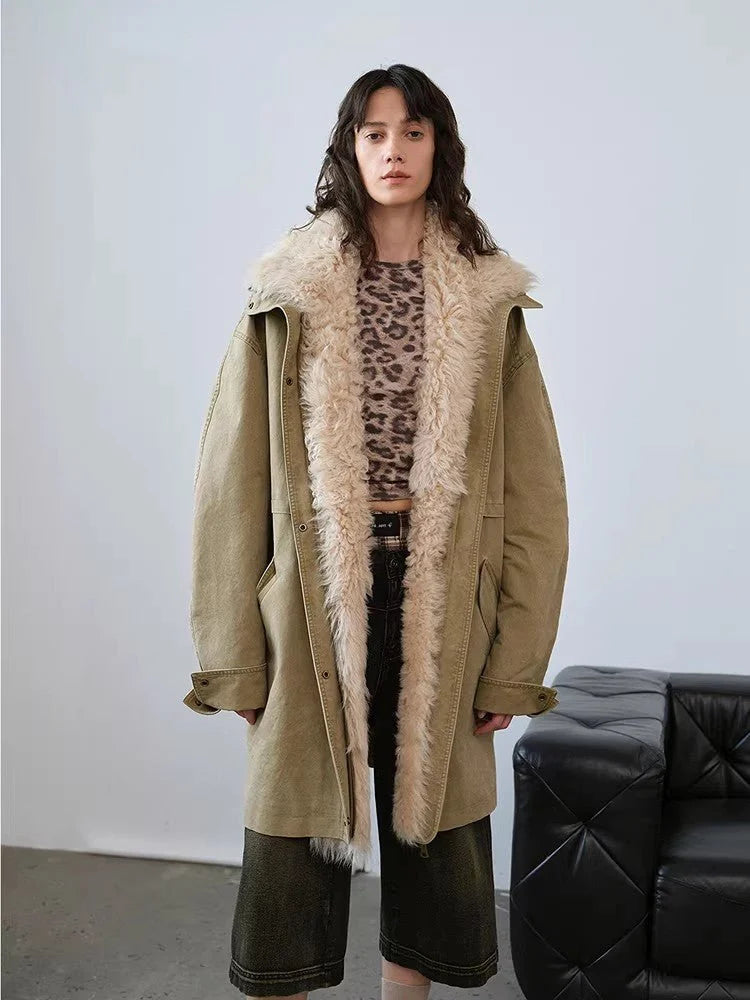
Texture is a movement question
Texture is not only softness. It is the way the surface catches light, separates, compresses and returns. Real fur often has natural variation that gives the surface depth. Faux fur may look cleaner or more uniform. Either can be beautiful, but the stronger choice is the one whose visual behavior fits the outfit role.
For a statement coat, volume may be the point. For daily wear, too much volume can make the coat harder to repeat. For travel, a surface that crushes easily may become frustrating even if it photographs well before packing.

The second check changes the answer
When the first impression is attractive, slow the decision down and inspect the part of the coat that will carry stress in actual use.
How styling changes the visual verdict
A coat that looks convincing over a minimal outfit may look different over textured knitwear, denim, formalwear or boots. Judge the surface in the outfits it would actually meet. A faux coat with the right shape may work better for casual styling than a real fur coat that feels too formal for the wardrobe. A real fur coat with restrained cut may look quieter and more useful than a dramatic faux piece that dominates every outfit.
What can be verified?
Use construction, lining, photos, care label and fit evidence before trusting a broad material claim.
Where will it be worn?
Daily cold, travel, occasional events and trend styling do not need the same material answer.
Can the owner support it?
Storage, cleaning, drying and repair access can change the better purchase.
Editorial field notes before the final decision
Appearance is not a truth test; it is a consistency test. A coat should still make sense across normal light, movement, side volume and outfit context. Real fur can look too heavy for a casual wardrobe. Faux fur can look convincing in one crop and less convincing when the whole garment appears.
The reader should also separate texture from silhouette. A surface can be beautiful while the shape is wrong. A quieter material can look more expensive when the cut, collar, shoulder and length are right. That is why a visual comparison should never stop at pile.
In product photos, the most useful image is often the least glamorous: side view, back view, sleeve edge, lining, hanger shot. These reveal whether the coat works as clothing instead of only as a surface.
| Question | What to check | What changes the answer |
|---|---|---|
| Is the material claim enough? | Look for construction evidence, not only label language. | Missing evidence should slow the purchase. |
| Does the use case support it? | Compare climate, movement, storage and repeat wear. | A good material can still be wrong for the job. |
| What is the next page? | Return to the parent guide | Use the cluster when one article exposes a new uncertainty. |
Evidence is visible
The page gives enough construction, care or use evidence to continue comparing.
Evidence is missing
Request photos, measurements, care history or product details before trusting the claim.
Role does not fit
Move to another material family or delay the purchase instead of forcing the answer.
If the reader is still comparing the whole category, the next step is the Real Fur vs Faux Fur Ultimate Guide. If the issue has moved into ownership, use care and long-term value before treating the decision as finished.
Reader-specific edge cases worth checking
The edge case is the buyer who wants a coat to look expensive without looking formal. Real fur can look too serious for some wardrobes; faux fur can look too playful or too uniform in others. The article should make the reader compare mood, outfit base and silhouette before treating material as the only visual decision.
A photo that looks convincing on its own may fail next to the buyer's actual clothes. Denim, knitwear, evening dresses, boots and tailored trousers all change the read. A material comparison is incomplete until the coat is imagined with the garments it will actually meet.
What would make this purchase fail?
Use that answer to pick the next support article instead of reading every page the same way.
Can the evidence be seen?
Prefer visible construction, photos, fit and care facts over material adjectives.
Where should the reader go next?
Use the parent guide to return to the full cluster when the decision branches again.
Final editorial check before publishing
Before publishing or buying from this page, the visual verdict should be tested against ordinary use: a hallway mirror, a coat over real clothes, a side view, and one unflattering angle. If the coat only works in a perfect product image, the material comparison has not solved the style problem.
This is especially important for faux fur because surface uniformity can look clean in a crop but broad on the body. It also matters for real fur because natural depth can look rich in one outfit and too formal in another.
FAQ
Can faux fur look real in photos?
Yes, especially in soft light or close crops. Ask for side, back, movement and inside photos before trusting one image.
What makes real fur look more natural?
Variation in depth, direction, movement and recovery can make real fur read differently, but poor care can also create irregularity.
Is shine a reliable clue?
No. Lighting and finishing affect shine in both materials. Movement, backing and edge evidence are more useful.


