


Article Summary
Care is where the material difference becomes practical. Real fur and faux fur can both be damaged, but they fail in different ways and need different routines.
Real and faux fur need different care decisions
A real-fur coat has hair attached to skin. It should be cleaned and assessed by a fur specialist, hung with room and kept away from direct heat. Faux fur is a textile garment whose fiber, backing, lining and trim vary. Its sewn-in care label decides whether that particular coat can be machine washed, hand washed or professionally cleaned. “Faux” alone is not a washing instruction.
After a small exposure to rain, both coats need attention before they go into a closet, but the response is not identical. For real fur, shake off surface moisture and let the coat air on a broad hanger away from heat; a soaked pelt needs a fur specialist. For faux fur, follow the garment maker's drying directions and check that the backing and lining are fully dry before storage. If the label is missing or unclear, ask the seller or maker before experimenting.
Protect the pelt
Use fur-specialist cleaning and repair. Give the coat air, a broad hanger and appropriate seasonal storage. Home washing and hot-air “quick fixes” risk the skin backing.
Follow this coat's label
Some faux coats permit a delicate machine cycle and flat drying; others specify dry cleaning. Support the garment as it dries and restore the pile only by a method the maker allows.
The material difference explains the two paths, but the label and condition complete the answer. A faux coat with a complex lining or coating may have stricter care than a simple polyester jacket. A real-fur coat with a fragile backing requires professional judgment even when the hair still looks glossy.
Two faux coats can give opposite cleaning instructions
The FTC's care-label guidance requires manufacturers and importers to provide care instructions for covered apparel. That label is more useful than an internet rule about all faux fur. For example, a Gap recycled-polyester faux-fur coat lists delicate machine washing and flat drying. An Apparis Pamela faux-fur coat specifies dry cleaning. These product pages were checked on 23 September 2026; their instructions belong to those products, not to a different coat in your closet.
| Garment example | Published instruction | What an owner should infer |
|---|---|---|
| Gap recycled faux-fur coat | Delicate machine wash; lay flat to dry. | Machine washing can be legitimate for a faux coat when its own label permits it. Flat drying is part of that product's instruction. |
| Apparis Pamela faux-fur coat | Dry clean, with a stated solvent exception. | Do not transfer the Gap wash route to a tailored or differently backed faux coat. |
| Real-fur coat | Fur-specialist care under American Fur Council guidance. | A textile wash or ordinary dry-clean assumption is unsuitable for the pelt and lining. |
Check the label before purchase as well as before cleaning. A buyer who expects home laundry may find a dry-clean-only faux coat inconvenient; another buyer may gladly pay for that service to get a particular cut. The choice is about this garment's complete ownership routine, not a contest in which one material is always “easy care.”
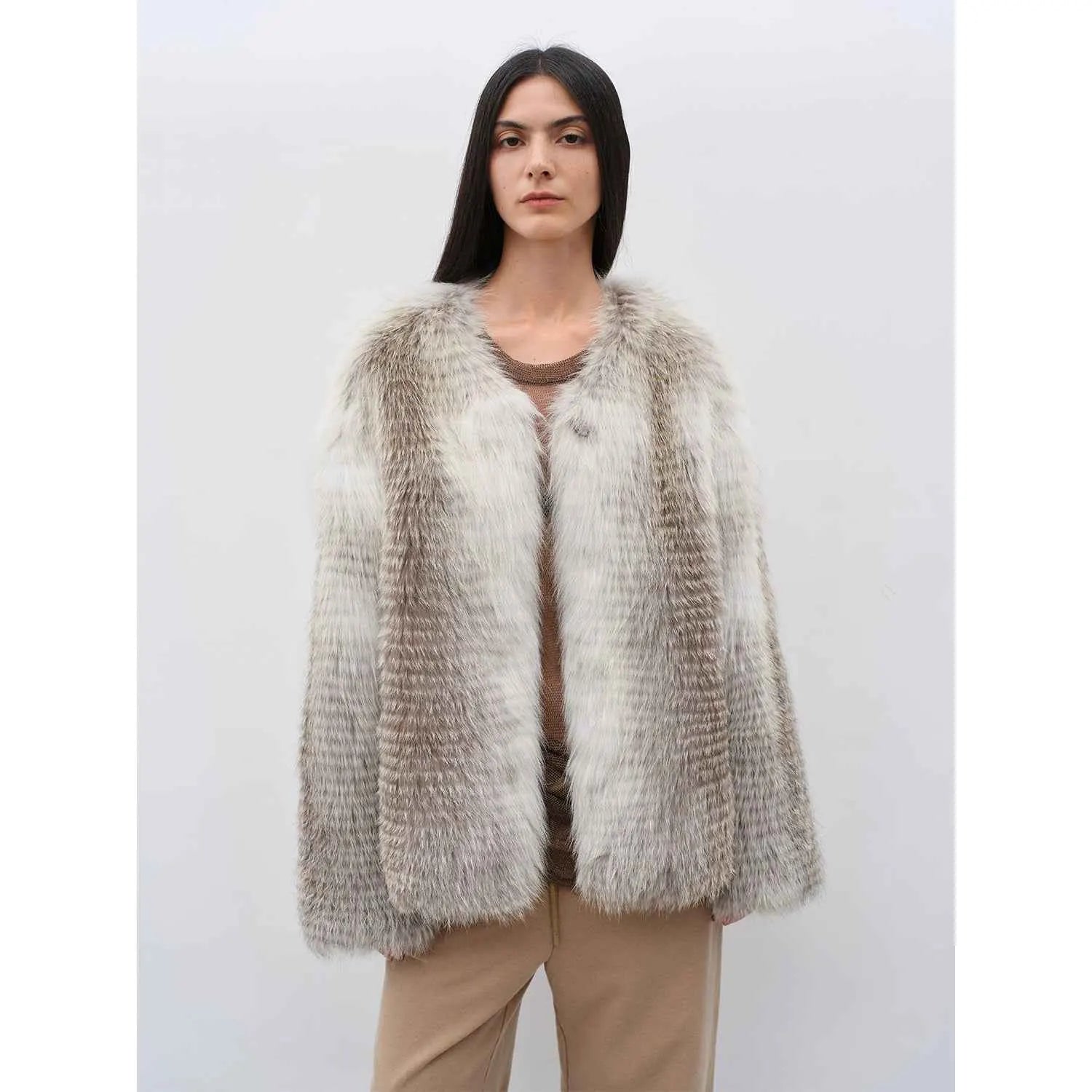
After wear, light rain and a serious soaking
A routine matters most when the coat comes home imperfectly dry. A crowded wardrobe is the wrong first stop after a damp journey. Check the collar, inner sleeve, lining and areas under a bag strap. Airflow helps you assess whether moisture remains, while direct heat can create a different problem.
| Event | Real-fur response | Faux-fur response |
|---|---|---|
| After an ordinary outing | Hang on a broad-shouldered hanger with room around the hair; check friction points and lining. | Hang or support as the maker recommends; shake gently if its product guidance permits and check for flattened pile. |
| Surface rain or snow | Shake off moisture and air in a ventilated room away from heaters, following fur-care guidance. | Read the label for the drying method. Keep the damp coat out of storage; support its shape until the backing and lining are dry. |
| Soaked through | Contact a qualified fur specialist promptly; the skin backing may need professional treatment. | Check the label and contact the maker or an experienced textile cleaner if the backing or lining is saturated or distorted. |
| Spill or persistent odor | Avoid home sprays and rubbing; ask a fur specialist to inspect the affected area. | Follow the label and fabric-specific spot-cleaning guidance; test any approved method as the maker directs. |
The American Fur Council advises against heaters and radiators for wet real fur and calls for specialist help when it is thoroughly soaked. That is a pelt-care boundary. It should not be copied into a claim that every faux coat is ruined by water. Faux fur can still suffer from a hot dryer, twisting, a weakened backing or pile that stays matted after the wrong process; the permissible route belongs to the product label.
Clean and dry without losing shape
For real fur, the American Fur Council recommends specialist cleaning, rather than a household washer or ordinary clothing dry cleaner. Its guidance discusses dirt and oils in the hair and pelt as well as an opportunity to find small tears. Ask the specialist what the coat's age, prior treatment and lining allow. A new spill or weak area deserves attention regardless of cleaning schedule.
For a washable faux coat, carry out the label's entire instruction, including temperature, cycle, detergent restrictions and drying method. The Gap example says delicate machine wash and flat dry; it does not authorize machine washing another faux coat or tumble drying the Gap coat. Close fasteners and protect loose trim only if the maker's instruction permits. A heavy wet coat may need a wide, clean flat surface so its shoulders and hem do not stretch while drying.
A faux coat marked dry-clean only needs a cleaner able to handle faux pile and any faux-leather facings, coatings or trims. Show the label and point out stains, shedding or previously flattened areas before service. The Apparis Pamela example is a tailored garment with its own solvent restriction; those details explain why the generic phrase “synthetic fibers wash easily” is unreliable.
Restore the pile only after the garment is safe and dry
A coat can be clean and still look tired because the pile has been compressed. First let it dry completely by the permitted method and check whether the lining and backing have regained their normal shape. Gentle shaking may help a faux pile settle. Apparis' product-care guidance suggests shaking to re-fluff its pieces and cautions against direct heat on faux fur. That is useful as an example of manufacturer guidance, not permission to steam, blow-dry or brush an unrelated coat.
A hot hair dryer, iron or vigorous brush can make a crushed patch worse. Heat can alter synthetic fibers and may stress coatings or backing; on real fur it can dry the pelt. If the maker supplies a specific brush or low-heat recovery procedure, follow its distance and temperature limits exactly. Otherwise, ask the maker or a specialist, especially for a long, dense pile or a valuable garment.
For real fur, the question after wear is whether the hair is merely flattened by contact or whether the backing, seam or surface is damaged. A furrier can inspect a persistent change. An appealing surface photograph cannot show that hidden condition. For the more detailed real-fur route, use the Ultimate Fur Coat Care Guide and the garment's specialist advice.
Store the two coats according to their construction
During a wearing season, real fur needs a broad hanger, breathing room and distance from heat, sun and persistent damp. The fur trade recommends professional cold storage during the off-season and warns that a close-fitting bag can restrict air and rub the hair. Ask a local furrier about the storage conditions, cost and access before you assume the service is available or worthwhile for your coat.
Faux fur also needs space so long pile is not crushed. Its backing and lining are textile constructions, so storage instructions can differ. A manufacturer may recommend a garment bag for its own outerwear—Apparis does—whereas the American Fur Council discourages bags for real fur. Those recommendations are not contradictory when you keep them attached to different garments. Any stored faux coat should be clean and fully dry; choose a hanger or fold only as its weight, structure and label permit.

Before the season ends, inspect cuffs, collar, hem and lining on both. A small loose seam can be easier to address before storage than after another winter of wear. For a real-fur coat, a professional can judge whether the pelt can support a repair. A faux coat may be mended as textile construction if its base and lining are sound; that does not mean every damaged synthetic pile can be restored to its original appearance.
Let the care plan influence the purchase
A buyer who has a washable faux coat with a clear label may have a simpler cleaning path than an owner who must arrange real-fur service. A dry-clean-only faux coat narrows that difference. A person with a humid, crowded closet and no access to specialist fur storage should put that constraint into the purchase decision before admiring a real-fur coat. A care routine you cannot keep is a cost, even when no invoice arrives.
FireladyFur on choosing a coat you can maintain
At FireladyFur, we check the sewn-in care label, the pile and backing, and the owner's drying and closet space before recommending a coat. A faux coat marked flat dry needs a clean surface large enough to support its wet weight; a dry-clean-only faux coat needs a cleaner who can handle its pile and trim. Real fur calls for room on a broad hanger and access to a fur specialist. If that route does not fit your week, choose a different garment before paying for a material story you cannot maintain. Our editorial standards explain why a maker's specific instructions outrank a broad material slogan.
Choose a coat whose care fits your week
If you can give real fur the space and specialist service it needs, compare the length and construction of FireladyFur's artisan-fur pieces. If changing weather and daily travel dominate, compare a fur-trim parka or shearling coat, then read each product's own care information before buying.
For the larger choice between the materials, read the real-versus-faux comparison. For a cost calculation that includes cleaning, storage and replacement, use the long-term cost worksheet.
FAQ
Can I put a faux-fur coat in the washing machine?
Only if that coat's sewn-in label permits it. A Gap faux-fur coat lists delicate machine washing and flat drying, while an Apparis faux-fur coat specifies dry cleaning. Follow the instructions for the garment you own, including its drying step.
Can ordinary dry cleaning replace real-fur specialist care?
The American Fur Council advises fur-specialist cleaning rather than an ordinary clothes dry cleaner. A specialist can also inspect the pelt, lining and small tears. Ask about the actual coat's condition before service.
How should I dry faux fur after washing or rain?
Use the garment maker's drying instruction. Support a coat marked flat-dry so wet weight does not pull it out of shape, and do not assume a machine-washable coat is safe to tumble dry. Let the backing and lining dry completely before storage.
Should real and faux fur both stay in garment bags?
Not automatically. The American Fur Council warns against close-fitting bags for real fur because of airflow and rubbing. Some faux-fur makers recommend bags for their own products. Keep each instruction attached to its garment and store either coat clean and dry.


