


Article Summary
Real and faux fur may look alike in a photograph, but they differ in pile, backing and care. Check the label, accessible edges and construction before judging a coat by softness or shine.
What Is Actually Under the Pile?
A photograph may make two coats look almost identical, yet the material carrying the pile can be quite different. In conventional real fur, natural guard hair and shorter underfur remain attached to a processed animal skin. A typical faux-fur fabric has a synthetic pile anchored to a knitted or woven textile backing; the pile may use acrylic, polyester, modacrylic or a blend. Those descriptions explain construction, not quality.
A strong textile-backed coat can outwear a poorly kept fur skin, and a healthy fur skin can remain serviceable when a flimsy faux backing fails.
The distinction matters at the seams and edges. A skin base can dry or stiffen with poor storage and may need a fur specialist for repair. A textile base can stretch, distort, lose pile at abrasion points or behave differently after washing, depending on the fiber, knit and finishing. In either category, the lining, seam allowance, closure and attachment method are part of the garment. A luxurious surface cannot make up for a strained armhole or a hem that has already begun to separate.
| Part of the coat | Common real-fur construction | Common faux-fur construction | Useful buyer question |
|---|---|---|---|
| Pile | Natural hair, often with guard hair and underfur | Manufactured fibers cut or finished to resemble hair | Does the listing identify the material instead of saying only “plush”? |
| Base | Processed skin, sometimes assembled in narrow strips or panels | Knitted or woven textile; pile may be knitted, woven or attached by another process | Can I see a safe edge view or reliable label without damaging the coat? |
| Stress points | Skin seams, shoulder joins, lining and closures | Backing stability, pile anchoring, seam stretch and lining | Is there pulling, separation or sparse pile at the cuff, pocket and underarm? |
| Care limit | Heat, prolonged humidity, cramped storage and unsuitable cleaning | Depends on fiber and finish; heat and washing can damage some piles | What does this exact garment's care label allow? |
This is a construction comparison, not a home laboratory test. The U.S. Federal Trade Commission's fur-label guidance requires specific disclosures for fur garments sold there, while its textile-label guidance covers fiber-content disclosures for applicable textiles. Requirements vary by market, but the practical request is the same: ask for the actual material and care information, not an adjective.
Inspect a Coat Without Damaging It
Start with the sewn-in material and care labels, then inspect an accessible edge or a place where the pile can be gently parted. On many conventional fur coats, the hair ends at a skin surface; on many faux coats, rows of threads or a fabric grid are visible. That observation is useful but not conclusive. Some real fur is knitted or mounted onto a textile, and dense faux pile can hide its base. Dye, lining and construction can also obstruct the view. Avoid cutting a seam, pulling hair, burning fibers or using a heated pin on a garment to “prove” a listing.
Move next to the inside edge of the hem, a cuff turnback, pocket mouth and underarm. Look for a clean join and an intact lining. At the cuff, repeated hand contact may abrade pile. At the pocket, a shoulder bag or a phone can pull on the fabric. At the underarm, a coat must tolerate reach and movement. These are signs of present condition; they do not establish how many years a garment will last.
Read the label
Record named fibers or animal material, care instructions and seller identification. If the listing and label conflict, ask the seller to resolve it before purchase.
Look at an accessible edge
Gently part the pile and inspect the cuff or hem from the inside. Treat a visible base as one clue, not proof of species or future performance.
Wear-test the structure
Close the coat over a normal layer, reach forward, sit and check whether seams, lining, shoulders and hem return to their intended shape.
When identification affects a substantial purchase, use documentation and a qualified specialist rather than a single tactile trick. Research comparing mink and artificial fibers shows why surface impressions can mislead, and exact animal identification may require specialist methods. A seller who cannot identify the material should not price it as if the claim were established.
What Touch, Shine and Weight Can Tell You
Hand feel is useful for comfort. It is a poor standalone identity test. A high-quality faux pile can feel soft, varied and fluid; dye and finishing can make real fur look unusually uniform or glossy. The same warning applies to weight: heavy may mean dense pile, a thick lining or simply a bulky cut. Lightweight may make a garment easier to use without proving that the backing is weak. Judge weight across the shoulders after five minutes of wear, not in one hand on a hanger.
Try a light, non-destructive stroke against and then with the pile, and watch how it settles. At the same time, observe the coat's overall drape with arms at rest and in motion. The result tells you whether you like this garment's appearance and handling today. It cannot reliably predict years of seat-belt friction, heat exposure, storage or cleaning. For online shopping, the photo texture guide explains how to request comparable light and angle before judging the surface.
A practical trial is to check whether the collar touches the chin comfortably, whether the sleeves leave room for a sweater and whether the pile gets trapped in the front closure. Those details can matter more to repeat wear than a minor difference in surface sheen. If warmth is the real reason for shopping, compare coverage, lining and closure in the winter-use guide instead of inferring thermal performance from touch.
Read Condition Separately From Material Identity
On a pre-owned real-fur coat, the label identifies what was originally sold; it does not establish the skin’s condition today. Check odor, panel stiffness, skin seams, lining, bald abrasion and pulling closures. Avoid aggressive flexing. For a costly or sentimental coat, ask a fur specialist to assess it before paying for cleaning or alteration.
On a pre-owned faux-fur coat, inspect sleeves, collar and the places a seat belt or bag touches. Matting may be local; heat damage or distorted backing can be harder to reverse. Read the whole garment’s care label before washing. Some allow gentle washing; others call for specialist or dry cleaning. Pile fiber alone does not reveal what the lining, adhesive, dye or finish can tolerate.
Mixed construction complicates the label. A textile body may carry real fur trim, a leather or shearling panel, or faux pile over another lining fiber. Identify each part; one small trim can set the cleaning limit for the whole coat. Ask which components are present and which part limits care or repair, rather than judging the most visible surface.
When possible, compare two coats of the same claimed material on similar hangers. Check shoulder, sleeve and hem; close each over the same layer, reach and sit. Lining pull or a twisting hem tells you more about this garment than a category-wide score for real or faux. Matching the garments reduces some misleading differences in product photography.
What to Request Before an Online Purchase
A strong listing should show front, back and side views on a person or appropriately sized form. It should also show the sewn-in composition and care labels, lining and closures. For used garments, ask for close images of the cuffs, pocket edges, underarms and any repaired seam. A parted-pile image can help when it is safe to obtain, but do not demand that a seller damage a finished lining or seam to create one.
A vague title calls for a direct question: ask whether the pile is natural animal fur or a manufactured faux-fur textile. Ask what the sewn-in label says. An expensive listing that names a species should come with seller documentation. Compare that answer with the photos and return terms. The FTC has documented cases in which products marketed as faux were actually fur, so a marketing adjective is not enough when a material boundary matters to the buyer.
| Seller supplies | What it can support | What remains uncertain |
|---|---|---|
| Composition and care-label photos | Declared material and stated cleaning method | Whether a used coat is still sound or a claim is accurate |
| Inside edge and seam photos | Visible backing type, lining and workmanship | Hidden panels and exact species |
| Front, side, back and movement views | Length, shoulder balance, volume and drape | Fiber identity, warmth in your climate and long-term durability |
| Repair and storage history for resale | Known interventions and maintenance habits | Condition beyond what a seller or specialist can verify |
When photos or labels are missing, request another photo, use a return window, reduce the amount you are willing to spend, or leave the listing. A confident material claim backed only by a studio image is a reason to ask more questions, not a reason to assume either fraud or exceptional quality.
Keep a record of the exact material words used in the listing, particularly on resale marketplaces where descriptions can change. When a seller answers “real” or “faux” in a message, ask whether that applies to the main pile, trim and lining or only one part. Before a cross-border purchase, confirm what can legally be shipped and returned in the relevant jurisdictions. Material clarity is both a values issue and a practical return issue.
Translate the Material Check Into a Purchase Decision
Suppose two short coats look similar on screen. One has a documented natural-fur label, intact seams and a seller willing to show the lining; the other is labeled faux, costs less and can be returned after a fit check. The first may fit a buyer who wants a long-term piece and can arrange appropriate storage and specialist care. The second may fit someone who avoids animal material or wants lower initial commitment. Neither answer follows from the surface photograph alone.
Now suppose the first coat is vintage, stiff at the cuff and missing condition information, while the faux coat has a clear label but flattened pile along the seat-belt path. The decision should change. Ask for a specialist opinion on the first and inspect the second's actual wear or return it. A category-level recommendation should never override an item-level defect.
FireladyFur's material lens
Inspect the structure you will wear. We would check a real-fur piece for the declared material, panel and seam condition, lining, fit and cleaning plan before treating it as an investment. An attractive product photograph without a backing view still leaves the material unconfirmed. Request a label or accessible edge photo instead of guessing from styling photography.
Match the coat to its role. A dramatic full-fur silhouette, a shearling coat and a fur-trim parka solve different wardrobe problems. Compare them by coverage, closures and care as well as material. Our brand story and Editorial Standards explain the FireladyFur perspective; neither is independent proof of a product's durability.
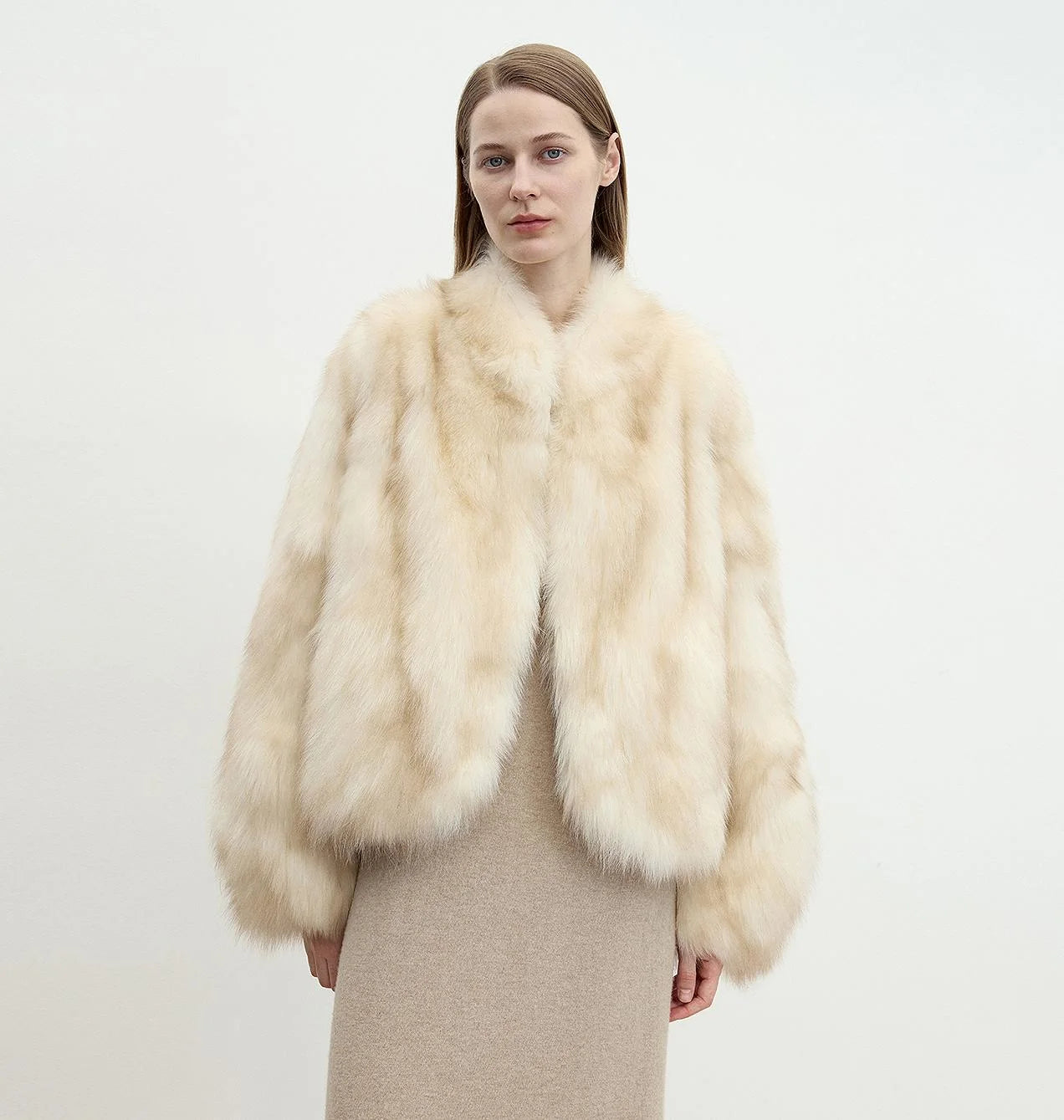
For a concrete real-fur example, FireladyFur lists the Reed Flower Finnish Fox Fur Coat as natural fox fur with dyed variation. Its product photograph helps you judge silhouette and pile volume; use the product details and ask about fit and care before treating the image as a material inspection. If your question is broader than construction, return to the real-versus-faux buying guide for warmth, price, ethics and ownership together.

A real-fur product example
Use this image for length and volume. The listing identifies fox fur, while a product photo alone cannot establish backing condition, fit or care needs.
Frequently Asked Questions
Can I tell real fur from faux fur by parting the pile?
Often you can see a skin-like base on conventional real fur and a knitted or woven textile on faux fur. Construction and lining can hide or complicate the view, so combine it with labels and seller documentation; a parted-pile view cannot prove animal species.
Does soft pile mean a coat will last longer?
No. Softness describes first contact. Backing, seams, lining, abrasion, cleaning and storage determine whether that specific coat keeps working and looking good.
Is every faux-fur coat machine washable?
No. Follow the garment's own care label. Fiber, backing, lining, dye and finish can require different methods even among faux coats.
Can a product photo prove that a coat is real fur?
No. A photograph can show color, cut and some pile behavior, but it cannot reliably establish fiber identity or backing condition. Request the composition label and suitable construction photos.
Should I use a burn or pin test?
Do not damage a garment to test it, especially one you do not own. Check the label, seller records, accessible edges and return terms; use a qualified specialist if a high-value claim remains uncertain.


