


Article Summary
Neither real fur nor faux fur automatically ages better. Inspect the pile, backing, lining, seams and closure on the actual coats, then compare wear and care histories. A good-looking surface can hide damage in either construction; the material label does not supply a lifespan.
Compare condition rather than assume a lifespan winner
Compare coats that have done comparable work. A nearly unworn real-fur coat from controlled storage is not a fair opponent for a faux coat compressed under a shoulder bag through two winters; reverse the histories and the conclusion can reverse too. Record age, wears per season, bag friction, cleaning method, storage space and repairs before calling one material more durable. These are buyer questions, not numbers that can be inferred from a photograph.
Check both the surface and what supports it. Flattened pile, clumping, shine or a visible base may be worth investigating on either coat. Real fur has skin beneath the hair; faux fur has a textile construction whose backing, seams and lining also need inspection. Where you find damage does not establish how frequently that material fails across the market.
Use, storage, cleaning, original construction and repairability can change which of two coats has aged better. A carefully used faux coat may be in better condition than a poorly stored natural-fur one, or the reverse. In its June 2013 mink/faux-fur life-cycle report, CE Delft said average and relative coat lifespans were unknown. That historical modeling limitation is a reason to question fixed lifespan ratios, not a current survey of all fur garments.
Look for matting, shine, flattened cuffs, visible backing, odor, damaged seams and changes in shape. Check the lining and textile base as well as the pile.
Look for worn or missing hair, existing skin cracks, weak seams, lining stains, odor, shoulder distortion and old repair decisions. An attractive surface does not clear the skin beneath it.
Inspect faux-fur pile and textile construction
On faux fur, inspect contact areas such as cuffs, elbows, underarms, seat-belt lines and bag straps for pile that is crushed, tangled or worn. Then look at the lining, stitching and accessible backing for a tear, stretched area or separation. A patch of visible backing may reflect worn pile, deliberate pile direction or construction; compare it with an undamaged area before calling it a loss of density.
For repeat winter wear, ask whether the damaged area can be improved and whether the rest of the coat remains sound. Check its actual care instructions before cleaning or attempting to restore the pile. Unreal Fur, for example, specifies professional dry cleaning for its faux garments; “faux” does not mean that washing or heat treatment is safe for every coat.
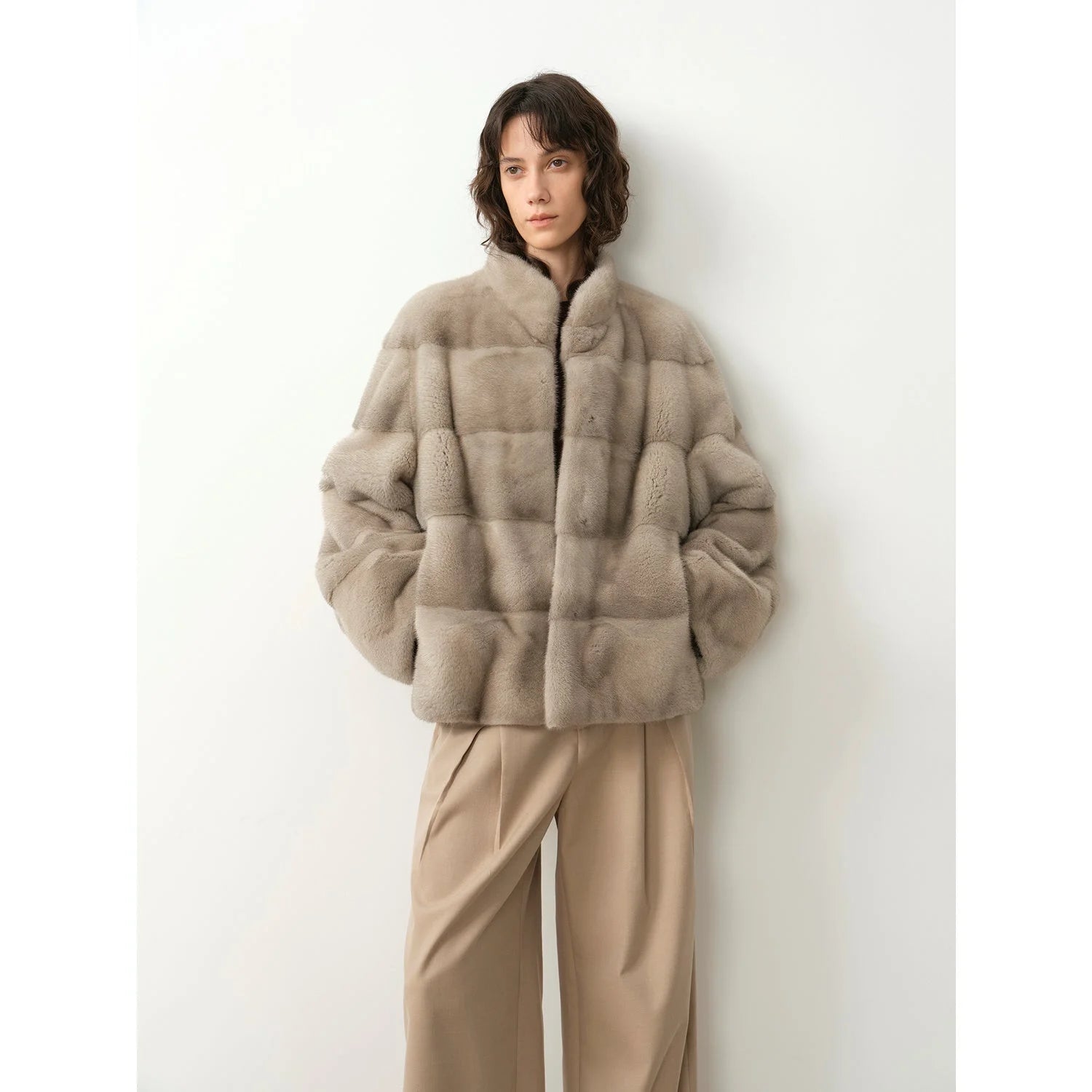
Inspect real-fur skin, lining and seams safely
Real fur can keep a rich surface while the supporting structure weakens. The lining may be stained, the shoulder may have collapsed, seams may be stressed, the backing may be dry, or the coat may carry storage odor. These are not always visible in a product photo.
For older pieces, the correct comparison is not only real versus faux. It is wearable, repairable, restorable, resellable or retired. The Fur Coat Value / Resale Guide should be part of the reading path whenever age, condition or secondhand pricing is involved.
- Look inside with support. Check visible lining, underarms, hem, pockets and repairs without pulling the garment open against resistance. Ask a furrier to assess skin concealed by the lining.
- Stop before flexing a fragile coat. Existing cracks, stiffness, splitting or active hair release need specialist assessment. Do not move the shoulders or bend the skin to create a crackling sign.
- Record odor. Mustiness, smoke, perfume and a damp-storage history can affect use or sale. Ask what treatment is realistic rather than assume airing will remove it.
- Separate a surface mark from structural damage. Crushed hair does not by itself prove weak skin, and glossy hair does not prove sound seams. Have the uncertain area assessed before wear or repair.
The Canadian Conservation Institute’s fragile-material guidance supports that handling boundary. It concerns weakened skin and fur objects; it does not mean a sound wearable coat must never be tried on.
Reconstruct storage history and identify each failure
Ask where the coat was stored and how it was cleaned. Heat, sunlight, dampness and repeated compression may damage the pile or supporting materials, but the relevant restrictions depend on the garment. A natural-fur specialist’s storage process and a faux-fur maker’s label are different care instructions. Neither coat’s history can be recovered from a glossy photograph.
The care question belongs beside the comparison. Use Real Fur vs Faux Fur Care and the broader Fur Coat Care Guide before treating age as a purely visual issue.
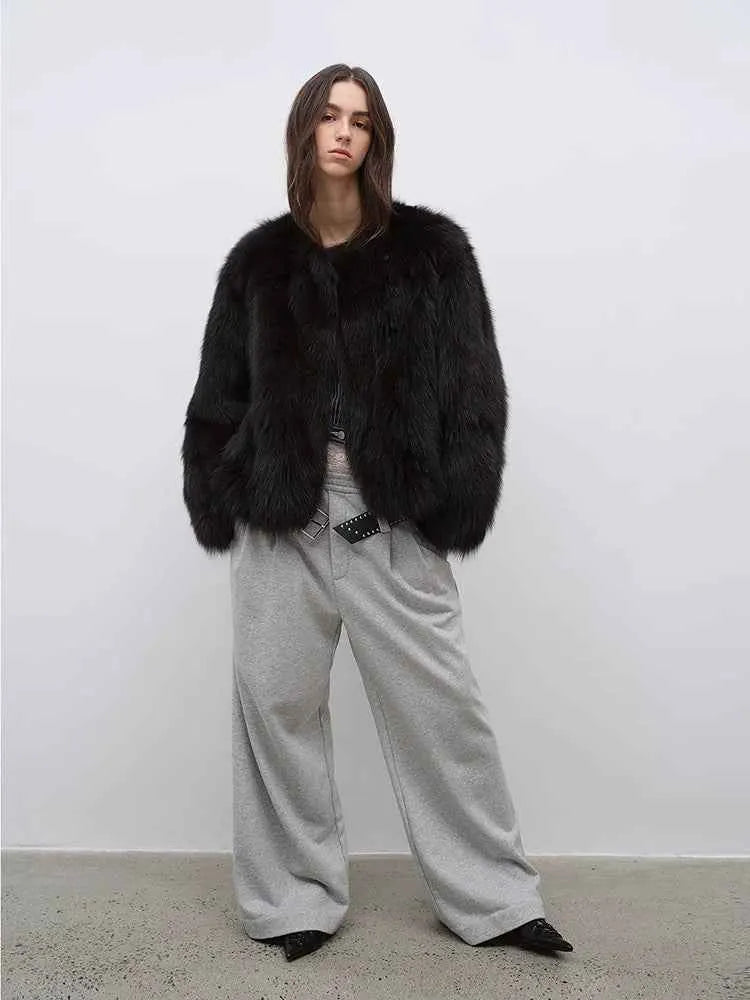
Older real fur is inspected from inside out
The surface can be persuasive. The ownership decision sits in the lining, seams, backing, odor, shoulder shape and repair history.
For a used coat, check both surface and structure in the same order: full front and back in even light, cuffs and underarms, closure and pocket stress, lining, then backing where construction allows inspection. A flattened patch on faux and a supple-looking real-fur surface are not equivalent evidence if the latter has a failing seam or dry leather. Ask what a repairer can actually restore, its cost, and whether the repaired garment would still suit your wear schedule.
| Failure sign | Where to inspect | What it means for the buyer |
|---|---|---|
| Flat, shiny or clumped pile | Pile and contact areas on either coat | Compare with undamaged areas and ask about realistic treatment. Heat damage or lost hair may not be reversible. |
| Stiff, cracked or weakened backing | Skin on natural fur; textile backing and seams on faux fur | Do not flex a fragile area. A repairer must judge whether the supporting material can hold wear or a repair. |
| Odor from storage, smoke or perfume | Pile, lining and backing on either coat | Establish the history and likely treatment before buying; airing does not guarantee removal. |
| Backing visible through pile | Pile direction, density and wear pattern on either coat | A photograph does not prove lost density. Compare the same area in clear views and with an unworn area. |
| Weak seams or lining damage | Shoulders, underarms, pockets, closure and hem on either coat | Check scope and cost before assuming continued wear or resale return. A lining-only repair does not repair weak backing. |
Decide whether repair, resale or continued wear is realistic
Real fur can age well when it was stored correctly, cleaned by the right professional, kept away from damp and heat, and repaired before small issues became structural. In those cases, the garment may still have wear value, emotional value, resale value or restyling potential.
The opposite is also true. A beautiful old coat with dry backing, weak seams, persistent odor or damaged lining can become expensive quickly. If the buyer is weighing a higher-cost older piece, connect this article with when real fur is worth the higher cost and lifespan and replacement cost.
Faux fur can suit a short trend window, but a well-made piece can also be chosen for repeat wear. Judge its pile recovery, backing, lining, closure and care label against that frequency. Real fur can be a long-term garment when pelt, seams and storage history support it. Neither label alone supplies a lifespan; condition and realistic care decide whether the expected wear horizon is credible.
If animal material is outside your preference, compare suitable faux garments within that boundary. If care convenience is the reason, check the particular label first: faux fur may still need specialist cleaning or a qualified repair. When faux fur makes more sense considers those reasons without assigning every faux coat a short wear horizon.
For the full material decision, return to the Real Fur vs Faux Fur Ultimate Guide. For photo-based shopping, use how to compare real and faux fur texture in photos. For ownership math, move to lifespan, replacement cost and long-term value.
FireladyFur durability judgment
Do not ask which material lasts longer until you know how it will be owned
FireladyFur advises inspecting the coat and its care history before using a material label to predict longevity. A real-fur coat with sound skin may have useful repair options; a well-constructed faux garment may also suit repeat use. The actual condition, care requirements and intended use must support either choice.
Before buying vintage, secondhand or higher-cost outerwear, inspect the coat's failure mode. If the issue is surface fatigue, price it as visible wear. If the issue is backing, lining, odor or seams, treat it as a professional-care question.
The collections below contain natural fur and are relevant only if you are willing to buy animal materials. If your preference is faux, continue comparing suitable faux coats using the condition, construction and care checks above.
FAQ
Does real fur age better than faux fur?
Either can age well or badly. Compare the actual pile, backing, seams, lining, closure and care history. Correct care supports continued use, but neither label guarantees a longer lifespan.
What wear signs should I inspect on faux fur?
Check contact areas for flattened, tangled or worn pile, then inspect the textile backing, lining, seams and closure. Shine, odor or exposed backing needs context; it does not establish how long every faux coat lasts.
What should I inspect on an older real fur coat?
With the coat supported, inspect visible lining, seams, shoulders, underarms, hem, odor and repair history. Ask a furrier about concealed skin. Do not flex or try on a stiff, splitting or actively shedding coat before assessment.
Which is better for resale?
Ask the intended selling channel what it accepts, then compare condition, style, care history, demand and likely net proceeds. Material alone does not guarantee a buyer, a higher offer or a profitable repair.


